THE ADVENTURE COLLECTIVE® · Independent discovery and booking for outdoor travel

Head into Lapland’s open nights on a guided bus chase that stops where the horizon and light pollution are lowest. Guides assist with camera settings and take photos while hot drinks and gingerbread keep you warm through the hunt.
Head into Lapland’s open nights on a guided bus chase that stops where the horizon and light pollution are lowest. Guides assist with camera settings and take photos while hot drinks and gingerbread keep you warm through the hunt.
The bus eases away from Rovaniemi and the town lights peel back like a curtain; ahead, the Arctic sky waits—black, cold and honest. You move through a world of birch and pine, windows frosting at the edges, while the guide scans the northern horizon for the first hint of green.
Verified experiences and guided adventures in the surrounding area.
Operated by Safartica · Rovaniemi, Lapland
The bus eases away from Rovaniemi and the town lights peel back like a curtain; ahead, the Arctic sky waits—black, cold and honest. You move through a world of birch and pine, windows frosting at the edges, while the guide scans the northern horizon for the first hint of green.
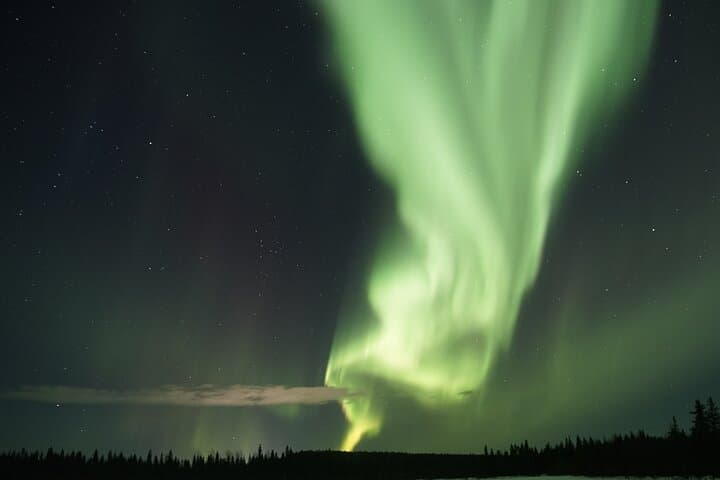
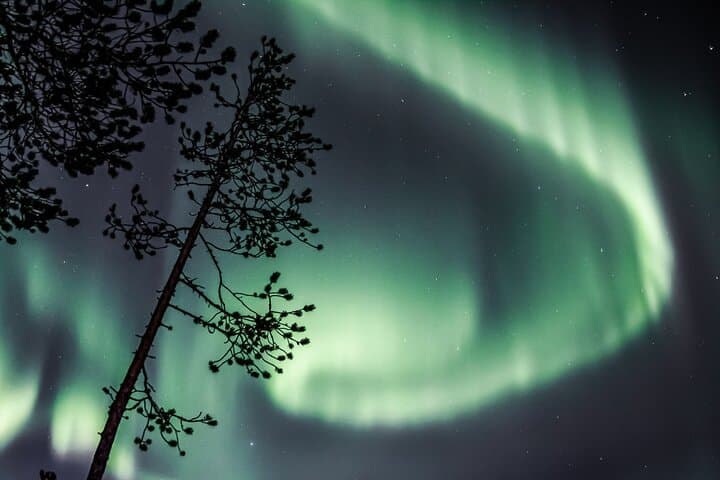
Lapland sits on the edge of the Arctic Circle, where geomagnetic storms push charged particles into the upper atmosphere and the aurora borealis becomes visible on clearer nights. The region’s glacially sculpted terrain and low light pollution make it one of Europe’s more reliable aurora belts. Local Sámi culture has long read the sky as part of a living landscape; tonight the lights are a weather system to be read and respected.
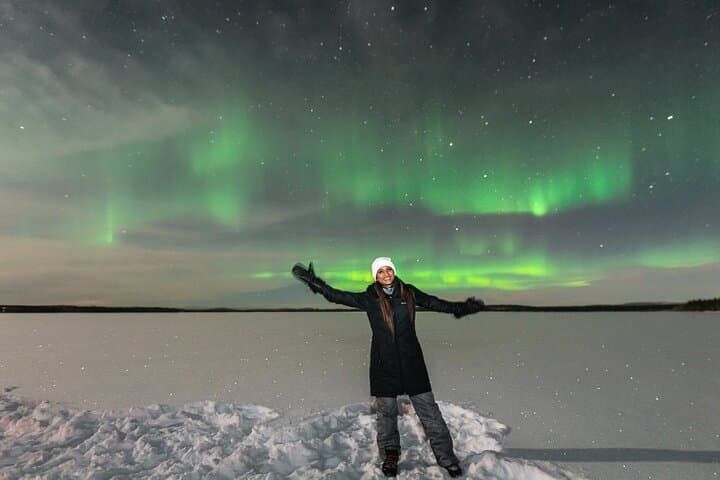
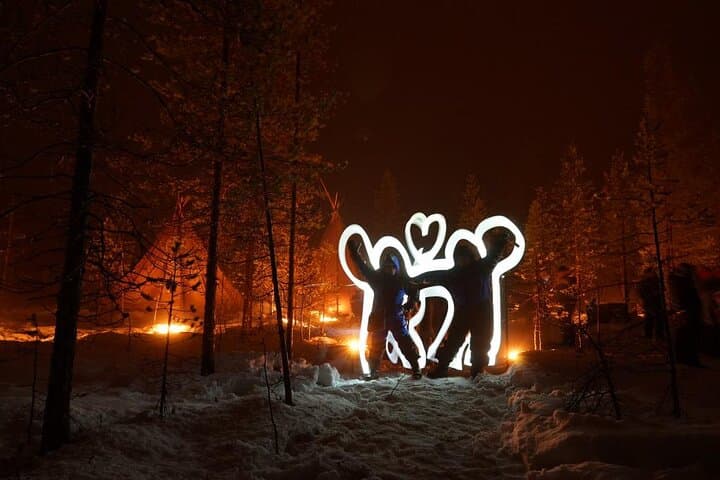
On this photo-oriented night chase, expect multiple roadside stops over a 200 km radius chosen for low horizon glow and open views. Guides position you for frames, suggest camera settings, and take portraits illuminated by auroral glow and playful light effects. Hot drinks and gingerbread warm hands; winter clothing is supplied when needed.
Practically: the tour runs about four hours after dark, and sightings can’t be guaranteed—solar activity and cloud cover decide. Dress in windproof layers, bring a tripod and a camera with manual controls, and allocate extra battery power in subzero temperatures. The trip is accessible to most fitness levels; it’s a seated chase punctuated by short walks to shooting points. Whether the sky erupts or simply shimmers, you’ll leave with better photos and a clearer sense of how the Arctic night moves.
easy.
4 hours.
Suitable for most fitness levels—activity is mainly seated with short walks at stops; stable footing required on icy shoulders.
Chances are good in clear winter months, but sightings depend on solar activity and cloud cover; operators maximize opportunities with multiple stops but cannot guarantee a sighting.
Yes—guides demonstrate camera settings, help position shots, and take photos of guests using light effects for portraits.
The tour includes winter clothing when necessary, but guests should still bring personal insulating layers and proper footwear.
Yes—hotel pickup and drop-off are included for selected hotels; confirm your pickup point when booking.
Rovaniemi sits on the Arctic Circle and grew rapidly after WWII; the area has long been seasonally inhabited by Sámi people who read and integrate northern phenomena into cultural lore.
Stick to designated pullouts and avoid trampling tundra vegetation; minimizing light pollution and leaving no trace helps preserve local night-sky quality.
Safartica operates guided outdoor trips and adventures with an emphasis on safety, stewardship, and memorable experiences.
The bus eases away from Rovaniemi and the town lights peel back like a curtain; ahead, the Arctic sky waits—black, cold and honest. You move through a world of birch and pine, windows frosting at the edges, while the guide scans the northern horizon for the first hint of green.
The bus eases away from Rovaniemi and the town lights peel back like a curtain; ahead, the Arctic sky waits—black, cold and honest. You move through a world of birch and pine, windows frosting at the edges, while the guide scans the northern horizon for the first hint of green.
Lapland sits on the edge of the Arctic Circle, where geomagnetic storms push charged particles into the upper atmosphere and the aurora borealis becomes visible on clearer nights. The region’s glacially sculpted terrain and low light pollution make it one of Europe’s more reliable aurora belts. Local Sámi culture has long read the sky as part of a living landscape; tonight the lights are a weather system to be read and respected.
On this photo-oriented night chase, expect multiple roadside stops over a 200 km radius chosen for low horizon glow and open views. Guides position you for frames, suggest camera settings, and take portraits illuminated by auroral glow and playful light effects. Hot drinks and gingerbread warm hands; winter clothing is supplied when needed.
Practically: the tour runs about four hours after dark, and sightings can’t be guaranteed—solar activity and cloud cover decide. Dress in windproof layers, bring a tripod and a camera with manual controls, and allocate extra battery power in subzero temperatures. The trip is accessible to most fitness levels; it’s a seated chase punctuated by short walks to shooting points. Whether the sky erupts or simply shimmers, you’ll leave with better photos and a clearer sense of how the Arctic night moves.