THE ADVENTURE COLLECTIVE® · Independent discovery and booking for outdoor travel

A 90-minute guided observatory designed to teach you how to read the Northern Lights and improve your odds of a sighting. Low-lit outdoor spaces, plasma-tube demonstrations and hot chocolate make this an efficient primer for aurora hunting around Reykjavik.
A 90-minute guided observatory designed to teach you how to read the Northern Lights and improve your odds of a sighting. Low-lit outdoor spaces, plasma-tube demonstrations and hot chocolate make this an efficient primer for aurora hunting around Reykjavik.
Step out into a low-lit courtyard where cold air bites and the sky opens wide — this is Aurora Basecamp just outside Reykjavik. Benches ring firepits; guides move between small groups, pointing to winks of light and explaining what the night sky is doing. Inside, a compact exhibition and a real-time plasma tube demonstration translate auroral science into plain sight before you step into the dark.
Verified experiences and guided adventures in the surrounding area.
Operated by Aurora Basecamp · Reykjavík, Capital Region
Step out into a low-lit courtyard where cold air bites and the sky opens wide — this is Aurora Basecamp just outside Reykjavik. Benches ring firepits; guides move between small groups, pointing to winks of light and explaining what the night sky is doing. Inside, a compact exhibition and a real-time plasma tube demonstration translate auroral science into plain sight before you step into the dark.
Icelanders have watched the aurora for centuries and built folk stories around the dancing bands. Geologically, Iceland’s position on the Mid-Atlantic Ridge means quiet nights away from urban glow reveal clear northern skies; the volcanic landscape underfoot keeps the horizon dramatic and raw. Culturally, evenings here are communal — hot chocolate, shared blankets and patient waiting are part of the ritual.
Practical guidance matters: the Basecamp is designed for winter visits, staffed by guides who teach you to read KP indices, cloud cover and local conditions. The outdoor area is intentionally low-light to preserve night vision; dress for sustained cold, arrive with a charged camera battery and expect to stand or sit beside a firepit for up to 90 minutes. The experience is accessible — paths are level and the lounge is warm — but sightings depend on solar activity and weather, not guarantees.
Bring layers, learn the simple science the guides teach, and use the Aurora Trails maps provided to continue hunting on your own. The Basecamp is an efficient primer: it turns guesswork into knowledge and increases the odds that your first Icelandic night under the northern sky will be memorable.
easy.
1–2 hours.
Suitable for most fitness levels; requires standing or sitting outdoors in cold conditions for up to 90 minutes
No — sightings depend on solar activity and local weather. The Basecamp increases your odds by teaching you how to read conditions, but sightings cannot be guaranteed.
Yes — the venue is wheelchair and stroller accessible and suitable for all fitness levels; there are heated indoor spaces and level outdoor areas.
The guided experience lasts about 90 minutes and includes a short exhibition, real-time plasma tube demonstrations, warm beverages and guided outdoor viewing at low-lit stations with firepits.
Use the provided Aurora Trails maps to drive to low-light coastal points or national parks; check local cloud cover and KP index forecasts before heading out.
Icelandic accounts of auroral sightings stretch back centuries; modern observatories like Aurora Basecamp translate folklore into observational science for visitors.
Minimize light pollution by using low-light areas and avoid off-road driving — stick to marked roads and parking to protect fragile moss and geothermal terrain.
Aurora Basecamp operates guided outdoor trips and adventures with an emphasis on safety, stewardship, and memorable experiences.
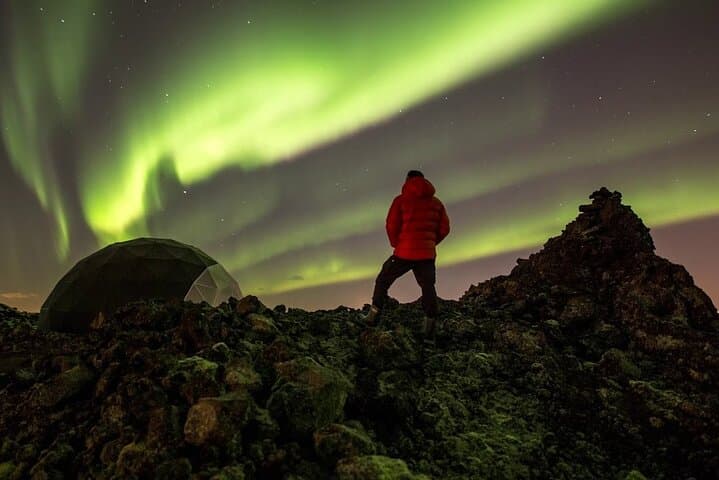
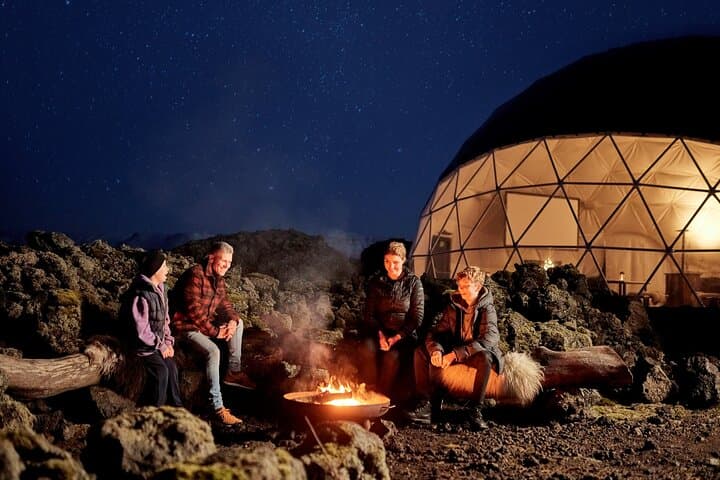
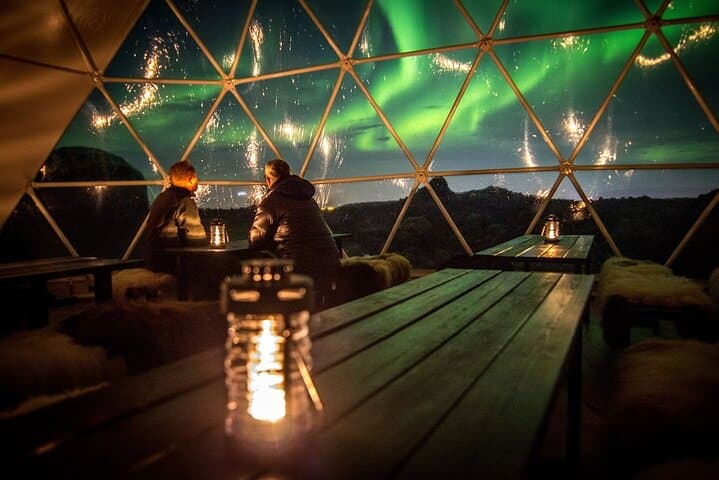
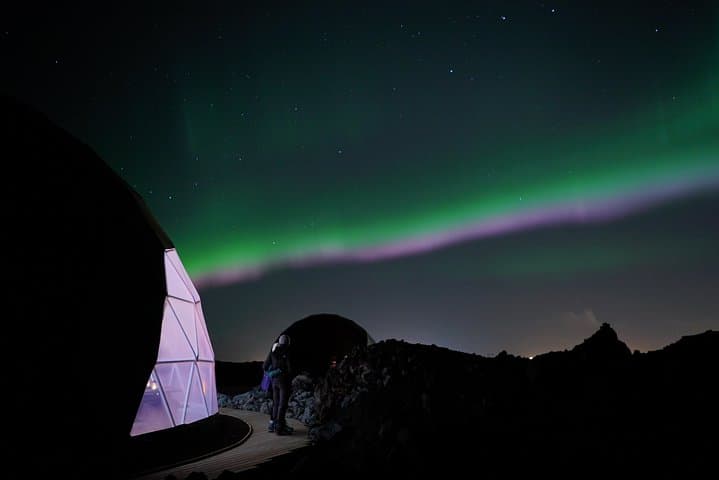
Step out into a low-lit courtyard where cold air bites and the sky opens wide — this is Aurora Basecamp just outside Reykjavik. Benches ring firepits; guides move between small groups, pointing to winks of light and explaining what the night sky is doing. Inside, a compact exhibition and a real-time plasma tube demonstration translate auroral science into plain sight before you step into the dark.
Step out into a low-lit courtyard where cold air bites and the sky opens wide — this is Aurora Basecamp just outside Reykjavik. Benches ring firepits; guides move between small groups, pointing to winks of light and explaining what the night sky is doing. Inside, a compact exhibition and a real-time plasma tube demonstration translate auroral science into plain sight before you step into the dark.
Icelanders have watched the aurora for centuries and built folk stories around the dancing bands. Geologically, Iceland’s position on the Mid-Atlantic Ridge means quiet nights away from urban glow reveal clear northern skies; the volcanic landscape underfoot keeps the horizon dramatic and raw. Culturally, evenings here are communal — hot chocolate, shared blankets and patient waiting are part of the ritual.
Practical guidance matters: the Basecamp is designed for winter visits, staffed by guides who teach you to read KP indices, cloud cover and local conditions. The outdoor area is intentionally low-light to preserve night vision; dress for sustained cold, arrive with a charged camera battery and expect to stand or sit beside a firepit for up to 90 minutes. The experience is accessible — paths are level and the lounge is warm — but sightings depend on solar activity and weather, not guarantees.
Bring layers, learn the simple science the guides teach, and use the Aurora Trails maps provided to continue hunting on your own. The Basecamp is an efficient primer: it turns guesswork into knowledge and increases the odds that your first Icelandic night under the northern sky will be memorable.