THE ADVENTURE COLLECTIVE® · Independent discovery and booking for outdoor travel

Spend a full day exploring Ellora’s monumental rock-cut temples and the quieter, older Pitalkhora Buddhist caves on this guided excursion from Aurangabad. Expect impressive stone architecture, uneven steps, and a long but rewarding day of cultural discovery.
Spend a full day exploring Ellora’s monumental rock-cut temples and the quieter, older Pitalkhora Buddhist caves on this guided excursion from Aurangabad. Expect impressive stone architecture, uneven steps, and a long but rewarding day of cultural discovery.
The day starts on a warm Aurangabad morning as your driver eases the car onto the open road and the Deccan plateau stretches out like worked stone. By the time you reach Ellora, the cliff face seems to breathe history: carved sanctuaries cut directly into solid basalt, steps worn by centuries of feet and wind.
Verified experiences and guided adventures in the surrounding area.
Operated by Agora Voyages Pvt. Ltd. · Aurangabad, Maharashtra
The day starts on a warm Aurangabad morning as your driver eases the car onto the open road and the Deccan plateau stretches out like worked stone. By the time you reach Ellora, the cliff face seems to breathe history: carved sanctuaries cut directly into solid basalt, steps worn by centuries of feet and wind.
Ellora is a UNESCO World Heritage Site, a complex of 34 rock-cut temples and monasteries built roughly between the 6th and 10th centuries CE for Hindu, Buddhist and Jain faiths—Kailasa (Cave 16) alone rewrites expectations with its monolithic scale. Pitalkhora, about 50 km farther, pushes the timeline back: pockets of Buddhist chaitya architecture and faded sculptures that date to around the 2nd century BCE, early evidence of rock-cut monastic life in this region.
Geology here is blunt and honest—layered Deccan basalt that artisans peeled and sculpted into interiors, reliefs and facades. Local guides thread stories of patronage, iconography and the shifting religious landscape as you step between cell-like viharas and towering mandapas.
Practical edge: expect uneven stone steps, narrow passageways and dust—comfortable walking shoes and sun protection are essential. The trip runs as a long day (hotel pickup early morning, return by evening), with entrance fees and lunch typically separate. Photography is allowed in many areas but avoid flash near fragile frescoes. Pace the visit: allow time at key caves to let the scale and detail register; the car provides a cooling pause between sites. This is a cultural, moderately active day that rewards curiosity and steady legs.
moderate.
8–12 hours.
Suitable for travelers in average shape who can manage repeated stairs and short uneven walks over several hours.
Entrance fees are often not included in basic tour pricing—confirm with the operator and bring cash or card for tickets at the sites.
Expect several hours of walking on uneven steps and tight passages; the visit includes firm-surfaced paths but also stepped cave interiors.
Children can do the trip but watch stairs and edge exposures; many cave interiors are not wheelchair accessible due to steps and narrow passages.
Yes—most caves allow photography, but flash is discouraged to protect pigments and some areas may restrict photos; check signage and follow guide instructions.
Ellora’s 34 caves represent successive centuries (roughly 6th–10th CE) of Hindu, Buddhist and Jain patronage; Pitalkhora contains earlier Buddhist rock-cut work dating to around the 2nd century BCE.
Both sites face erosion and visitor impact—stay on marked paths, avoid touching carvings, and follow local guidance to reduce wear on fragile stone and frescoes.
Agora Voyages Pvt. Ltd. operates guided outdoor trips and adventures with an emphasis on safety, stewardship, and memorable experiences.
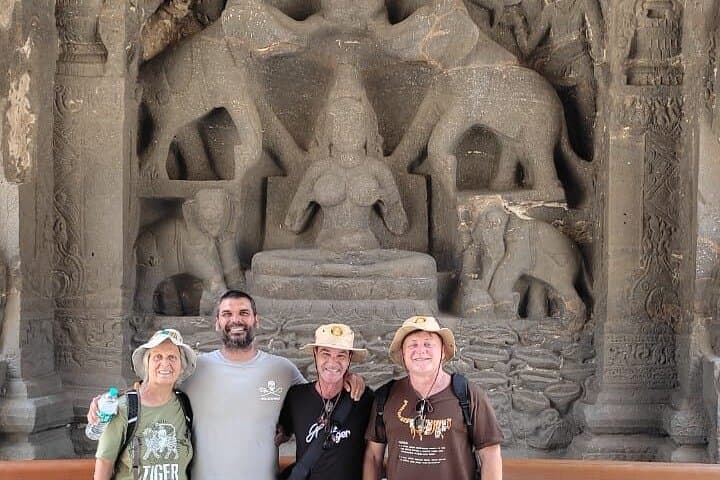
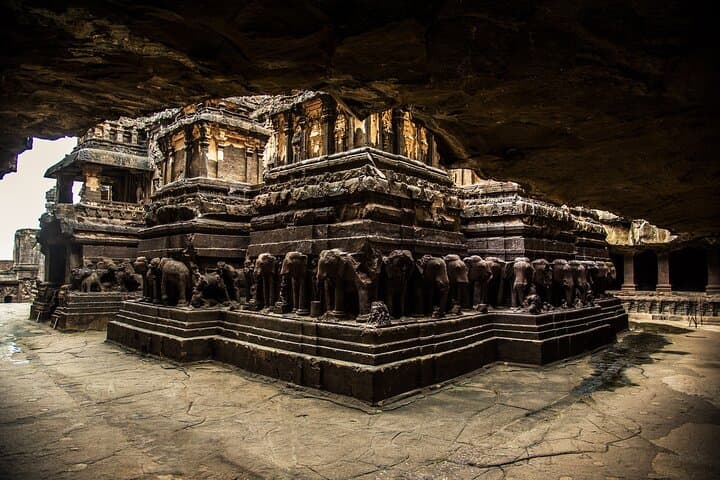

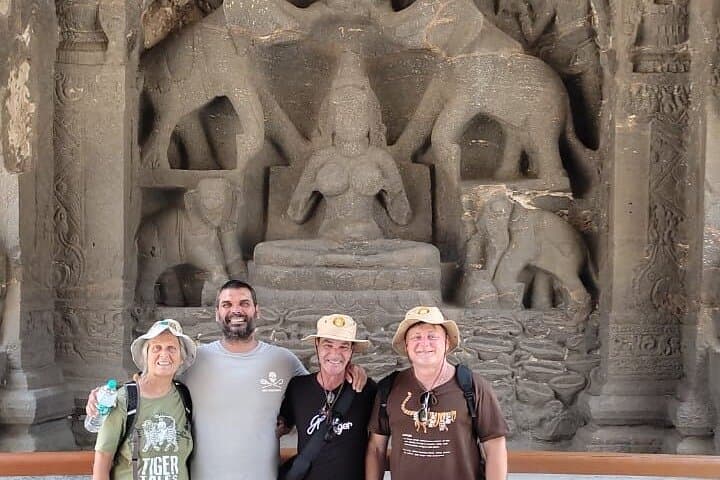
The day starts on a warm Aurangabad morning as your driver eases the car onto the open road and the Deccan plateau stretches out like worked stone. By the time you reach Ellora, the cliff face seems to breathe history: carved sanctuaries cut directly into solid basalt, steps worn by centuries of feet and wind.
The day starts on a warm Aurangabad morning as your driver eases the car onto the open road and the Deccan plateau stretches out like worked stone. By the time you reach Ellora, the cliff face seems to breathe history: carved sanctuaries cut directly into solid basalt, steps worn by centuries of feet and wind.
Ellora is a UNESCO World Heritage Site, a complex of 34 rock-cut temples and monasteries built roughly between the 6th and 10th centuries CE for Hindu, Buddhist and Jain faiths—Kailasa (Cave 16) alone rewrites expectations with its monolithic scale. Pitalkhora, about 50 km farther, pushes the timeline back: pockets of Buddhist chaitya architecture and faded sculptures that date to around the 2nd century BCE, early evidence of rock-cut monastic life in this region.
Geology here is blunt and honest—layered Deccan basalt that artisans peeled and sculpted into interiors, reliefs and facades. Local guides thread stories of patronage, iconography and the shifting religious landscape as you step between cell-like viharas and towering mandapas.
Practical edge: expect uneven stone steps, narrow passageways and dust—comfortable walking shoes and sun protection are essential. The trip runs as a long day (hotel pickup early morning, return by evening), with entrance fees and lunch typically separate. Photography is allowed in many areas but avoid flash near fragile frescoes. Pace the visit: allow time at key caves to let the scale and detail register; the car provides a cooling pause between sites. This is a cultural, moderately active day that rewards curiosity and steady legs.