THE ADVENTURE COLLECTIVE® · Independent discovery and booking for outdoor travel

A private two-day sedan tour from Aurangabad that pairs Ajanta’s ancient painted caves with Ellora’s monumental rock-cut temples. Practical route details, timings, and what to pack for comfortable, informed sightseeing.
A private two-day sedan tour from Aurangabad that pairs Ajanta’s ancient painted caves with Ellora’s monumental rock-cut temples. Practical route details, timings, and what to pack for comfortable, informed sightseeing.
Dawn breaks over the Deccan Plateau and the sedan hums out of Aurangabad, air conditioning cutting through the early dust as the road narrows toward carved rock faces. The drive to Ajanta is a study in flat fields giving way to a river valley where cliffs suddenly reveal banded cave mouths—ancient cells and prayer halls chiselled into basalt.
Verified experiences and guided adventures in the surrounding area.
Operated by Liberty Travel House · Aurangabad, Maharashtra
Dawn breaks over the Deccan Plateau and the sedan hums out of Aurangabad, air conditioning cutting through the early dust as the road narrows toward carved rock faces. The drive to Ajanta is a study in flat fields giving way to a river valley where cliffs suddenly reveal banded cave mouths—ancient cells and prayer halls chiselled into basalt.
Ajanta’s frescoed interiors date from the 2nd century BCE to the 5th century CE; paint and plaster survive in cool, shadowed chaityas that reward close, slow viewing. Geologically the caves sit in Deccan Trap basalt, a hard canvas that helped preserve fine sculptural detail. Ellora, nearer Aurangabad, shifts the story: here multi-religious workshops produced viharas, temples and the monolithic Kailasa, cut top-down in the 8th century — a pilgrimage of stone and ambition.
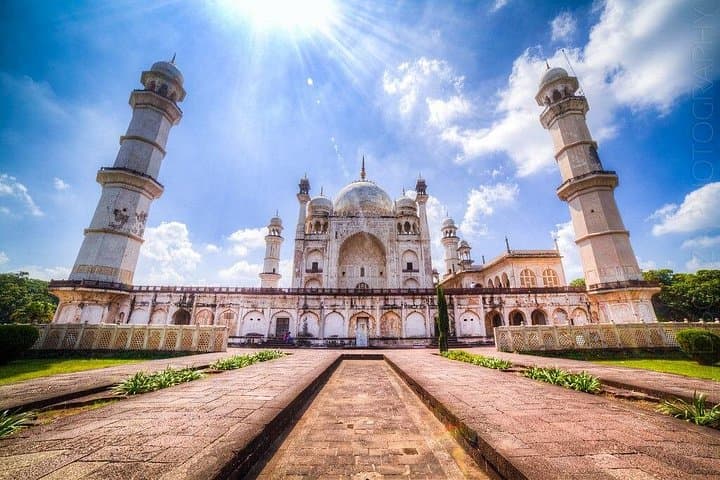
Local culture bubbles up in roadside tea stalls, the Mughal-era Bibi Ka Maqbara, and the crenellated Daulatabad Fort where medieval rulers tested the plateau’s defenses. Guides will thread history with logistics: Ajanta sits about 100 km (≈2 hours) from Aurangabad; caves are 4 km from the car park with a shuttle every 15 minutes. Expect 2–3 hours at Ajanta and 2–3 hours at Ellora if you move deliberately.
Practical edge: wear sturdy shoes for uneven steps, bring sun protection and 1–2 liters of water per person, and plan visits early morning or late afternoon to avoid peak heat and crowds. Tickets and shuttle rides are purchased at site kiosks; reserve the private car early to lock preferred pickup and timing. This two-day loop balances long drives with measured exploration, letting the caves’ silence speak for themselves.
easy.
2 days.
Suitable for travelers in average fitness; involves short to moderate walks and stair climbs inside caves.
The road distance is about 100 km and typically takes around two hours each way, depending on traffic and road conditions.
This tour description notes admission is not included; the guide or driver can help you purchase entry and the 4 km shuttle at Ajanta.
Many areas are listed as wheelchair accessible, but cave interiors include steps and uneven surfaces; accessibility may be limited inside specific caves.
Yes — the operator emphasizes traveler liberty and private transport allows adjustments to pickup times and site pacing, subject to permit and timing constraints.
Ajanta and Ellora are UNESCO-inscribed sites that span Buddhist, Hindu and Jain traditions from roughly 2nd century BCE through the early medieval period, reflecting religious and artistic evolution on the Deccan Plateau.
Both sites are sensitive to humidity, light and human traffic; photographers should avoid flash on murals, stick to paths and follow site rules to limit wear.
Liberty Travel House operates guided outdoor trips and adventures with an emphasis on safety, stewardship, and memorable experiences.
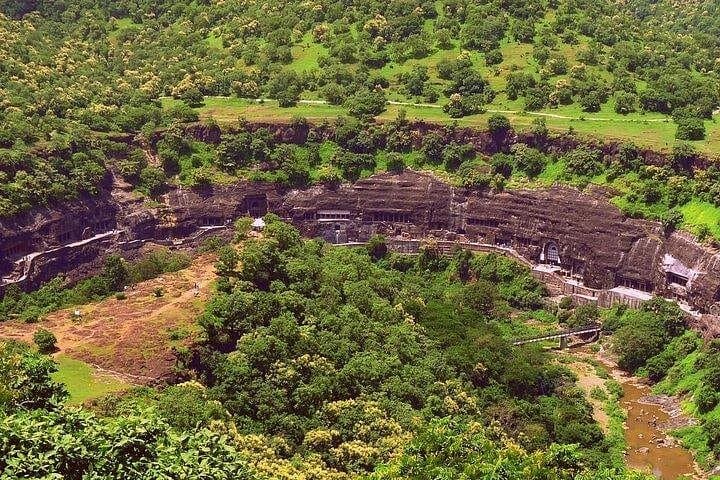

Dawn breaks over the Deccan Plateau and the sedan hums out of Aurangabad, air conditioning cutting through the early dust as the road narrows toward carved rock faces. The drive to Ajanta is a study in flat fields giving way to a river valley where cliffs suddenly reveal banded cave mouths—ancient cells and prayer halls chiselled into basalt.
Dawn breaks over the Deccan Plateau and the sedan hums out of Aurangabad, air conditioning cutting through the early dust as the road narrows toward carved rock faces. The drive to Ajanta is a study in flat fields giving way to a river valley where cliffs suddenly reveal banded cave mouths—ancient cells and prayer halls chiselled into basalt.
Ajanta’s frescoed interiors date from the 2nd century BCE to the 5th century CE; paint and plaster survive in cool, shadowed chaityas that reward close, slow viewing. Geologically the caves sit in Deccan Trap basalt, a hard canvas that helped preserve fine sculptural detail. Ellora, nearer Aurangabad, shifts the story: here multi-religious workshops produced viharas, temples and the monolithic Kailasa, cut top-down in the 8th century — a pilgrimage of stone and ambition.
Local culture bubbles up in roadside tea stalls, the Mughal-era Bibi Ka Maqbara, and the crenellated Daulatabad Fort where medieval rulers tested the plateau’s defenses. Guides will thread history with logistics: Ajanta sits about 100 km (≈2 hours) from Aurangabad; caves are 4 km from the car park with a shuttle every 15 minutes. Expect 2–3 hours at Ajanta and 2–3 hours at Ellora if you move deliberately.
Practical edge: wear sturdy shoes for uneven steps, bring sun protection and 1–2 liters of water per person, and plan visits early morning or late afternoon to avoid peak heat and crowds. Tickets and shuttle rides are purchased at site kiosks; reserve the private car early to lock preferred pickup and timing. This two-day loop balances long drives with measured exploration, letting the caves’ silence speak for themselves.