THE ADVENTURE COLLECTIVE® · Independent discovery and booking for outdoor travel

Spend a full day tracing Sri Lanka’s ancient capital and the soaring Avukana Buddha. This private day tour from Colombo packs UNESCO monuments, stupas and carved baths into a single, accessible cultural route.
Spend a full day tracing Sri Lanka’s ancient capital and the soaring Avukana Buddha. This private day tour from Colombo packs UNESCO monuments, stupas and carved baths into a single, accessible cultural route.
You step out of the air‑conditioned vehicle into sharp sunlight and a flat, open plain where stupas and tank walls rise like the ruins of a timepiece. The road from Colombo unwinds through paddy fields and roadside temples; after roughly four hours the Avukana Buddha appears, carved from living granite and standing over 40 feet tall, its robe and gesture carved with deliberate calm.
Verified experiences and guided adventures in the surrounding area.
Operated by Classical Lanka Tours · Anuradhapura, North Central Province
You step out of the air‑conditioned vehicle into sharp sunlight and a flat, open plain where stupas and tank walls rise like the ruins of a timepiece. The road from Colombo unwinds through paddy fields and roadside temples; after roughly four hours the Avukana Buddha appears, carved from living granite and standing over 40 feet tall, its robe and gesture carved with deliberate calm.
Anuradhapura was Sri Lanka’s first major capital, a UNESCO World Heritage site whose brick stupas, stone moon‑stones and irrigation tanks date from the 4th century BCE onward. Geology here is ancient gneiss and granite; the monuments are built from local stone and fired brick that have weathered monsoons for millennia. Culture is overt: monks move between shrines, lay visitors leave offerings at the Jaya Sri Maha Bodhi—the sapling said to come from the Bodhi tree at Bodh Gaya.
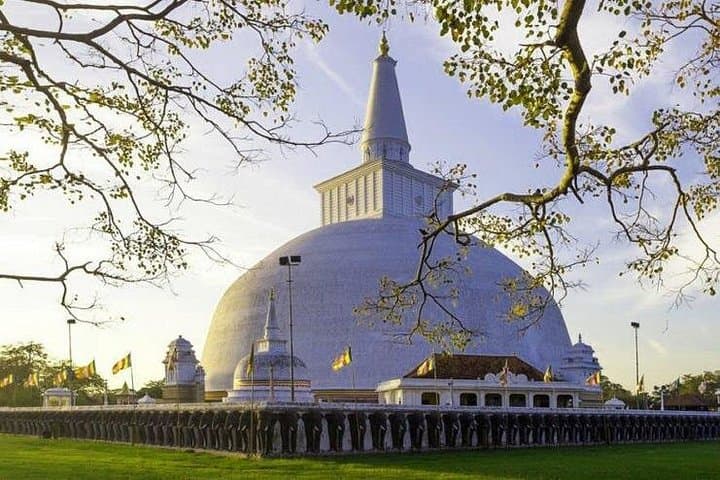
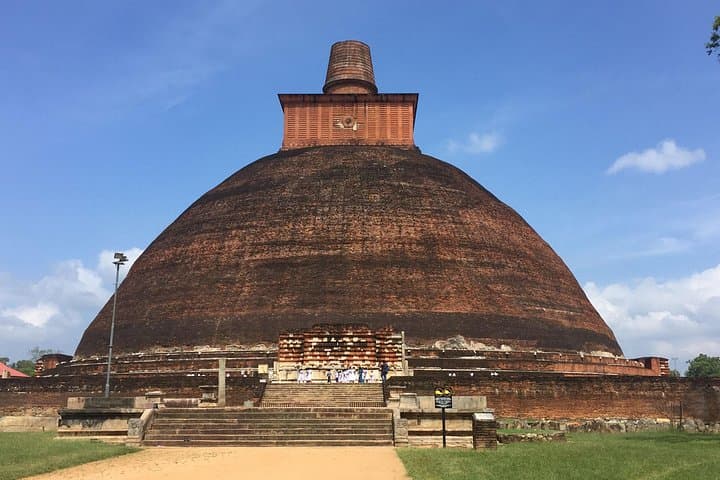
Expect a day of short walks on packed earth and stone, low‑grade heat, and frequent shade breaks. The itinerary moves fast—Aukana, Ruwanwelisaya, Jaya Sri Maha Bodhi, Jetavanaramaya and the bathing pools—so bring modest clothing for temple entry, covered shoulders and knees, and slip‑on shoes for quick removals.
Practical guidance: start early to avoid the afternoon heat, carry at least 2 liters of water, apply reef‑safe sun protection, and keep camera batteries charged—details in the ruins reveal themselves at close range. The tour balances cultural depth and logistical ease: a full day of heritage, readable history, and strong visual rewards for minimal exertion.
easy.
10–12 hours.
Suitable for most travelers with basic mobility; involves short walks on uneven stone and packed earth
Plan on around four hours each way depending on traffic; the full tour is approximately 10–12 hours including stops.
This tour lists entrance tickets for key sites such as Aukana and main Anuradhapura monuments as included in the price.
The tour notes wheelchair‑accessible transportation, but many ancient sites have uneven surfaces and steps—check accessibility for specific monuments before booking.
Yes — bottled water and lunch are included; bringing extra water or snacks is still advisable for hot days.
Anuradhapura was an early Sinhalese capital from the 4th century BCE and became a center of Theravāda Buddhism; many stupas and tanks date from successive royal dynasties.
The site is managed as a World Heritage area—respect signposted routes, avoid touching fragile carvings and use refillable bottles to reduce plastic waste.
Classical Lanka Tours operates guided outdoor trips and adventures with an emphasis on safety, stewardship, and memorable experiences.
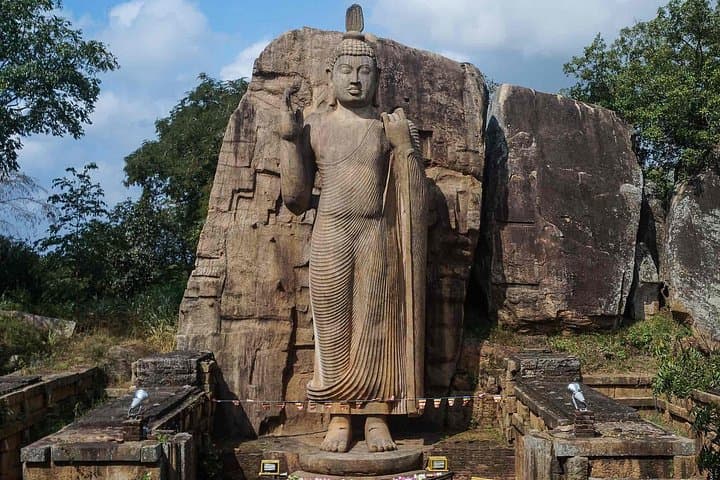

You step out of the air‑conditioned vehicle into sharp sunlight and a flat, open plain where stupas and tank walls rise like the ruins of a timepiece. The road from Colombo unwinds through paddy fields and roadside temples; after roughly four hours the Avukana Buddha appears, carved from living granite and standing over 40 feet tall, its robe and gesture carved with deliberate calm.
You step out of the air‑conditioned vehicle into sharp sunlight and a flat, open plain where stupas and tank walls rise like the ruins of a timepiece. The road from Colombo unwinds through paddy fields and roadside temples; after roughly four hours the Avukana Buddha appears, carved from living granite and standing over 40 feet tall, its robe and gesture carved with deliberate calm.
Anuradhapura was Sri Lanka’s first major capital, a UNESCO World Heritage site whose brick stupas, stone moon‑stones and irrigation tanks date from the 4th century BCE onward. Geology here is ancient gneiss and granite; the monuments are built from local stone and fired brick that have weathered monsoons for millennia. Culture is overt: monks move between shrines, lay visitors leave offerings at the Jaya Sri Maha Bodhi—the sapling said to come from the Bodhi tree at Bodh Gaya.
Expect a day of short walks on packed earth and stone, low‑grade heat, and frequent shade breaks. The itinerary moves fast—Aukana, Ruwanwelisaya, Jaya Sri Maha Bodhi, Jetavanaramaya and the bathing pools—so bring modest clothing for temple entry, covered shoulders and knees, and slip‑on shoes for quick removals.
Practical guidance: start early to avoid the afternoon heat, carry at least 2 liters of water, apply reef‑safe sun protection, and keep camera batteries charged—details in the ruins reveal themselves at close range. The tour balances cultural depth and logistical ease: a full day of heritage, readable history, and strong visual rewards for minimal exertion.