THE ADVENTURE COLLECTIVE® · Independent discovery and booking for outdoor travel

Step aboard Tradewind 3 out of Augusta for a reliable two-hour whale watching tour. Expect close sightings of humpback whales, expert narration, and practical onboard amenities for comfort.
Step aboard Tradewind 3 out of Augusta for a reliable two-hour whale watching tour. Expect close sightings of humpback whales, expert narration, and practical onboard amenities for comfort.
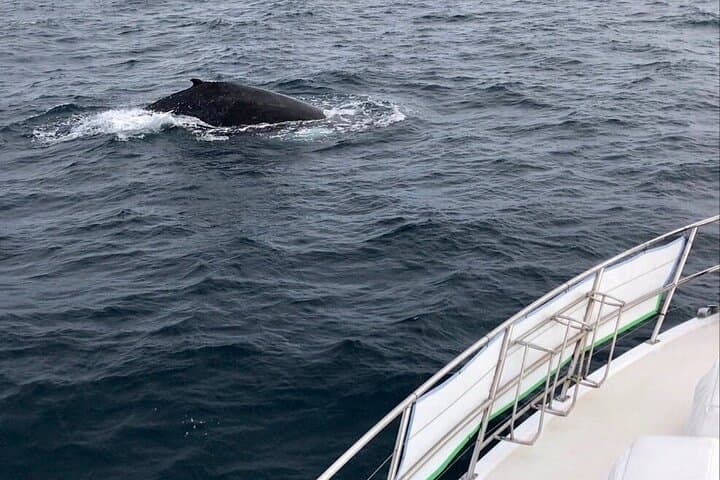
The boat slips from Augusta’s jetty and immediately the ocean announces itself — a low, steady swell that pushes and guides the hull. On Tradewind 3, passengers climb the flybridge and the bow, eyes scanning the channel toward deep water where blows and flukes puncture the horizon. Sea spray dares you forward; the harbor rocks hold their slow applause.
Verified experiences and guided adventures in the surrounding area.
Operated by All Sea Charters · Augusta, Western Australia
The boat slips from Augusta’s jetty and immediately the ocean announces itself — a low, steady swell that pushes and guides the hull. On Tradewind 3, passengers climb the flybridge and the bow, eyes scanning the channel toward deep water where blows and flukes puncture the horizon. Sea spray dares you forward; the harbor rocks hold their slow applause.
This stretch of coastline sits at the southwestern tip of Australia where the Leeuwin Current shapes local seas and currents. For millennia the Wardandi and Minang Noongar people have known these waters; later, European maritime traffic mapped the cape and lighthouses that still mark tricky approaches. Geologically, the coastline alternates granite headlands and sheltered bays, creating resting spots for migrating whales.
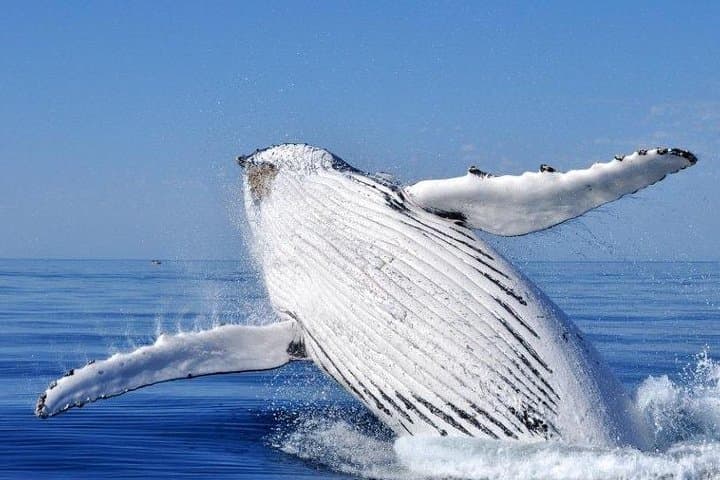
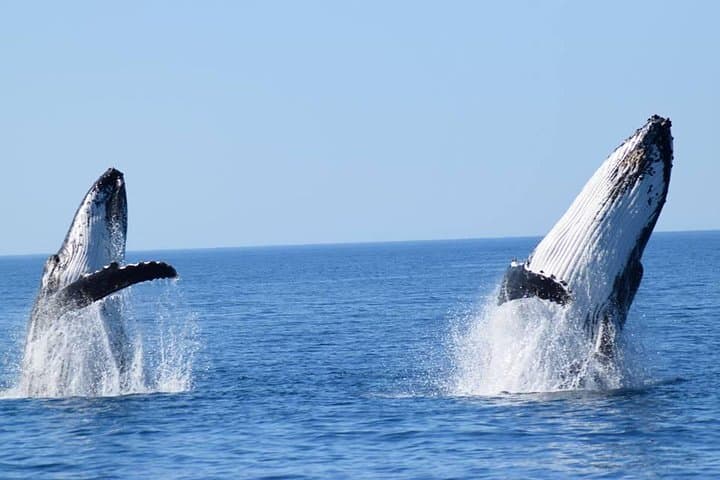
On a typical two-hour trip travelers should expect multiple sightings of humpback whales, and occasionally southern right whales, as they pause to rest or play in Exmouth’s cooler waters before heading north. Guides will narrate behavior, point out blows, breaches, and tail-lifts, and explain safe viewing practices.
Practical tips: dress warm and windproof even in summer — ocean conditions change fast — and bring a camera with a telephoto lens or zoom. If you are prone to seasickness, try the onboard anti-nausea wristbands or ginger tablets and sit midship where motion feels gentlest. Boats follow local regulations to keep distance and reduce disturbance; listen to crew briefings on approach and photography. Tours typically depart from Augusta, run about two hours, and are suitable for most fitness levels. The experience balances close, respectful observation with hands-on interpretation — a focused, reliable chance to see whales in the wild.
easy.
2 hours.
Suitable for most fitness levels; requires ability to board a small boat and stand for short periods
The main migration window for humpbacks and southern right whales is during the austral winter and spring months; local tours often run peak sightings from June to November.
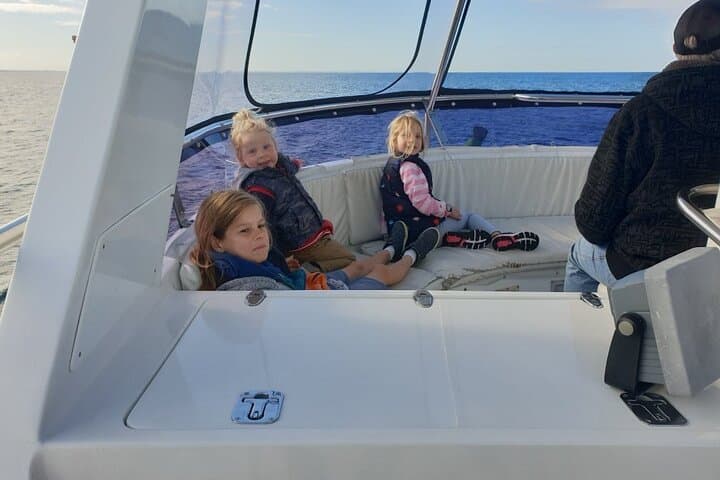
Yes — tours are family-friendly, but children should be supervised and able to follow safety briefings; check operator age policies when booking.
Tours may be cancelled for safety in rough conditions; operators typically refund or reschedule if cancelled due to weather (check the 24-hour cancellation policy).
You can photograph whales from the permitted viewing distance; crew will manage approaches to ensure safety and minimal disturbance, but a zoom lens greatly improves close-up shots.
Augusta sits near Cape Leeuwin, a historic maritime waypoint; the area is part of Noongar country with longstanding Indigenous connections to the sea.
Operators follow regional guidelines to minimize disturbance to whales; visitors are encouraged to avoid single-use plastics and respect wildlife viewing distances.
All Sea Charters operates guided outdoor trips and adventures with an emphasis on safety, stewardship, and memorable experiences.
The boat slips from Augusta’s jetty and immediately the ocean announces itself — a low, steady swell that pushes and guides the hull. On Tradewind 3, passengers climb the flybridge and the bow, eyes scanning the channel toward deep water where blows and flukes puncture the horizon. Sea spray dares you forward; the harbor rocks hold their slow applause.
The boat slips from Augusta’s jetty and immediately the ocean announces itself — a low, steady swell that pushes and guides the hull. On Tradewind 3, passengers climb the flybridge and the bow, eyes scanning the channel toward deep water where blows and flukes puncture the horizon. Sea spray dares you forward; the harbor rocks hold their slow applause.
This stretch of coastline sits at the southwestern tip of Australia where the Leeuwin Current shapes local seas and currents. For millennia the Wardandi and Minang Noongar people have known these waters; later, European maritime traffic mapped the cape and lighthouses that still mark tricky approaches. Geologically, the coastline alternates granite headlands and sheltered bays, creating resting spots for migrating whales.
On a typical two-hour trip travelers should expect multiple sightings of humpback whales, and occasionally southern right whales, as they pause to rest or play in Exmouth’s cooler waters before heading north. Guides will narrate behavior, point out blows, breaches, and tail-lifts, and explain safe viewing practices.
Practical tips: dress warm and windproof even in summer — ocean conditions change fast — and bring a camera with a telephoto lens or zoom. If you are prone to seasickness, try the onboard anti-nausea wristbands or ginger tablets and sit midship where motion feels gentlest. Boats follow local regulations to keep distance and reduce disturbance; listen to crew briefings on approach and photography. Tours typically depart from Augusta, run about two hours, and are suitable for most fitness levels. The experience balances close, respectful observation with hands-on interpretation — a focused, reliable chance to see whales in the wild.