THE ADVENTURE COLLECTIVE® · Independent discovery and booking for outdoor travel

Move through ancient rock-cut halls with an expert voice in your ear. This self-guided audio walking tour of Ellora’s Buddhist caves lets you explore on your own schedule while learning the architectural and cultural stories carved into the basalt.
Move through ancient rock-cut halls with an expert voice in your ear. This self-guided audio walking tour of Ellora’s Buddhist caves lets you explore on your own schedule while learning the architectural and cultural stories carved into the basalt.
The rock face breathes history as you stand at Ellora’s western flank, the carved caves slicing into basalt like chapters of a long-made book. An audio guide unfolds a quiet narrator’s footsteps as you move through long Chaitya halls and intimate shrine rooms; wind and birds punctuate the commentary, and the stone seems to answer back.
Verified experiences and guided adventures in the surrounding area.
Operated by HopOn India · Aurangabad, Maharashtra
The rock face breathes history as you stand at Ellora’s western flank, the carved caves slicing into basalt like chapters of a long-made book. An audio guide unfolds a quiet narrator’s footsteps as you move through long Chaitya halls and intimate shrine rooms; wind and birds punctuate the commentary, and the stone seems to answer back.
Carved between the 6th and 9th centuries CE, the Ellora complex stitches Buddhist, Hindu and Jain architecture along a volcanic escarpment formed by Deccan Plateau lava flows. The dozen Buddhist caves include early Chaitya halls, monastic cells and finely cut reliefs that document devotional life, pilgrimage routes and evolving iconography tied to the Buddha and attendant bodhisattvas. Local culture still orients around pilgrimage and the surrounding villages retain craft traditions tied to the site.
This HopOn India audio walk suits independent travelers who prefer moving at their own pace — you’ll rely on a smartphone and headphones rather than a live guide. Expect uneven stone steps, low doorways and tight, echoing spaces; the route covers key Buddhist caves and allows side visits to adjacent Hindu monuments.
Practical notes: start early to avoid midday heat and crowds, bring a fully charged phone and offline maps, and buy or confirm entry tickets at the site (audio access is separate). Observe signage: some areas restrict touching or photography. Hydrate between caves, wear sturdy shoes for basalt surfaces, and leave no trace — the carvings are fragile and conservation-dependent.
easy.
1–1.5 hours.
Suitable for most fitness levels; requires walking and negotiating steps and narrow passages.
No — the HopOn audio tour is self-guided and designed to be used independently on your schedule.
Ellora has many steps and uneven surfaces; some areas may be difficult for those with limited mobility, though entrance areas are accessible.
Admission to Ellora is separate; the audio tour provides commentary but does not cover park entry fees or tickets.
HopOn typically offers multiple language tracks—check the app listing before purchase for available languages.
Ellora’s caves were cut into Deccan basalt between roughly the 6th and 9th centuries CE and host Buddhist, Hindu and Jain monuments reflecting centuries of religious patronage.
Visitor pressure and weathering threaten carved surfaces; follow designated paths, avoid touching reliefs, and carry out all trash to reduce impact.
HopOn India operates guided outdoor trips and adventures with an emphasis on safety, stewardship, and memorable experiences.
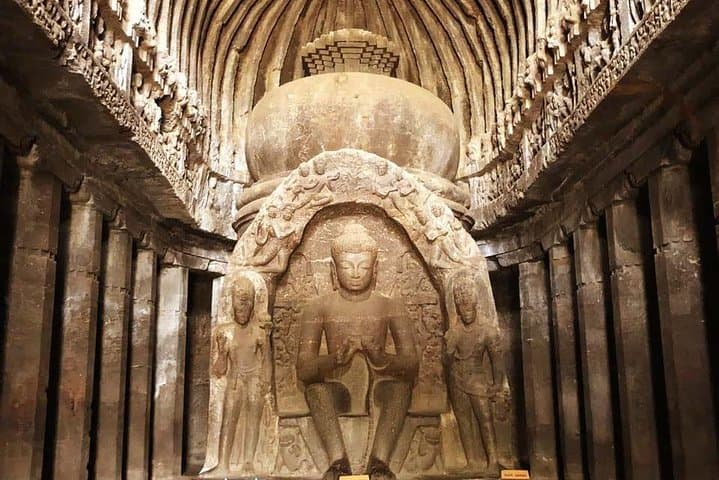
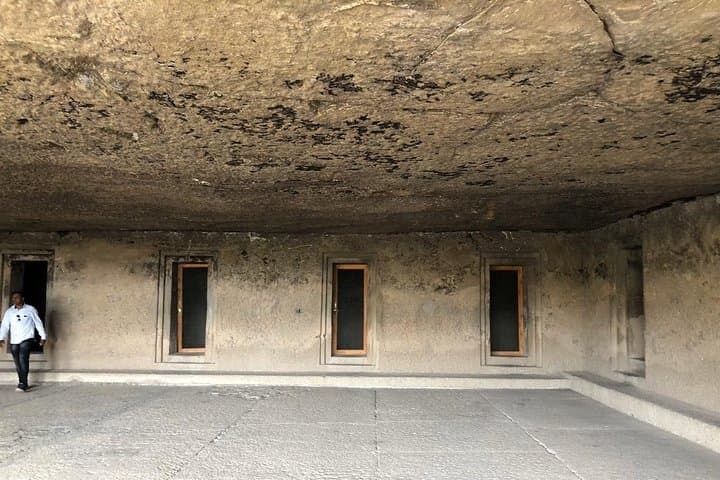
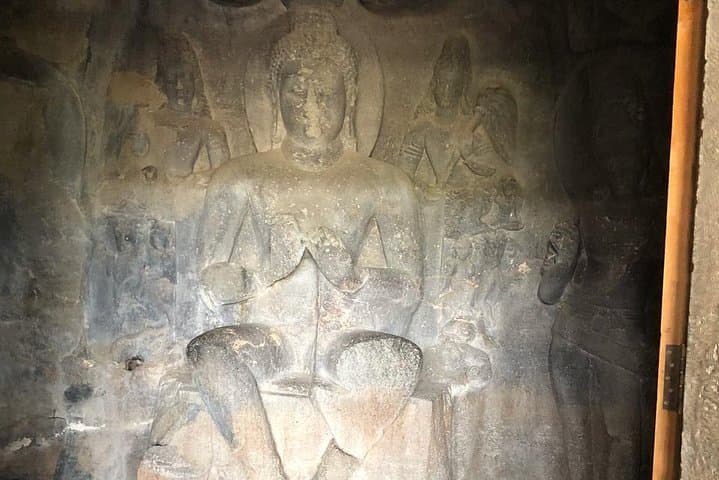
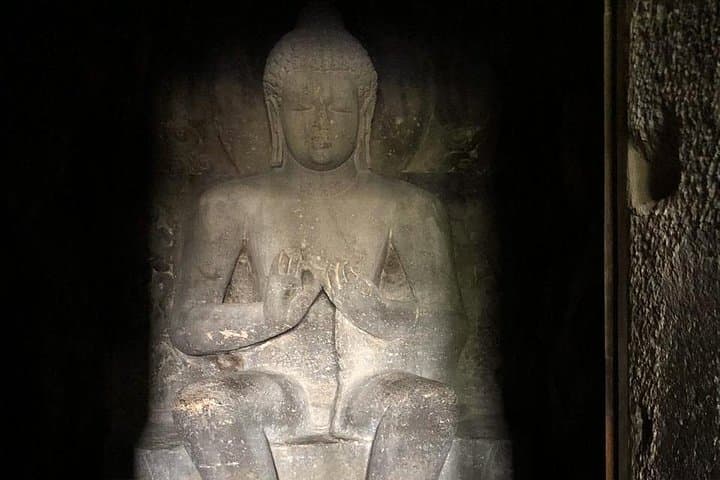
The rock face breathes history as you stand at Ellora’s western flank, the carved caves slicing into basalt like chapters of a long-made book. An audio guide unfolds a quiet narrator’s footsteps as you move through long Chaitya halls and intimate shrine rooms; wind and birds punctuate the commentary, and the stone seems to answer back.
The rock face breathes history as you stand at Ellora’s western flank, the carved caves slicing into basalt like chapters of a long-made book. An audio guide unfolds a quiet narrator’s footsteps as you move through long Chaitya halls and intimate shrine rooms; wind and birds punctuate the commentary, and the stone seems to answer back.
Carved between the 6th and 9th centuries CE, the Ellora complex stitches Buddhist, Hindu and Jain architecture along a volcanic escarpment formed by Deccan Plateau lava flows. The dozen Buddhist caves include early Chaitya halls, monastic cells and finely cut reliefs that document devotional life, pilgrimage routes and evolving iconography tied to the Buddha and attendant bodhisattvas. Local culture still orients around pilgrimage and the surrounding villages retain craft traditions tied to the site.
This HopOn India audio walk suits independent travelers who prefer moving at their own pace — you’ll rely on a smartphone and headphones rather than a live guide. Expect uneven stone steps, low doorways and tight, echoing spaces; the route covers key Buddhist caves and allows side visits to adjacent Hindu monuments.
Practical notes: start early to avoid midday heat and crowds, bring a fully charged phone and offline maps, and buy or confirm entry tickets at the site (audio access is separate). Observe signage: some areas restrict touching or photography. Hydrate between caves, wear sturdy shoes for basalt surfaces, and leave no trace — the carvings are fragile and conservation-dependent.