THE ADVENTURE COLLECTIVE® · Independent discovery and booking for outdoor travel

Learn wreck-specific dive techniques in the Hauraki Gulf with guided dives, full gear hire and instructor-led training. This course builds on Open Water certification and focuses on safe, responsible exploration of sunken vessels.
Learn wreck-specific dive techniques in the Hauraki Gulf with guided dives, full gear hire and instructor-led training. This course builds on Open Water certification and focuses on safe, responsible exploration of sunken vessels.
You step off the dive boat into a bright New Zealand morning; the Hauraki Gulf stretches flat and pale, a ribbon of kelp beds and stony breaks between the surface and the shapes below. Masks fog for a heartbeat, regulators click, and then the ocean pulls you down toward rusted beams and coral-touched plating where history sits quietly on the seafloor.
Verified experiences and guided adventures in the surrounding area.
Operated by New Zealand Diving Ltd · Auckland, Auckland
You step off the dive boat into a bright New Zealand morning; the Hauraki Gulf stretches flat and pale, a ribbon of kelp beds and stony breaks between the surface and the shapes below. Masks fog for a heartbeat, regulators click, and then the ocean pulls you down toward rusted beams and coral-touched plating where history sits quietly on the seafloor.
The Gulf and wider Auckland coastline have long been corridors for shipping, fishing and coastal trade—so wrecks here span eras from early steamers to deliberately scuttled vessels that now act as artificial reefs. Geology is simple but stark: volcanic rocks from nearby Rangitoto give way to sandy basins and kelp forests that alter currents and visibility, creating micro-environments around wrecks.
This specialty course teaches wreck-specific skills—site assessment, penetration planning, line technique, and buoyancy control—built on an existing Open Water certification. Expect two guided tank dives from a dive charter, full gear hire, online theory and instructor-led briefings. Practical notes: you’ll practice reel work in shallow sections before deeper approaches, follow strict no-touch policies, log all dives, and carry a SMB and dive computer.
Timing matters; choose calm, clear days for best visibility and plan surface intervals with your instructor. Bring warm layers for the boat ride, a printed certification and recent dive medical if required. The experience balances archaeology and ecology: you’re learning to read wrecks as both historical artifacts and living habitats while following best-practice safety and conservation protocols.
moderate.
6–10 hours.
Moderate fitness: comfortable swimming, able to carry kit and perform repetitive dives with surface intervals
Yes—participants must hold a minimum Open Water certification and provide proof prior to diving.
Depths vary by site; many local wrecks sit between 12–30 meters, but specific dive plans will be set by your instructor.
No—skills cover both external survey and safe penetration techniques, but confined-penetration is only done under strict instructor supervision and with proper training.
You must complete a dive medical declaration; if any red flags appear you may need sign-off from a dive physician before participating.
Many Auckland-area wrecks are relics of coastal trade and WWII-era activity; some were later scuttled intentionally to create reefs and training sites.
Operators follow strict no-touch policies and local rules; divers are encouraged to practice buoyancy control and leave artifacts in place to protect fragile marine life.
New Zealand Diving Ltd operates guided outdoor trips and adventures with an emphasis on safety, stewardship, and memorable experiences.
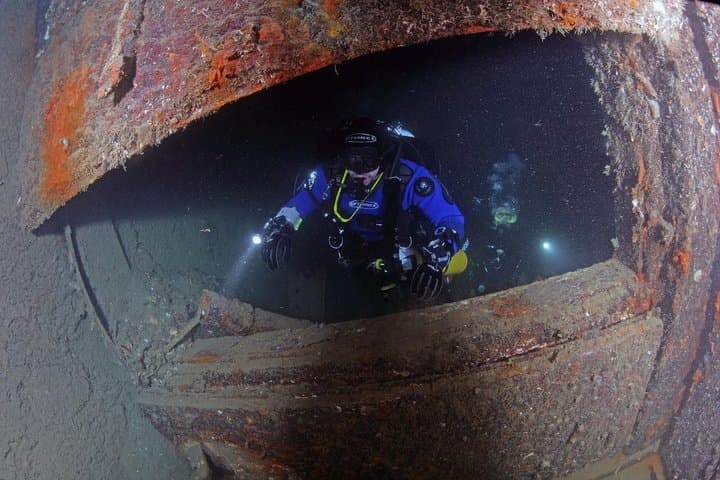
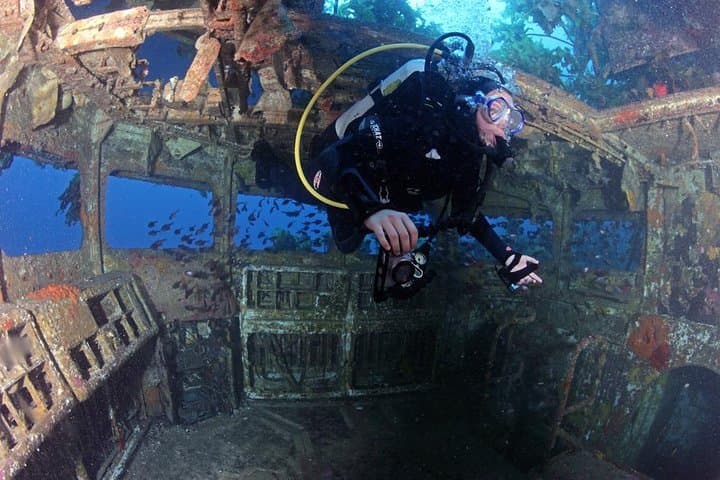
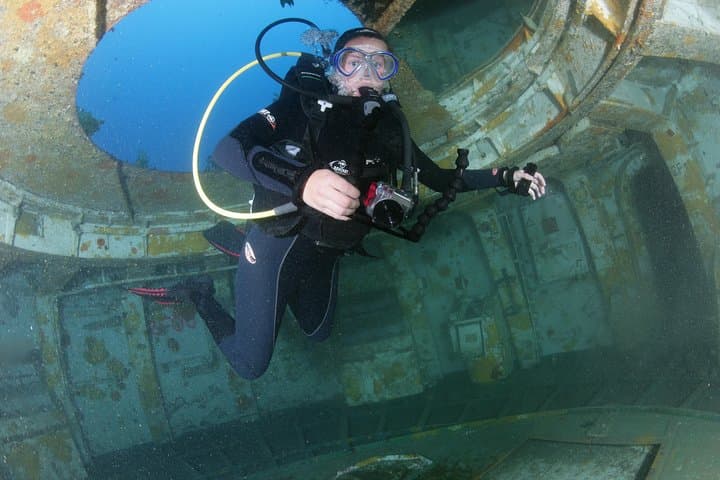
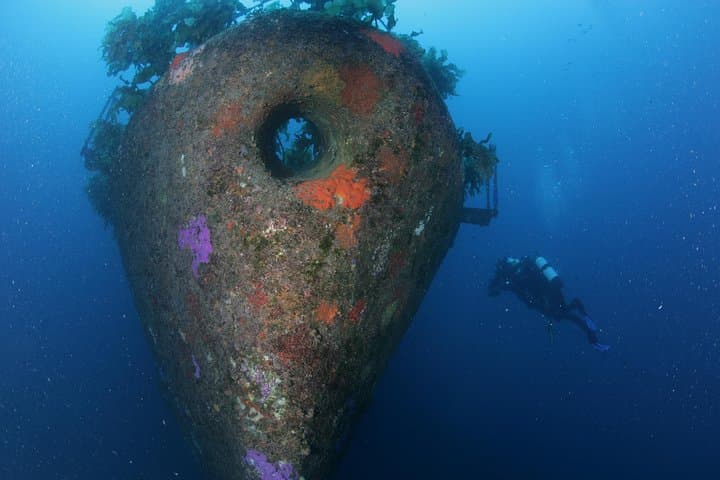
You step off the dive boat into a bright New Zealand morning; the Hauraki Gulf stretches flat and pale, a ribbon of kelp beds and stony breaks between the surface and the shapes below. Masks fog for a heartbeat, regulators click, and then the ocean pulls you down toward rusted beams and coral-touched plating where history sits quietly on the seafloor.
You step off the dive boat into a bright New Zealand morning; the Hauraki Gulf stretches flat and pale, a ribbon of kelp beds and stony breaks between the surface and the shapes below. Masks fog for a heartbeat, regulators click, and then the ocean pulls you down toward rusted beams and coral-touched plating where history sits quietly on the seafloor.
The Gulf and wider Auckland coastline have long been corridors for shipping, fishing and coastal trade—so wrecks here span eras from early steamers to deliberately scuttled vessels that now act as artificial reefs. Geology is simple but stark: volcanic rocks from nearby Rangitoto give way to sandy basins and kelp forests that alter currents and visibility, creating micro-environments around wrecks.
This specialty course teaches wreck-specific skills—site assessment, penetration planning, line technique, and buoyancy control—built on an existing Open Water certification. Expect two guided tank dives from a dive charter, full gear hire, online theory and instructor-led briefings. Practical notes: you’ll practice reel work in shallow sections before deeper approaches, follow strict no-touch policies, log all dives, and carry a SMB and dive computer.
Timing matters; choose calm, clear days for best visibility and plan surface intervals with your instructor. Bring warm layers for the boat ride, a printed certification and recent dive medical if required. The experience balances archaeology and ecology: you’re learning to read wrecks as both historical artifacts and living habitats while following best-practice safety and conservation protocols.