THE ADVENTURE COLLECTIVE® · Independent discovery and booking for outdoor travel

Trace a compact North Island itinerary from Auckland to Rotorua that pairs Waitomo’s glowworm caves with Hobbiton’s movie-set charm and Te Puia’s geothermal and cultural displays. Perfect for travelers who want big landscapes and cultural context in two days.
Trace a compact North Island itinerary from Auckland to Rotorua that pairs Waitomo’s glowworm caves with Hobbiton’s movie-set charm and Te Puia’s geothermal and cultural displays. Perfect for travelers who want big landscapes and cultural context in two days.
Daylight unspools as an air-conditioned van peels out of Auckland and the North Island opens up: rolling dairy pastures, weathered limestone teeth, and steam rising from Rotorua’s sulphur springs like a landscape exhaling. On day one the tour threads into Waitomo’s underworld where a boat drifts beneath a ceiling freckled with glowworms—the grotto’s dark becomes a sky that chose to live underground. Later, the green bowls of Matamata reveal Hobbiton’s round doors and manicured hedgerows, a film set that reads like a lived-in village.
Verified experiences and guided adventures in the surrounding area.
Operated by Brightlane Luxury Transfers & Tours · Rotorua, Bay of Plenty
Daylight unspools as an air-conditioned van peels out of Auckland and the North Island opens up: rolling dairy pastures, weathered limestone teeth, and steam rising from Rotorua’s sulphur springs like a landscape exhaling. On day one the tour threads into Waitomo’s underworld where a boat drifts beneath a ceiling freckled with glowworms—the grotto’s dark becomes a sky that chose to live underground. Later, the green bowls of Matamata reveal Hobbiton’s round doors and manicured hedgerows, a film set that reads like a lived-in village.
The region blends volcanic geology and Māori tradition. Rotorua sits in a caldera of rhyolite and mud pools; Te Puia is both a geothermal museum and the home of the New Zealand Māori Arts and Crafts Institute, where carving and weaving continue living lineages. Waitomo’s caves formed in ancient limestone, carved by rivers that keep shaping caverns and natural bridges.
Practicalities are straightforward: this private two-day tour includes vehicle transport, one night twin-share accommodation in Rotorua, and entry to major sites (bookings for Waitomo and Hobbiton should be secured months ahead). Expect light walking, cave boardwalks and uneven paths at geothermal parks—sturdy footwear and a light rain layer are sensible. Mornings are best for clear photos; geothermal steam softens midday light.
Plan for variable weather, charge devices (on-board chargers are provided), and leave time for cultural interpretation at Te Puia. The trip balances cinematic nostalgia, subterranean wonder, and geothermal theatre—compact, accessible, and rich in place-based stories.
easy.
2 days (48 hours).
Suitable for most fitness levels—requires light walking, standing during guided tours, and navigating some uneven surfaces.
Yes—both popular sites require advance tickets and are often booked out months ahead; the tour recommends booking at least three months in advance.
Yes—this private tour is rated easy with light walking; however, cave access includes steps and dim lighting, so mobility limitations should be discussed with the operator.
The itinerary includes bottled water and transport; meals are generally not included—there will be opportunities to purchase food during stops or arrange dining in Rotorua.
Pickup from the airport is offered by the operator—confirm pickup point and flight details at booking to coordinate timing.
The area blends Māori craft traditions—Te Puia hosts the NZ Maori Arts and Crafts Institute—and European farming reshaped the Waikato and Bay of Plenty landscapes during the 19th century.
Cave and geothermal habitats are fragile; visitors should avoid touching formations or glowworms, stay on marked paths, and follow site-specific biosecurity rules.
Brightlane Luxury Transfers & Tours operates guided outdoor trips and adventures with an emphasis on safety, stewardship, and memorable experiences.
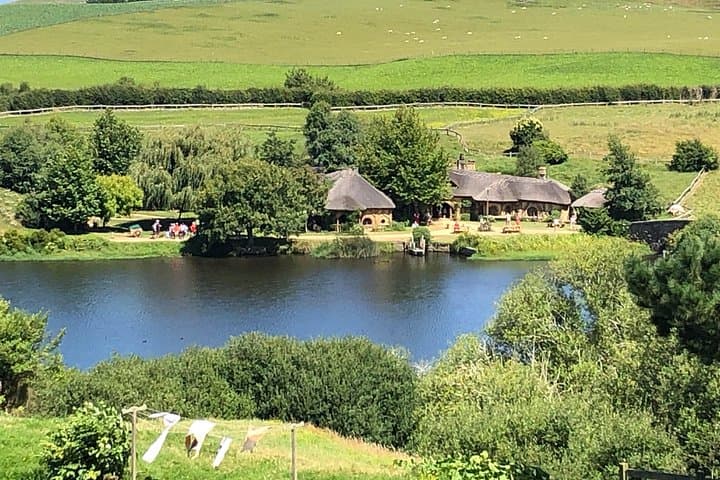
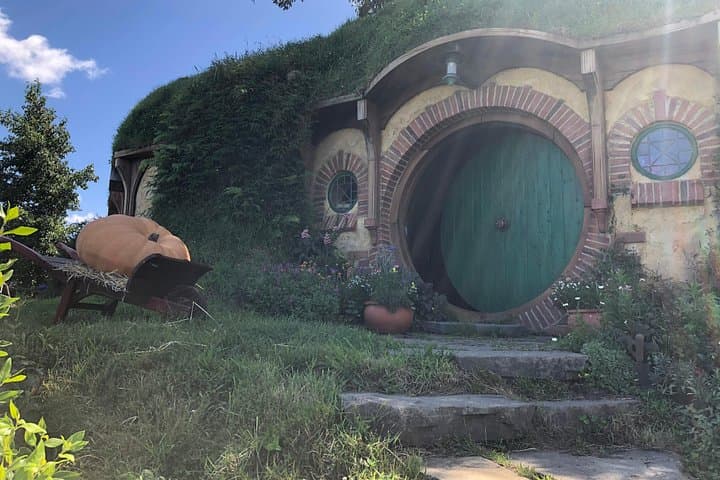
Daylight unspools as an air-conditioned van peels out of Auckland and the North Island opens up: rolling dairy pastures, weathered limestone teeth, and steam rising from Rotorua’s sulphur springs like a landscape exhaling. On day one the tour threads into Waitomo’s underworld where a boat drifts beneath a ceiling freckled with glowworms—the grotto’s dark becomes a sky that chose to live underground. Later, the green bowls of Matamata reveal Hobbiton’s round doors and manicured hedgerows, a film set that reads like a lived-in village.
Daylight unspools as an air-conditioned van peels out of Auckland and the North Island opens up: rolling dairy pastures, weathered limestone teeth, and steam rising from Rotorua’s sulphur springs like a landscape exhaling. On day one the tour threads into Waitomo’s underworld where a boat drifts beneath a ceiling freckled with glowworms—the grotto’s dark becomes a sky that chose to live underground. Later, the green bowls of Matamata reveal Hobbiton’s round doors and manicured hedgerows, a film set that reads like a lived-in village.
The region blends volcanic geology and Māori tradition. Rotorua sits in a caldera of rhyolite and mud pools; Te Puia is both a geothermal museum and the home of the New Zealand Māori Arts and Crafts Institute, where carving and weaving continue living lineages. Waitomo’s caves formed in ancient limestone, carved by rivers that keep shaping caverns and natural bridges.
Practicalities are straightforward: this private two-day tour includes vehicle transport, one night twin-share accommodation in Rotorua, and entry to major sites (bookings for Waitomo and Hobbiton should be secured months ahead). Expect light walking, cave boardwalks and uneven paths at geothermal parks—sturdy footwear and a light rain layer are sensible. Mornings are best for clear photos; geothermal steam softens midday light.
Plan for variable weather, charge devices (on-board chargers are provided), and leave time for cultural interpretation at Te Puia. The trip balances cinematic nostalgia, subterranean wonder, and geothermal theatre—compact, accessible, and rich in place-based stories.