THE ADVENTURE COLLECTIVE® · Independent discovery and booking for outdoor travel

Ride from desert to surf on a three-hour guided ATV loop to Migrino Beach, crossing dunes, dry riverbeds and ridgelines. Expect dust, dramatic geology, and the chance to spot migrating gray whales in winter months.
Ride from desert to surf on a three-hour guided ATV loop to Migrino Beach, crossing dunes, dry riverbeds and ridgelines. Expect dust, dramatic geology, and the chance to spot migrating gray whales in winter months.
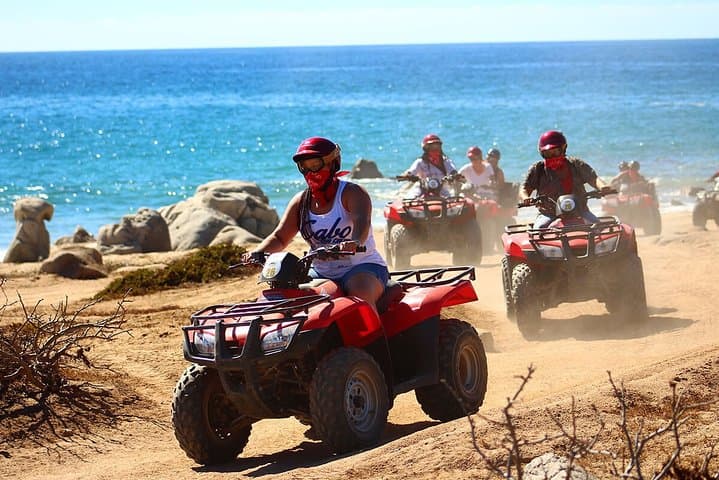
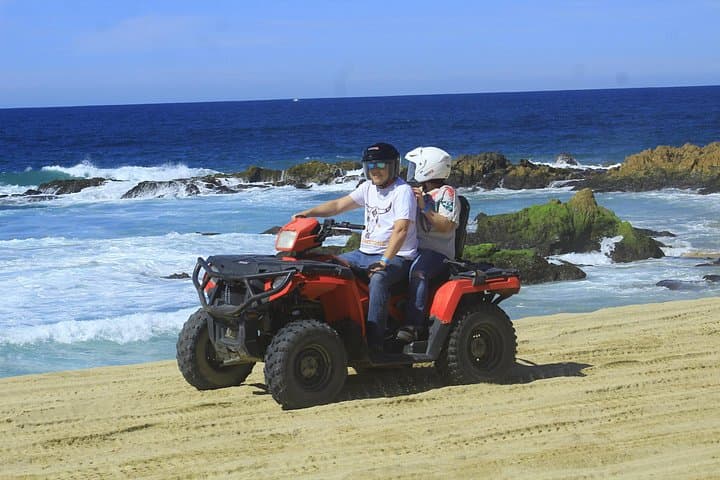
The engine thumps beneath you as the Baja desert opens up—baked ochre plains, sharp dunes rising like teeth, and a ribbon of white sand far below where the Pacific meets the shore. Within an hour the salt air returns, the desert’s dust giving way to the sound of waves and, in winter months, distant gray whale spouts as they migrate past the coast.
Verified experiences and guided adventures in the surrounding area.
Operated by Rancho Tours · Cabo San Lucas, Baja California Sur
The engine thumps beneath you as the Baja desert opens up—baked ochre plains, sharp dunes rising like teeth, and a ribbon of white sand far below where the Pacific meets the shore. Within an hour the salt air returns, the desert’s dust giving way to the sound of waves and, in winter months, distant gray whale spouts as they migrate past the coast.
This guided ATV tour runs about three hours, tracing dry riverbeds, coastal ridgelines and sand ramps that reveal the region’s volcanic and alluvial geology. The landscape here is shaped by infrequent but powerful wash events; riverbeds carve corridors through the desert and feed sand into the dunes that riders climb and descend. Human history is present but quiet—fishermen’s camps and ranching routes dot the margins, while Los Cabos’ modern tourism economy centers on accessible, high-adrenaline outings like this one.
Expect a mostly flat to rolling route with occasional steep dunes rather than sustained elevation gain; terrain alternates between packed arroyo clay, loose sand and rocky connectors. Guides provide helmets, goggles and a briefing on vehicle handling; no prior ATV experience is required, but riders should be comfortable shifting and braking on loose surfaces.
Practical tips: book morning or late-afternoon slots to avoid midday heat; bring sun protection, closed-toe shoes, and a reusable water bottle. If you visit January–March, scan the offshore horizon for gray whale activity. The run is short but intense—ideal for travelers who want a compact, hands-on taste of Baja’s contrasting desert and coast.
moderate.
3 hours.
Light to moderate fitness—able to mount/dismount an ATV, handle bumps for several hours, and tolerate heat and dust.
No—guides provide instruction and the route is suitable for beginners, though basic coordination and comfort shifting/braking on loose surfaces help.
Yes—between January and March guests often spot migrating gray whales from shore; sightings aren’t guaranteed but are common in peak season.
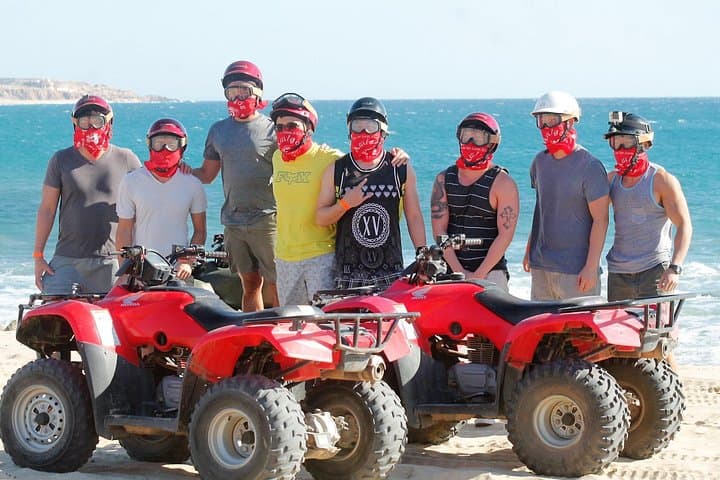
Wear closed-toe shoes, breathable layers, sun protection, and bring a bandana or scarf for dust; goggles and helmets are supplied.
Children must be accompanied by an adult; not recommended for pregnant guests or those with serious back or heart conditions.
Rancho Tours operates guided outdoor trips and adventures with an emphasis on safety, stewardship, and memorable experiences.
The engine thumps beneath you as the Baja desert opens up—baked ochre plains, sharp dunes rising like teeth, and a ribbon of white sand far below where the Pacific meets the shore. Within an hour the salt air returns, the desert’s dust giving way to the sound of waves and, in winter months, distant gray whale spouts as they migrate past the coast.
The engine thumps beneath you as the Baja desert opens up—baked ochre plains, sharp dunes rising like teeth, and a ribbon of white sand far below where the Pacific meets the shore. Within an hour the salt air returns, the desert’s dust giving way to the sound of waves and, in winter months, distant gray whale spouts as they migrate past the coast.
This guided ATV tour runs about three hours, tracing dry riverbeds, coastal ridgelines and sand ramps that reveal the region’s volcanic and alluvial geology. The landscape here is shaped by infrequent but powerful wash events; riverbeds carve corridors through the desert and feed sand into the dunes that riders climb and descend. Human history is present but quiet—fishermen’s camps and ranching routes dot the margins, while Los Cabos’ modern tourism economy centers on accessible, high-adrenaline outings like this one.
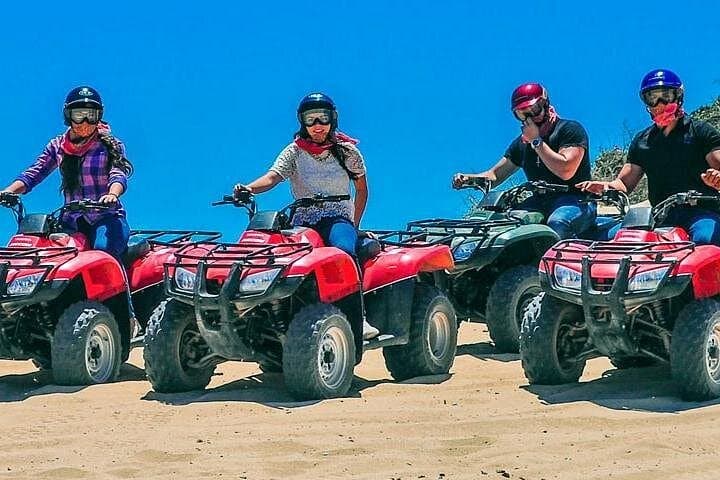
Expect a mostly flat to rolling route with occasional steep dunes rather than sustained elevation gain; terrain alternates between packed arroyo clay, loose sand and rocky connectors. Guides provide helmets, goggles and a briefing on vehicle handling; no prior ATV experience is required, but riders should be comfortable shifting and braking on loose surfaces.
Practical tips: book morning or late-afternoon slots to avoid midday heat; bring sun protection, closed-toe shoes, and a reusable water bottle. If you visit January–March, scan the offshore horizon for gray whale activity. The run is short but intense—ideal for travelers who want a compact, hands-on taste of Baja’s contrasting desert and coast.