THE ADVENTURE COLLECTIVE® · Independent discovery and booking for outdoor travel

Race along desert tracks with the pyramids in your mirrors on this 2‑hour quad bike tour near Giza. Expert guides operate in permitted zones, offering thrilling dune runs and panoramic photo stops while protecting the archaeological plateau.
Race along desert tracks with the pyramids in your mirrors on this 2‑hour quad bike tour near Giza. Expert guides operate in permitted zones, offering thrilling dune runs and panoramic photo stops while protecting the archaeological plateau.
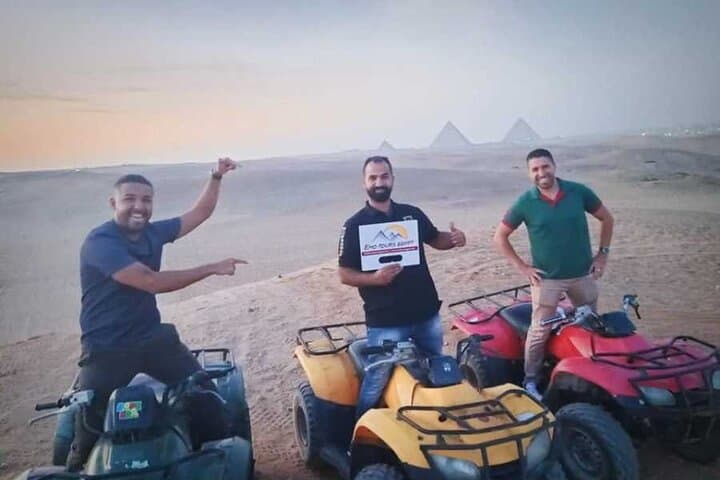
The engine thumps to life and the desert answers — a low, steady rhythm under the open sky while the pyramids loom like stone compasses on the horizon. Pickup from Cairo or Giza drops you at the permitted sand ramps that skirt the archaeological plateau; you clip into a helmet, get a short safety briefing, and the dunes dare you forward.
Verified experiences and guided adventures in the surrounding area.
Operated by Book My Egypt Tours · Giza, Giza Governorate
The engine thumps to life and the desert answers — a low, steady rhythm under the open sky while the pyramids loom like stone compasses on the horizon. Pickup from Cairo or Giza drops you at the permitted sand ramps that skirt the archaeological plateau; you clip into a helmet, get a short safety briefing, and the dunes dare you forward.
The Giza Plateau is limestone bedrock capped with wind-blown sand, sculpted by millennia of Nile-fed weathering and modern desert winds. The pyramids themselves date to the Old Kingdom (about 2600 BCE) and dominate a landscape where modern machines and ancient stones meet at the edge of the Sahara. Local guides will point out cultural notes — nearby villages, traditional small-scale trades, and the rules that protect the monuments: motorized rides stay outside the archaeological complex in regulated zones.
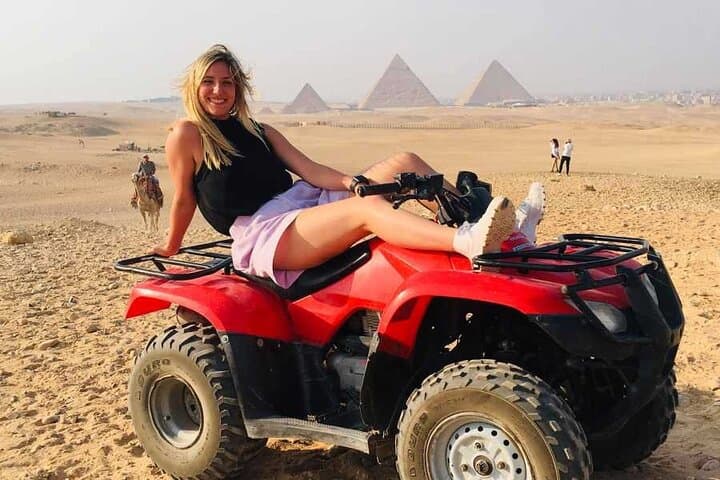
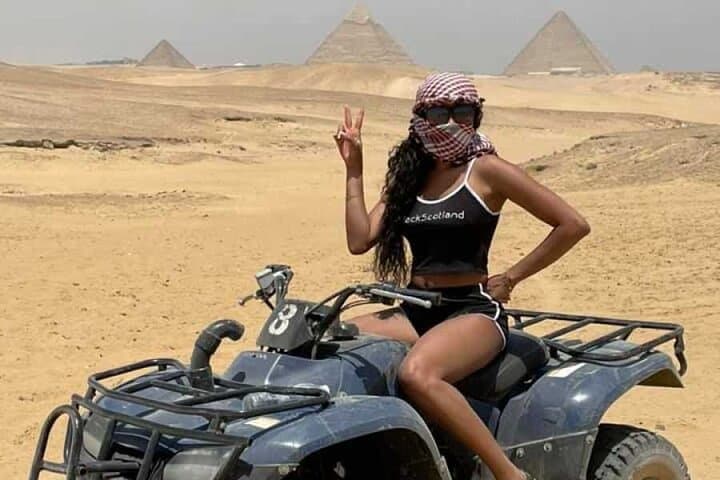
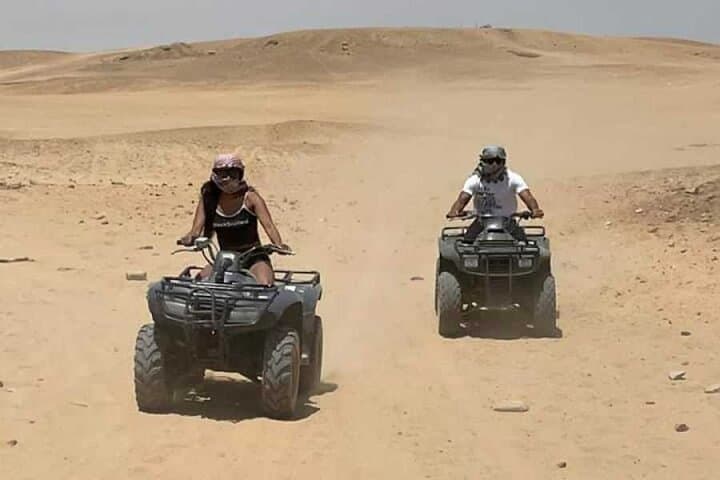
Expect a 2-hour ride across undulating dunes and hard-packed desert tracks, with sudden bursts of speed and wide, panoramic photo stops where the Great Pyramid fills the frame. Guides manage route choice and safety; riders should listen closely during the briefing and follow hand signals.
Practical tips: aim for early morning or late afternoon to avoid peak heat, wear closed-toe shoes and eye protection to keep sand out, and secure cameras with straps. Bring a light layer for wind and bottled water (supplied on tour, but carry extras if you are prone to dehydration). Stay on permitted courses, respect signage, and leave no trace — the desert holds fragile surfaces that won’t forgive careless tracks.
moderate.
2 hours.
Light physical ability required: able to mount/dismount ATVs and sit upright for the duration; not strenuous but requires basic balance.
No — Egyptian authorities prohibit motorized vehicles within the archaeological complex; tours operate in permitted desert areas that still offer close pyramid views.
Requirements vary by operator, but many quad tours restrict riders under 16 or impose weight limits for safety — check booking details and bring ID for verification.
No — guides provide a safety briefing and basic instruction; however riders should be comfortable with simple throttle and brake control.
Tours may be canceled for extreme weather or unsafe conditions; check the cancellation policy for refunds and rebooking details.
The Giza pyramids were constructed during Egypt’s Old Kingdom (around 2600 BCE) as monumental royal tombs and sit on a limestone plateau shaped by ancient Nile cycles.
Rides are restricted to designated tracks to protect fragile archaeological sediments; follow guides and avoid leaving tire marks off-route to minimize erosion and damage.
Book My Egypt Tours operates guided outdoor trips and adventures with an emphasis on safety, stewardship, and memorable experiences.
The engine thumps to life and the desert answers — a low, steady rhythm under the open sky while the pyramids loom like stone compasses on the horizon. Pickup from Cairo or Giza drops you at the permitted sand ramps that skirt the archaeological plateau; you clip into a helmet, get a short safety briefing, and the dunes dare you forward.
The engine thumps to life and the desert answers — a low, steady rhythm under the open sky while the pyramids loom like stone compasses on the horizon. Pickup from Cairo or Giza drops you at the permitted sand ramps that skirt the archaeological plateau; you clip into a helmet, get a short safety briefing, and the dunes dare you forward.
The Giza Plateau is limestone bedrock capped with wind-blown sand, sculpted by millennia of Nile-fed weathering and modern desert winds. The pyramids themselves date to the Old Kingdom (about 2600 BCE) and dominate a landscape where modern machines and ancient stones meet at the edge of the Sahara. Local guides will point out cultural notes — nearby villages, traditional small-scale trades, and the rules that protect the monuments: motorized rides stay outside the archaeological complex in regulated zones.
Expect a 2-hour ride across undulating dunes and hard-packed desert tracks, with sudden bursts of speed and wide, panoramic photo stops where the Great Pyramid fills the frame. Guides manage route choice and safety; riders should listen closely during the briefing and follow hand signals.
Practical tips: aim for early morning or late afternoon to avoid peak heat, wear closed-toe shoes and eye protection to keep sand out, and secure cameras with straps. Bring a light layer for wind and bottled water (supplied on tour, but carry extras if you are prone to dehydration). Stay on permitted courses, respect signage, and leave no trace — the desert holds fragile surfaces that won’t forgive careless tracks.