THE ADVENTURE COLLECTIVE® · Independent discovery and booking for outdoor travel

Ride coastal bluffs, desert dunes and ranch roads outside Cabo San Lucas on a guided ATV tour that mixes ocean views with Baja desert scenery. Practical for active travelers, the outing includes gear, insurance and hotel transfers.
Ride coastal bluffs, desert dunes and ranch roads outside Cabo San Lucas on a guided ATV tour that mixes ocean views with Baja desert scenery. Practical for active travelers, the outing includes gear, insurance and hotel transfers.
The morning starts with the smell of salt and hot sand: a line of Honda ATVs idles beneath an awning, helmets clutched under arms as the Pacific hisses against black rock far below. Riders push off onto a narrow track that alternates between hard-packed desert soil and soft dunes, the bike’s suspension working as the trail rises to bluff-top views where the ocean seems to narrow into a ribbon.
Verified experiences and guided adventures in the surrounding area.
Operated by Rancho Carisuva · Cabo San Lucas, Baja California Sur
The morning starts with the smell of salt and hot sand: a line of Honda ATVs idles beneath an awning, helmets clutched under arms as the Pacific hisses against black rock far below. Riders push off onto a narrow track that alternates between hard-packed desert soil and soft dunes, the bike’s suspension working as the trail rises to bluff-top views where the ocean seems to narrow into a ribbon.
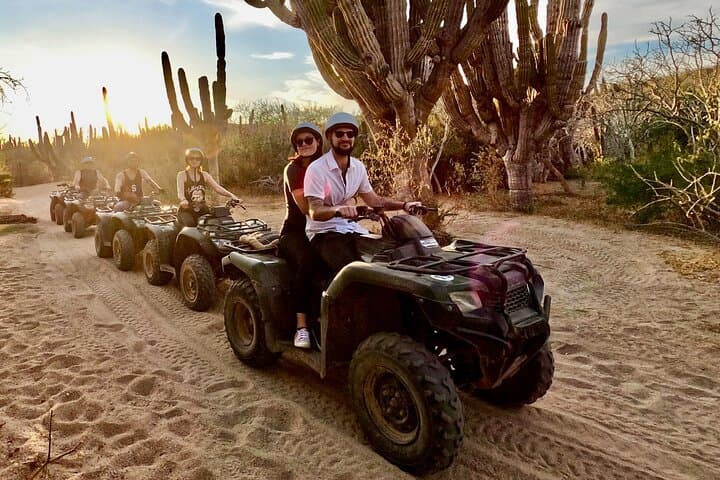
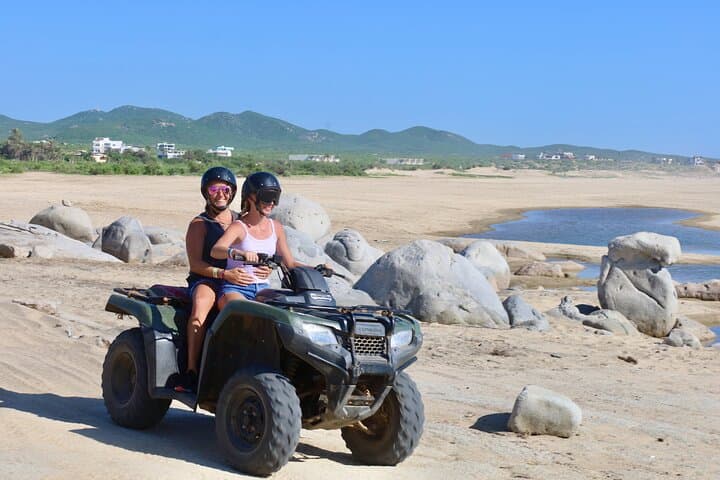
This route threads classic Baja landscapes—granite outcrops carved by millennia of waves, arroyos that funnel rare desert storms, and patches of cardón and organ pipe cactus reaching skyward. The area grew from ranching and fishing roots; old ranch roads are the same tracks guides still use, and local conservation efforts like Turtle Camp reflect a community that balances tourism with coastline stewardship.
Expect a mix of steep, rocky singletrack and open sandy bowls; the ride is physically engaging but beginner-friendly after a short orientation. Guides point out seasonal wildlife—humpback whales offshore in winter and spring, and desert mammals and birds inland—and often stop at a small ranch to meet donkeys and see traditional Baja livestock.
Practicalities: tours last about 3.5 hours, include helmets, goggles, bottled water, collision insurance and hotel transfer. Riders should wear closed-toe shoes, long pants and sun protection, and lock personal items before starting. Peak whale sightings run January–April; summer afternoons are hot and dusty—early departures are cooler. The experience rewards steady throttle control and attention to terrain: push when the trail asks for it, and let the guide set the pace.
moderate.
3–3.5 hours.
Moderate fitness: able to handle uneven terrain, mount/dismount an ATV, and ride for several hours.
Helmets, goggles, the ATV, bottled water, collision insurance, a professional guide and hotel pickup/drop-off are included.
No—guides provide an orientation to basic controls and riding techniques; basic coordination and comfort on off-road terrain are advised.
Minimum age is 16; the tour is not recommended for pregnant travelers or those with serious back, spinal or heart conditions.
Whale migrations peak between January and April, when guides often pause at coastal viewpoints for sightings.
Trails follow old ranch roads shaped by Baja’s long history of coastal fishing and interior cattle ranching; remnants of ranch structures dot the landscape.
Operators often partner with local programs like Turtle Camp and a Donkey Sanctuary—stay on trails, respect nesting areas and follow guide instructions to minimize erosion and disturbance.
Rancho Carisuva operates guided outdoor trips and adventures with an emphasis on safety, stewardship, and memorable experiences.
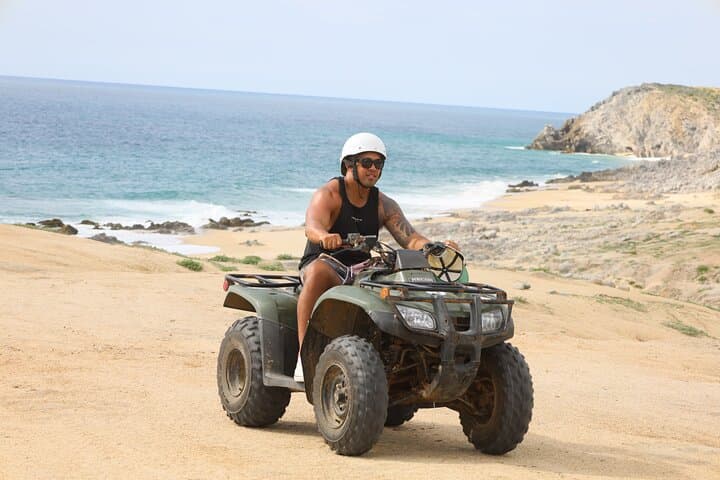
The morning starts with the smell of salt and hot sand: a line of Honda ATVs idles beneath an awning, helmets clutched under arms as the Pacific hisses against black rock far below. Riders push off onto a narrow track that alternates between hard-packed desert soil and soft dunes, the bike’s suspension working as the trail rises to bluff-top views where the ocean seems to narrow into a ribbon.
The morning starts with the smell of salt and hot sand: a line of Honda ATVs idles beneath an awning, helmets clutched under arms as the Pacific hisses against black rock far below. Riders push off onto a narrow track that alternates between hard-packed desert soil and soft dunes, the bike’s suspension working as the trail rises to bluff-top views where the ocean seems to narrow into a ribbon.
This route threads classic Baja landscapes—granite outcrops carved by millennia of waves, arroyos that funnel rare desert storms, and patches of cardón and organ pipe cactus reaching skyward. The area grew from ranching and fishing roots; old ranch roads are the same tracks guides still use, and local conservation efforts like Turtle Camp reflect a community that balances tourism with coastline stewardship.
Expect a mix of steep, rocky singletrack and open sandy bowls; the ride is physically engaging but beginner-friendly after a short orientation. Guides point out seasonal wildlife—humpback whales offshore in winter and spring, and desert mammals and birds inland—and often stop at a small ranch to meet donkeys and see traditional Baja livestock.
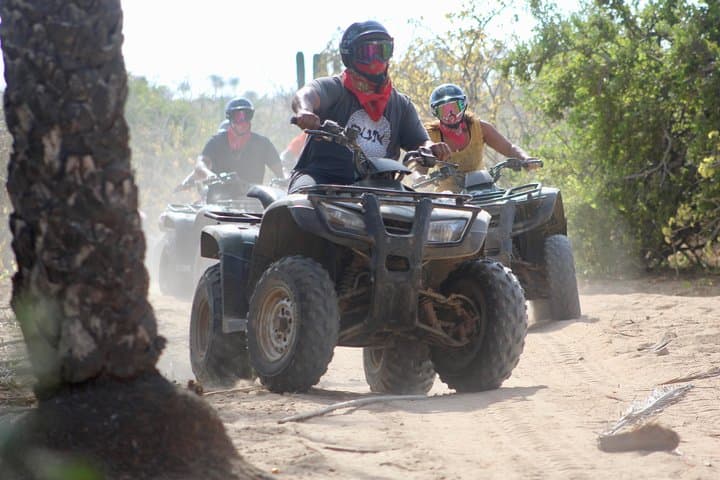
Practicalities: tours last about 3.5 hours, include helmets, goggles, bottled water, collision insurance and hotel transfer. Riders should wear closed-toe shoes, long pants and sun protection, and lock personal items before starting. Peak whale sightings run January–April; summer afternoons are hot and dusty—early departures are cooler. The experience rewards steady throttle control and attention to terrain: push when the trail asks for it, and let the guide set the pace.