THE ADVENTURE COLLECTIVE® · Independent discovery and booking for outdoor travel

Race a quad along open sand with the Great Pyramid and Sphinx framing the horizon. This one-hour ATV safari delivers high-adrenaline riding, dramatic photo ops, and an intimate view of the Giza Plateau.
Race a quad along open sand with the Great Pyramid and Sphinx framing the horizon. This one-hour ATV safari delivers high-adrenaline riding, dramatic photo ops, and an intimate view of the Giza Plateau.
You kick up a cone of ochre sand and the desert answers — a broad, clean wind pushing the quad forward while the pyramids sit like patient giants on the horizon.
Verified experiences and guided adventures in the surrounding area.
Operated by Hesham Egypt tour guide · Giza, Giza Governorate
You kick up a cone of ochre sand and the desert answers — a broad, clean wind pushing the quad forward while the pyramids sit like patient giants on the horizon.
This one-hour ATV loop runs along the fringes of the Giza Plateau, offering close-up panoramas of the Great Pyramid and the Sphinx from angles most visitors never see. Geologically the plateau is a flat limestone outcrop carved by wind and time; culturally it’s the doorstep to pharaonic Egypt — a landscape shaped by funerary architecture and centuries of pilgrimage.
Local guides often point out stone quarries and erosion patterns that explain why the pyramids were placed here, and Bedouin-led camps nearby echo more recent cultural layers of desert life.
Practically, expect short bursts of higher speed on packed sand, slower technical stretches over rutty dunes, and unavoidable dust. Riders receive basic safety briefing and helmet; pickup from Giza or Cairo hotels is typically included. Morning and late-afternoon departures reduce heat and sharpen the light for photography; sunset runs tint the limestone gold while the wind cools.
Bring closed-toe shoes, eye protection, and a scarf for dust. Stay on the marked routes — the archaeological zone is strictly off-limits — and follow your guide’s pace. The experience is compact but vivid: a mechanical conversation with the desert that leaves you with panoramic photos, a racing heart, and a clearer sense of why the plateau has held human attention for millennia.
easy.
1 hour.
Suitable for most fitness levels; riders should be able to mount/dismount a quad and hold a steady posture for an hour.
Rides run along the desert perimeter and offer excellent panoramic views and photo points, but ATVs are not permitted directly on archaeological monuments or inside the fenced complexes.
No — guides provide a safety briefing and basic instruction; the route and speed are adjusted for rider ability, making it accessible for most people.
Yes, helmets are provided and required; bring your own goggles if you prefer a personal fit for dust protection.
Tours generally operate in light winds and clear conditions; operators will cancel or reschedule if conditions create unsafe driving or visibility.
The Giza Plateau holds Old Kingdom royal tombs built roughly 4,500 years ago; the pyramids are monumental burial structures that anchored early Egyptian state religion.
Operators must avoid riding on protected sections of the plateau; visitors should follow marked tracks, take all waste with them, and respect archaeological boundaries to limit erosion and damage.
Hesham Egypt tour guide operates guided outdoor trips and adventures with an emphasis on safety, stewardship, and memorable experiences.
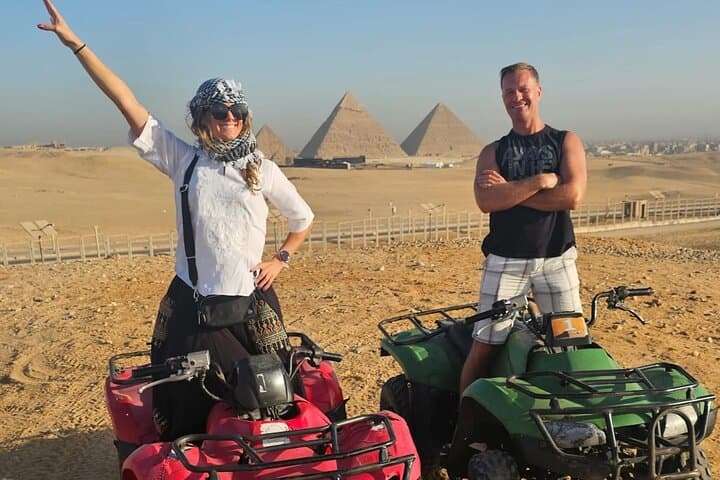
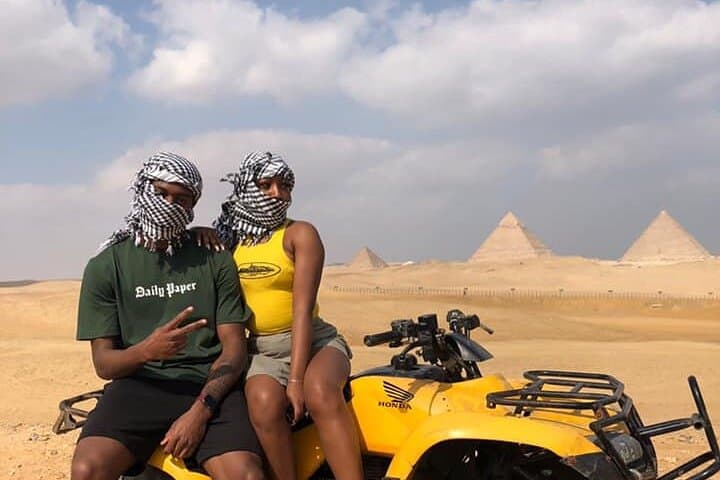
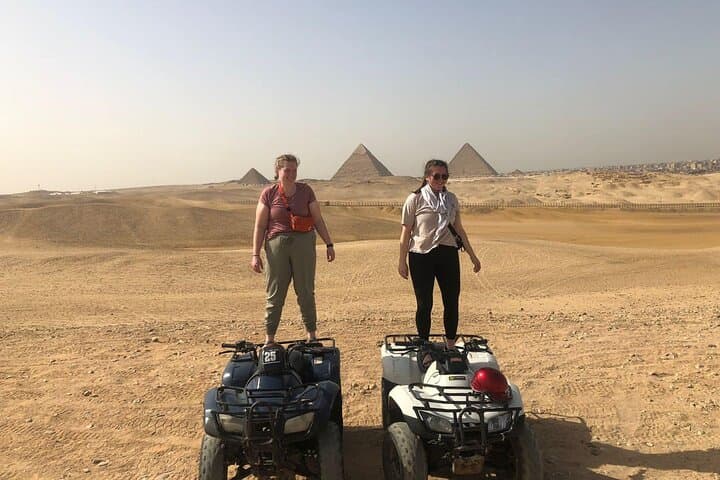
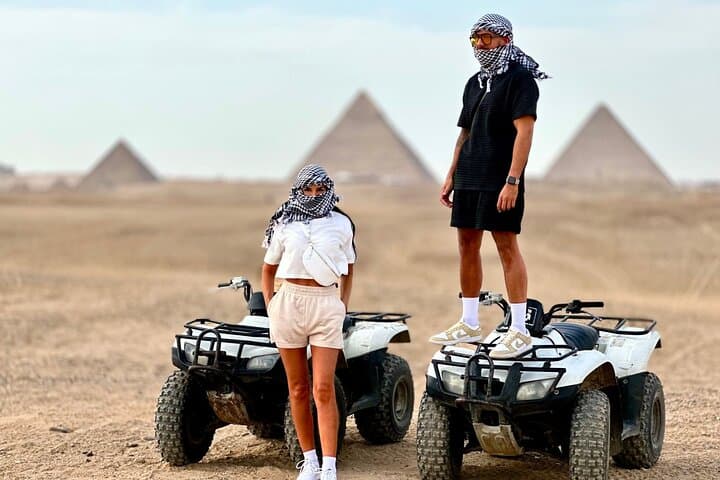
You kick up a cone of ochre sand and the desert answers — a broad, clean wind pushing the quad forward while the pyramids sit like patient giants on the horizon.
You kick up a cone of ochre sand and the desert answers — a broad, clean wind pushing the quad forward while the pyramids sit like patient giants on the horizon.
This one-hour ATV loop runs along the fringes of the Giza Plateau, offering close-up panoramas of the Great Pyramid and the Sphinx from angles most visitors never see. Geologically the plateau is a flat limestone outcrop carved by wind and time; culturally it’s the doorstep to pharaonic Egypt — a landscape shaped by funerary architecture and centuries of pilgrimage.
Local guides often point out stone quarries and erosion patterns that explain why the pyramids were placed here, and Bedouin-led camps nearby echo more recent cultural layers of desert life.
Practically, expect short bursts of higher speed on packed sand, slower technical stretches over rutty dunes, and unavoidable dust. Riders receive basic safety briefing and helmet; pickup from Giza or Cairo hotels is typically included. Morning and late-afternoon departures reduce heat and sharpen the light for photography; sunset runs tint the limestone gold while the wind cools.
Bring closed-toe shoes, eye protection, and a scarf for dust. Stay on the marked routes — the archaeological zone is strictly off-limits — and follow your guide’s pace. The experience is compact but vivid: a mechanical conversation with the desert that leaves you with panoramic photos, a racing heart, and a clearer sense of why the plateau has held human attention for millennia.