THE ADVENTURE COLLECTIVE® · Independent discovery and booking for outdoor travel

Charge through jungle tracks, fording rivers and finding hidden waterfalls on a full-day ATV tour of Samaná. This guide explains what to expect, local context, and how to prepare for a long, muddy, and unforgettable ride.
Charge through jungle tracks, fording rivers and finding hidden waterfalls on a full-day ATV tour of Samaná. This guide explains what to expect, local context, and how to prepare for a long, muddy, and unforgettable ride.
Dust from the ATV rises and the jungle closes in — palms brush the helmet and a river dares you to slow down. On an all-day Samana tour, four-wheelers thread old farm tracks into primary forest, spill across shallow river fords, and reveal waterfalls that tumble into hidden pools and narrow coves where the Caribbean keeps its quieter face.
Verified experiences and guided adventures in the surrounding area.
Dust from the ATV rises and the jungle closes in — palms brush the helmet and a river dares you to slow down. On an all-day Samana tour, four-wheelers thread old farm tracks into primary forest, spill across shallow river fords, and reveal waterfalls that tumble into hidden pools and narrow coves where the Caribbean keeps its quieter face.
Geology here is limestone and karst, with ridges carved by seasonal streams and red lateritic soil that grips tires one moment and slicks under rain the next. Culturally the route passes through cacao plots and small bateyes, reminders of the peninsula’s layered history: Taino roots, Spanish colonial trade, and 19th-century Afro-Caribbean settlements that shaped local music and food.
Expect stopovers at panoramic overlooks on ridgelines where you can see the horseshoe-shaped bay, and brief walks to mid-size cascades set beneath dense canopy. Guides usually point out native palms, medicinal plants, and signs of howler monkeys and coastal birds.
Practical guidance: these are long, variable days — itineraries often run 8–12 hours and include beach and inland sections. Wear long pants, closed-toe shoes, and a good sun hat under the helmet; waterproof layers are wise if rain is forecast. Bring at least 2 liters of water, sunscreen, and a compact dry bag for electronics. Operators typically require a minimum age and brief safety orientation; if you’re new to off-road riding, choose a guided tandem or easier route. Respect private farms and stay on designated tracks — erosion and sensitive coastal habitat recover slowly once disturbed.
This is a raw, motorized way to see Samaná: noisy, fast, and very close to the land.
challenging.
8–12 hours.
Moderate to strong cardiovascular fitness recommended; riders should be comfortable handling uneven terrain for long periods.
Many operators require a valid driver's license for solo driving; minors often must ride tandem with a guide or adult — check the operator’s policy before booking.
Guides accommodate beginners with short training and easier routes, but comfortable balance and stamina for several hours on rough terrain is helpful.
Closed-toe shoes, long pants, and a lightweight long-sleeve layer are recommended; bring sunscreen, a hat under your helmet, and sunglasses with a strap.
Shallow fords are common and generally safe with a guide; avoid fast-flowing water after heavy rain and follow the guide’s line and speed instructions.
Samaná Peninsula has Taino roots and later saw Spanish colonial influence; in the 19th century, Afro-Caribbean and freed Black American settlers shaped local culture and religious traditions.
Stay on designated tracks to limit erosion and avoid driving near fragile coastal vegetation; local operators often support beach clean-ups and responsible wildlife viewing.
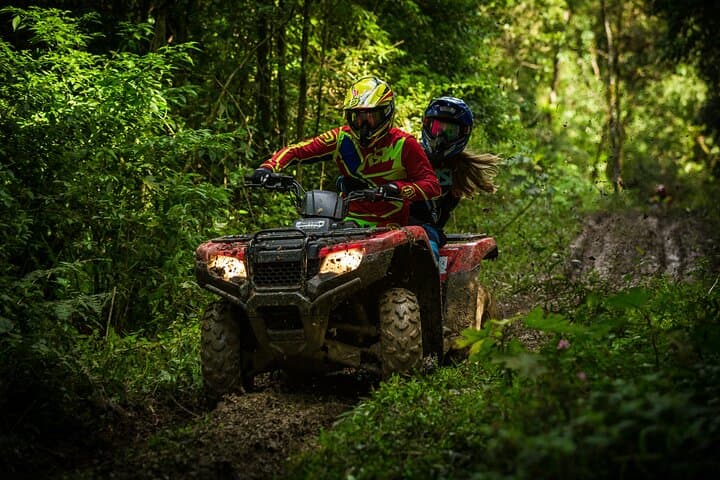
Dust from the ATV rises and the jungle closes in — palms brush the helmet and a river dares you to slow down. On an all-day Samana tour, four-wheelers thread old farm tracks into primary forest, spill across shallow river fords, and reveal waterfalls that tumble into hidden pools and narrow coves where the Caribbean keeps its quieter face.
Dust from the ATV rises and the jungle closes in — palms brush the helmet and a river dares you to slow down. On an all-day Samana tour, four-wheelers thread old farm tracks into primary forest, spill across shallow river fords, and reveal waterfalls that tumble into hidden pools and narrow coves where the Caribbean keeps its quieter face.
Geology here is limestone and karst, with ridges carved by seasonal streams and red lateritic soil that grips tires one moment and slicks under rain the next. Culturally the route passes through cacao plots and small bateyes, reminders of the peninsula’s layered history: Taino roots, Spanish colonial trade, and 19th-century Afro-Caribbean settlements that shaped local music and food.
Expect stopovers at panoramic overlooks on ridgelines where you can see the horseshoe-shaped bay, and brief walks to mid-size cascades set beneath dense canopy. Guides usually point out native palms, medicinal plants, and signs of howler monkeys and coastal birds.
Practical guidance: these are long, variable days — itineraries often run 8–12 hours and include beach and inland sections. Wear long pants, closed-toe shoes, and a good sun hat under the helmet; waterproof layers are wise if rain is forecast. Bring at least 2 liters of water, sunscreen, and a compact dry bag for electronics. Operators typically require a minimum age and brief safety orientation; if you’re new to off-road riding, choose a guided tandem or easier route. Respect private farms and stay on designated tracks — erosion and sensitive coastal habitat recover slowly once disturbed.
This is a raw, motorized way to see Samaná: noisy, fast, and very close to the land.