THE ADVENTURE COLLECTIVE® · Independent discovery and booking for outdoor travel

Rev up across Pacaya’s petrified lava fields on a guided ATV loop from Antigua. Expect rough basalt, wide volcanic views and a 6‑hour outing that mixes 3 hours of riding with hotel pickup and local guidance.
Rev up across Pacaya’s petrified lava fields on a guided ATV loop from Antigua. Expect rough basalt, wide volcanic views and a 6‑hour outing that mixes 3 hours of riding with hotel pickup and local guidance.
The engine settles into a steady rumble as the minivan drops riders at the edge of basalt-black plains. Dust lifts in the wake of ATVs and the open landscape feels abrupt — a raw, wind-scoured room carved by recent eruptions. From the saddle you face pavements of jagged lava, intermittent scrub, and sudden views of Volcán de Fuego breathing steam into a clear sky.
Verified experiences and guided adventures in the surrounding area.
Operated by Turisteando.net · Antigua Guatemala, Sacatepéquez
The engine settles into a steady rumble as the minivan drops riders at the edge of basalt-black plains. Dust lifts in the wake of ATVs and the open landscape feels abrupt — a raw, wind-scoured room carved by recent eruptions. From the saddle you face pavements of jagged lava, intermittent scrub, and sudden views of Volcán de Fuego breathing steam into a clear sky.
Pacaya is one of Guatemala’s most active volcanoes; its surface is a patchwork of flows from the 20th and 21st centuries. The volcanic rock is young and rough — basaltic, porous, and prone to loose footing — and settlements below have long adapted coffee farms to the cooler slopes. Guides typically point out the layered flows and where fresh pahoehoe met ‘a‘ā textures, translating geology into readable lines of fire and time.
The ride itself is straightforward but physical: expect roughly a 20 km circuit on varied terrain and about 3 hours of riding within a 6-hour door-to-door excursion from Antigua. Elevations range around Antigua’s 1,500 m up toward Pacaya’s flanks (the summit reaches ~2,552 m), so mornings feel cool and mid-days can heat quickly. Terrain alternates between compacted volcanic rock, loose scree, and packed dirt; a guided group keeps pace and enforces safety protocols.
Practical notes: wear closed-toe boots, eye protection, and layers; hydrate before you go and bring sunscreen. The tour includes pickup in central Antigua, safety gear, bottled water and a guide; it’s not recommended for pregnant travelers or those with spinal or serious cardiac conditions. Ride within your comfort zone, respect fragile volcanic surfaces, and leave the rocks where you find them — Pacaya’s black fields look eternal, but they’re part of an active landscape that demands attention.
moderate.
6 hours total (≈3 hours riding).
Moderate fitness: ability to handle bumpy terrain for several hours and manage short climbs on an ATV.
No — tours are suitable for beginners; guides provide a safety briefing and basic instruction before departure.
Moderate: you’ll be on the ATV for extended periods and should be able to mount/dismount and hold steady over rough terrain.
Hotel pickup in central Antigua, safety equipment (helmet), bottled water, a guide, and refreshments; specifics may vary by operator.
Not recommended for pregnant travelers or those with spinal, severe back, or serious heart conditions — disclose health issues when booking.
Pacaya has been frequently active in the modern era; many flows visible today date from eruptions in the 20th and 21st centuries.
Stay on established routes, avoid removing volcanic rock, and travel with licensed guides who minimize impacts on fragile volcanic soils.
Turisteando.net operates guided outdoor trips and adventures with an emphasis on safety, stewardship, and memorable experiences.
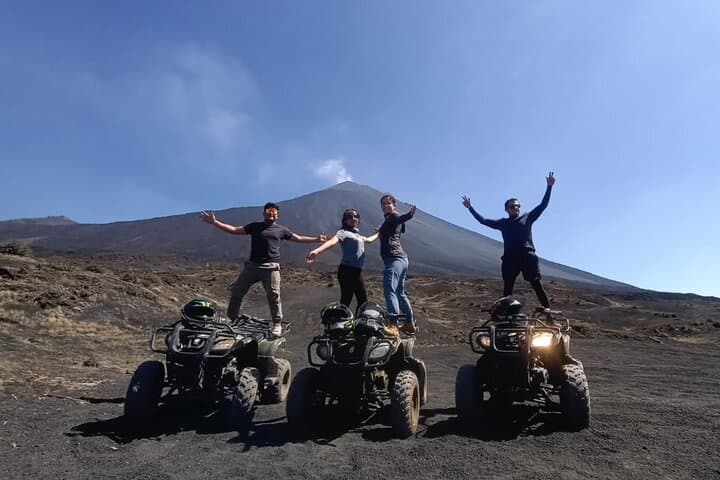
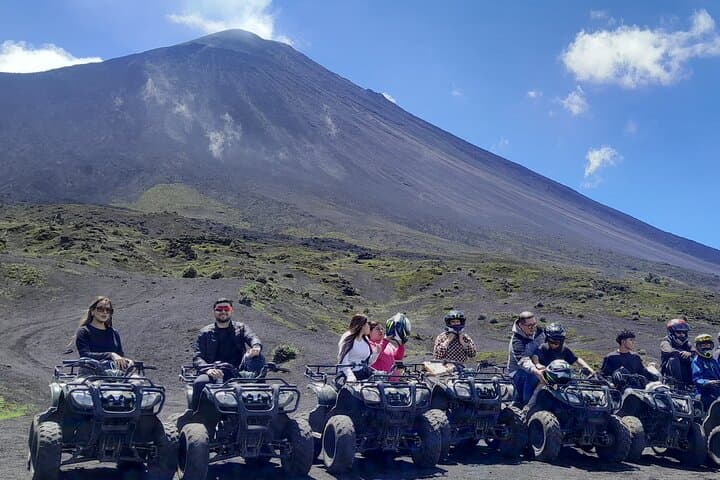
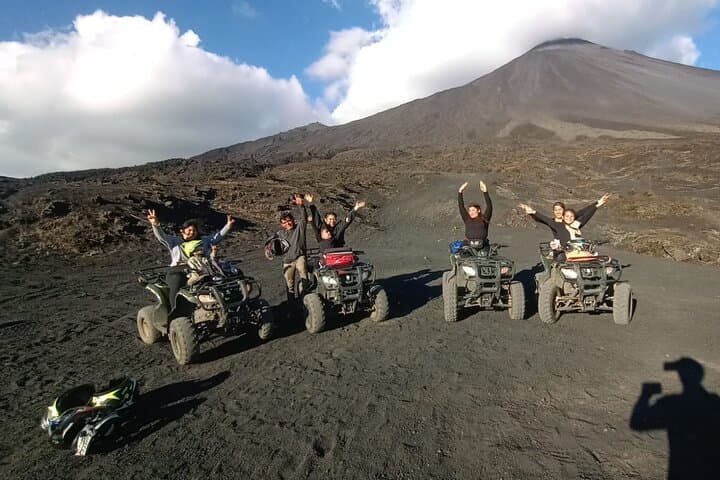
The engine settles into a steady rumble as the minivan drops riders at the edge of basalt-black plains. Dust lifts in the wake of ATVs and the open landscape feels abrupt — a raw, wind-scoured room carved by recent eruptions. From the saddle you face pavements of jagged lava, intermittent scrub, and sudden views of Volcán de Fuego breathing steam into a clear sky.
The engine settles into a steady rumble as the minivan drops riders at the edge of basalt-black plains. Dust lifts in the wake of ATVs and the open landscape feels abrupt — a raw, wind-scoured room carved by recent eruptions. From the saddle you face pavements of jagged lava, intermittent scrub, and sudden views of Volcán de Fuego breathing steam into a clear sky.
Pacaya is one of Guatemala’s most active volcanoes; its surface is a patchwork of flows from the 20th and 21st centuries. The volcanic rock is young and rough — basaltic, porous, and prone to loose footing — and settlements below have long adapted coffee farms to the cooler slopes. Guides typically point out the layered flows and where fresh pahoehoe met ‘a‘ā textures, translating geology into readable lines of fire and time.
The ride itself is straightforward but physical: expect roughly a 20 km circuit on varied terrain and about 3 hours of riding within a 6-hour door-to-door excursion from Antigua. Elevations range around Antigua’s 1,500 m up toward Pacaya’s flanks (the summit reaches ~2,552 m), so mornings feel cool and mid-days can heat quickly. Terrain alternates between compacted volcanic rock, loose scree, and packed dirt; a guided group keeps pace and enforces safety protocols.
Practical notes: wear closed-toe boots, eye protection, and layers; hydrate before you go and bring sunscreen. The tour includes pickup in central Antigua, safety gear, bottled water and a guide; it’s not recommended for pregnant travelers or those with spinal or serious cardiac conditions. Ride within your comfort zone, respect fragile volcanic surfaces, and leave the rocks where you find them — Pacaya’s black fields look eternal, but they’re part of an active landscape that demands attention.