THE ADVENTURE COLLECTIVE® · Independent discovery and booking for outdoor travel

Drive an ATV across Pacaya’s black lava fields and visit the crater-born Calderas Lagoon on a full-day off-road tour from Antigua. This trip pairs raw volcanic terrain with local guide knowledge and included transport, helmet, and hydration.
Drive an ATV across Pacaya’s black lava fields and visit the crater-born Calderas Lagoon on a full-day off-road tour from Antigua. This trip pairs raw volcanic terrain with local guide knowledge and included transport, helmet, and hydration.
The engine clicks, dust lifts, and the first black folds of cooled lava appear like a stitched seam across the hillside. Riding an ATV here is immediate: wind, heat, and a horizon knifed by other volcanic cones. The route threads out of El Cedro toward Calderas Lagoon, then crosses the pancake-flat, glassy plates of solidified flows where every boulder and ridge tells a recent story of fire.
Verified experiences and guided adventures in the surrounding area.
Operated by GUATEMAYA TOURS · Antigua Guatemala, Sacatepéquez
The engine clicks, dust lifts, and the first black folds of cooled lava appear like a stitched seam across the hillside. Riding an ATV here is immediate: wind, heat, and a horizon knifed by other volcanic cones. The route threads out of El Cedro toward Calderas Lagoon, then crosses the pancake-flat, glassy plates of solidified flows where every boulder and ridge tells a recent story of fire.
Pacaya is an active basaltic volcano with frequent lava flows that have reshaped the landscape for centuries. Geologically young, its fields are rough, porous rock—excellent for off-road traction in places and unforgiving in others. Culturally, the slopes are worked by small farming communities; guides from nearby villages point out coffee plots and explain local uses of volcanic soils.
Expect about 20–30 km of off-road driving across terraces, rutted feeder trails, and open lava fields. The operator provides round-trip transfer from Antigua or Guatemala City, helmets, hydration, and a guide who manages route selection and safety. The full outing, including transfers, typically fills most of the day (7–8 hours), while the on-ATV portion runs near four hours.
Practical tips: wear sturdy closed-toe shoes, eye protection, and a windproof layer; sunscreen and extra water are essential. Ride within your comfort zone—terrain is rutted and occasionally sharp—and follow guide instructions: stay on permitted tracks, avoid fragile crusts, and don’t remove rocks. For anyone curious about active landscapes, this is a direct, kinetic way to read Pacaya’s recent geological history while supporting local guides and communities.
moderate.
7–8 hours (total); ~4 hours on ATVs.
Moderate fitness—comfortable standing on pegs, handling bumps and short climbs; not suited for those with serious back or heart conditions
Most operators require a basic driving competency and will run through safety and handling; a formal license is not always required but check with the operator beforehand.
Tours operate on permitted routes and follow local monitoring; active lava flows are avoided and guides update plans based on current volcanic alerts.
Not recommended for young children, pregnant travelers, or those with serious back or heart problems; participants should have moderate fitness.
Typical inclusions are round-trip transfers from Antigua/Guatemala City, use of an ATV and helmet, admission fees, hydration, guide services, and digital photos/videos.
Pacaya has been frequently active since the colonial era; its repeated flows have created the jagged lava fields that define the route today.
Stick to marked tracks, do not collect volcanic rock, and support local guides to minimize erosion and disturbance to fragile volcanic surfaces.
GUATEMAYA TOURS operates guided outdoor trips and adventures with an emphasis on safety, stewardship, and memorable experiences.
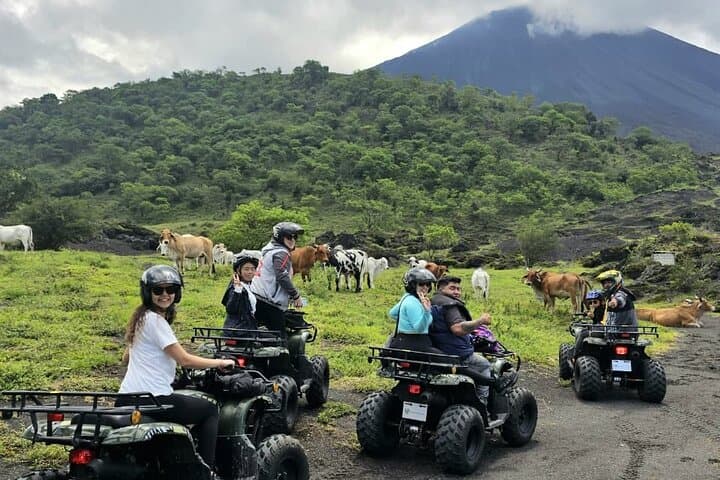
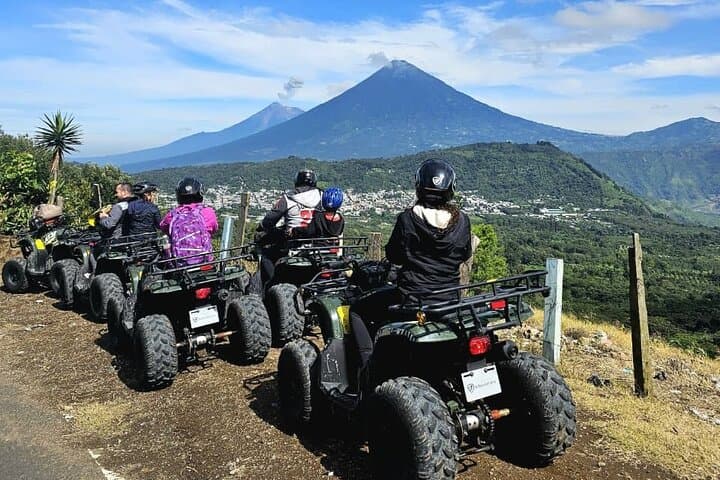
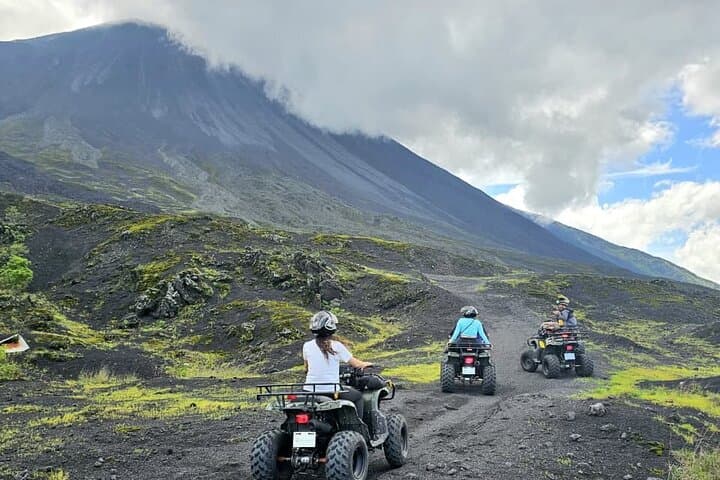
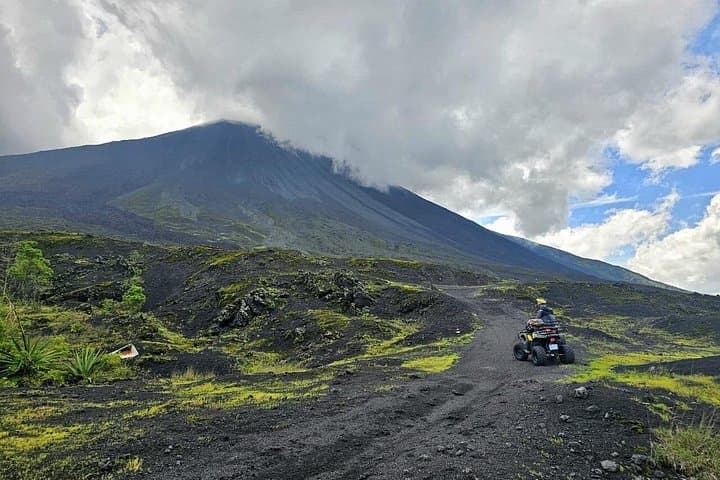
The engine clicks, dust lifts, and the first black folds of cooled lava appear like a stitched seam across the hillside. Riding an ATV here is immediate: wind, heat, and a horizon knifed by other volcanic cones. The route threads out of El Cedro toward Calderas Lagoon, then crosses the pancake-flat, glassy plates of solidified flows where every boulder and ridge tells a recent story of fire.
The engine clicks, dust lifts, and the first black folds of cooled lava appear like a stitched seam across the hillside. Riding an ATV here is immediate: wind, heat, and a horizon knifed by other volcanic cones. The route threads out of El Cedro toward Calderas Lagoon, then crosses the pancake-flat, glassy plates of solidified flows where every boulder and ridge tells a recent story of fire.
Pacaya is an active basaltic volcano with frequent lava flows that have reshaped the landscape for centuries. Geologically young, its fields are rough, porous rock—excellent for off-road traction in places and unforgiving in others. Culturally, the slopes are worked by small farming communities; guides from nearby villages point out coffee plots and explain local uses of volcanic soils.
Expect about 20–30 km of off-road driving across terraces, rutted feeder trails, and open lava fields. The operator provides round-trip transfer from Antigua or Guatemala City, helmets, hydration, and a guide who manages route selection and safety. The full outing, including transfers, typically fills most of the day (7–8 hours), while the on-ATV portion runs near four hours.
Practical tips: wear sturdy closed-toe shoes, eye protection, and a windproof layer; sunscreen and extra water are essential. Ride within your comfort zone—terrain is rutted and occasionally sharp—and follow guide instructions: stay on permitted tracks, avoid fragile crusts, and don’t remove rocks. For anyone curious about active landscapes, this is a direct, kinetic way to read Pacaya’s recent geological history while supporting local guides and communities.