THE ADVENTURE COLLECTIVE® · Independent discovery and booking for outdoor travel

Wade, swim, and crawl into one of Belize’s most storied caves on a full-day guided tour from San Ignacio. Explore limestone chambers housing Maya artifacts and the famous ‘Crystal Maiden’—an intense, hands-on lesson in archaeology and adventure.
Wade, swim, and crawl into one of Belize’s most storied caves on a full-day guided tour from San Ignacio. Explore limestone chambers housing Maya artifacts and the famous ‘Crystal Maiden’—an intense, hands-on lesson in archaeology and adventure.
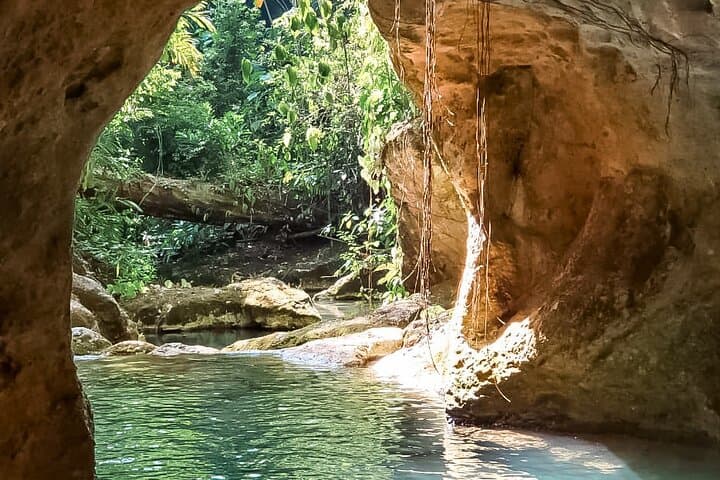
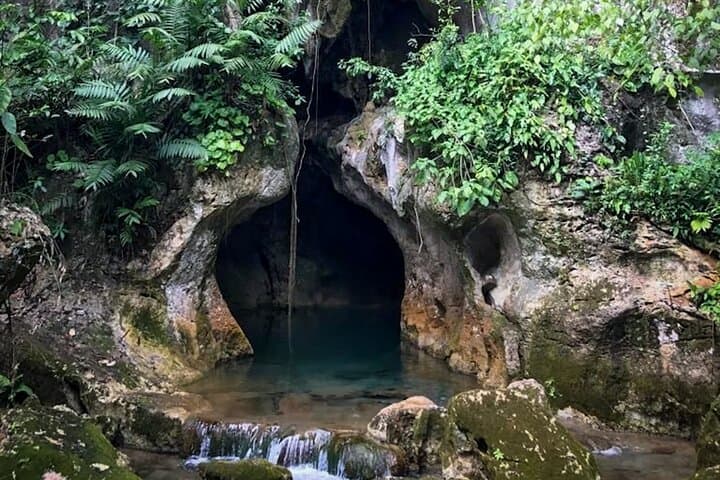
You step from the humid Belizean air into a waist-deep river that seems to hesitate before the cave mouth, as if testing whether you’re determined enough to follow. The jungle crowds close behind you—ferns brush your arms, cicadas keep time—and the water pulls at your calves. For the next hours the forest and the underground trade places as the dominant world: daylight shrinking to a thin ribbon, then gone, replaced by the slow, stony breathing of Actun Tunichil Muknal.
Verified experiences and guided adventures in the surrounding area.
Operated by Ruwa Travels · San Ignacio, Cayo District
You step from the humid Belizean air into a waist-deep river that seems to hesitate before the cave mouth, as if testing whether you’re determined enough to follow. The jungle crowds close behind you—ferns brush your arms, cicadas keep time—and the water pulls at your calves. For the next hours the forest and the underground trade places as the dominant world: daylight shrinking to a thin ribbon, then gone, replaced by the slow, stony breathing of Actun Tunichil Muknal.
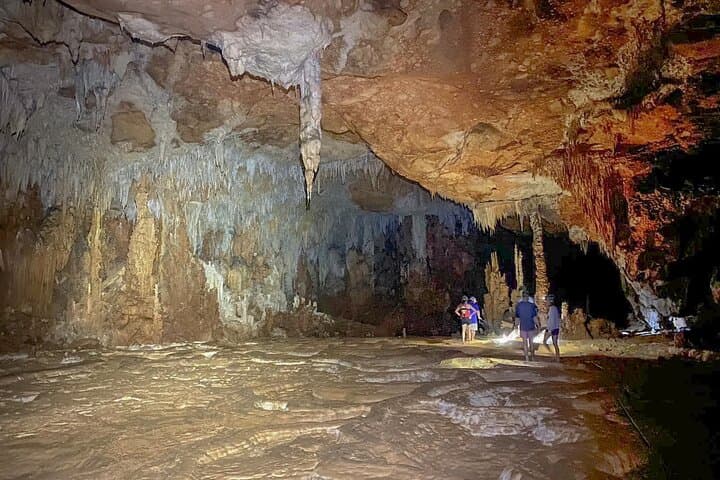
Actun Tunichil Muknal (ATM) is more than a cave; it’s an archive carved by water and human ceremony. Geologically, the passageways are classic karst—limestone dissolved over millennia—leaving chambers thick with calcite glinting like crystallized memory. Archaeologically it’s a puzzle of Maya ritual: pottery shards, stone tools, and human remains left undisturbed in sacrificial contexts. The “Crystal Maiden,” a calcified young woman turned to stone by mineral deposition, is not a museum piece but a fragile witness set in place for over a thousand years.
Culturally, the trip threads through the Cayo District’s living landscape. Teakettle village and the farms along the approach route are part of a working countryside where Maya stories and modern life intersect: guides translate both, pointing to traces of ancient river use and explaining how local communities steward access and protect fragile deposits.
Practically, this is an all-day, authority-led expedition: expect an early pickup in San Ignacio, 4x4 or paved driving through Tapir Mountain country, a jungle hike punctuated by three shallow river crossings, then a swim into the cave entrance. Inside you’ll scramble low passages, balance across slimy ledges, and stand barefoot in a dry chamber (socks are required there to protect ancient floors). Cameras and phones are prohibited by Belize’s preservation rules—so the images you carry will be sensory memory rather than pixels.
Fitness and preparation are straightforward: bring closed-toe water shoes with grip, a swimsuit under modest clothing, and a small dry bag for toiletries left with the vehicle. Guides supply helmets, life vests, and headlights. The cave is physically demanding and psychologically rigorous—dark, wet, and tight in sections—so it’s not for anyone with severe mobility limits or a fear of enclosed spaces.
Leave no trace is enforced: don’t touch artifacts, and follow your guide’s route precisely. The experience supports community conservation and local women-owned operations, so your visit contributes directly to the people who protect this place.
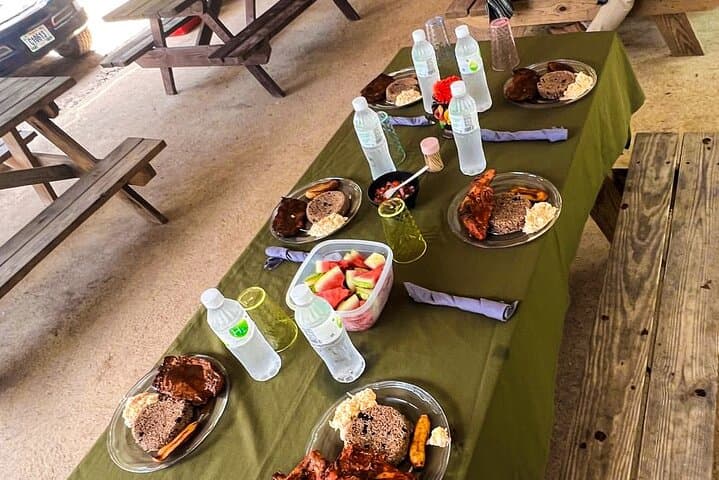
When you emerge, the air tastes like earth and river; the lunch on the riverbank tastes like victory. ATM is equal parts geology, history, and test of will—an unforgettable day in Belize where the past is literally part of the ground beneath your feet.
challenging.
8 hours.
Good cardiovascular fitness and comfort with swimming and moderate scrambling; not recommended for those with serious mobility or heart conditions.
No—Belize government regulations and site stewards strictly prohibit cameras and phones inside the cave to protect artifacts and sensitive deposits.
There is a minimum height requirement of 40 inches; children must be closely supervised and able to meet physical demands.
It’s challenging—expect jungle hiking, multiple river crossings, swimming into the cave entrance, and low, slippery passages requiring scrambling.
Yes—pickup from central San Ignacio hotels is typically provided (confirm time and location after booking); there may be a fee for pickups beyond the standard zone.
Entrance fees, safety equipment (helmets, life vests, headlights), bottled water, an inclusive Belizean lunch, knowledgeable guides, and transport in an air‑conditioned vehicle are included.
Not recommended for pregnant travelers, those with spinal or serious heart conditions, or people with a severe fear of darkness, water, or confined spaces.
ATM was used by Maya people for ritual deposits and human offerings during the Classic period; many finds remain undisturbed in situ.
Strict access controls and no‑photography rules protect fragile artifacts; local operators support community programs and conservation efforts in the Cayo District.
Ruwa Travels operates guided outdoor trips and adventures with an emphasis on safety, stewardship, and memorable experiences.
You step from the humid Belizean air into a waist-deep river that seems to hesitate before the cave mouth, as if testing whether you’re determined enough to follow. The jungle crowds close behind you—ferns brush your arms, cicadas keep time—and the water pulls at your calves. For the next hours the forest and the underground trade places as the dominant world: daylight shrinking to a thin ribbon, then gone, replaced by the slow, stony breathing of Actun Tunichil Muknal.
You step from the humid Belizean air into a waist-deep river that seems to hesitate before the cave mouth, as if testing whether you’re determined enough to follow. The jungle crowds close behind you—ferns brush your arms, cicadas keep time—and the water pulls at your calves. For the next hours the forest and the underground trade places as the dominant world: daylight shrinking to a thin ribbon, then gone, replaced by the slow, stony breathing of Actun Tunichil Muknal.
Actun Tunichil Muknal (ATM) is more than a cave; it’s an archive carved by water and human ceremony. Geologically, the passageways are classic karst—limestone dissolved over millennia—leaving chambers thick with calcite glinting like crystallized memory. Archaeologically it’s a puzzle of Maya ritual: pottery shards, stone tools, and human remains left undisturbed in sacrificial contexts. The “Crystal Maiden,” a calcified young woman turned to stone by mineral deposition, is not a museum piece but a fragile witness set in place for over a thousand years.
Culturally, the trip threads through the Cayo District’s living landscape. Teakettle village and the farms along the approach route are part of a working countryside where Maya stories and modern life intersect: guides translate both, pointing to traces of ancient river use and explaining how local communities steward access and protect fragile deposits.
Practically, this is an all-day, authority-led expedition: expect an early pickup in San Ignacio, 4x4 or paved driving through Tapir Mountain country, a jungle hike punctuated by three shallow river crossings, then a swim into the cave entrance. Inside you’ll scramble low passages, balance across slimy ledges, and stand barefoot in a dry chamber (socks are required there to protect ancient floors). Cameras and phones are prohibited by Belize’s preservation rules—so the images you carry will be sensory memory rather than pixels.
Fitness and preparation are straightforward: bring closed-toe water shoes with grip, a swimsuit under modest clothing, and a small dry bag for toiletries left with the vehicle. Guides supply helmets, life vests, and headlights. The cave is physically demanding and psychologically rigorous—dark, wet, and tight in sections—so it’s not for anyone with severe mobility limits or a fear of enclosed spaces.
Leave no trace is enforced: don’t touch artifacts, and follow your guide’s route precisely. The experience supports community conservation and local women-owned operations, so your visit contributes directly to the people who protect this place.
When you emerge, the air tastes like earth and river; the lunch on the riverbank tastes like victory. ATM is equal parts geology, history, and test of will—an unforgettable day in Belize where the past is literally part of the ground beneath your feet.