THE ADVENTURE COLLECTIVE® · Independent discovery and booking for outdoor travel

Spend a full day leaving Marrakech to explore Imlil’s mountain trails, Asni markets, an argan cooperative, and the stony Agafay Desert—short walks, a camel ride option, and a traditional Berber lunch make this a compact introduction to the High Atlas.
Spend a full day leaving Marrakech to explore Imlil’s mountain trails, Asni markets, an argan cooperative, and the stony Agafay Desert—short walks, a camel ride option, and a traditional Berber lunch make this a compact introduction to the High Atlas.
A dust-sweet road leaves Marrakech behind and climbs toward the High Atlas, the air cooling as the city’s heat gives way to stone terraces and mule tracks. By mid-morning the group disperses along narrow village lanes—women carrying argan, children watching visitors pass—while the mountains above the valley push clouds across the ridges.
Verified experiences and guided adventures in the surrounding area.
Operated by Day trip on the villages of the High Atlas Mountains · Marrakech, Marrakech-Safi
A dust-sweet road leaves Marrakech behind and climbs toward the High Atlas, the air cooling as the city’s heat gives way to stone terraces and mule tracks. By mid-morning the group disperses along narrow village lanes—women carrying argan, children watching visitors pass—while the mountains above the valley push clouds across the ridges.
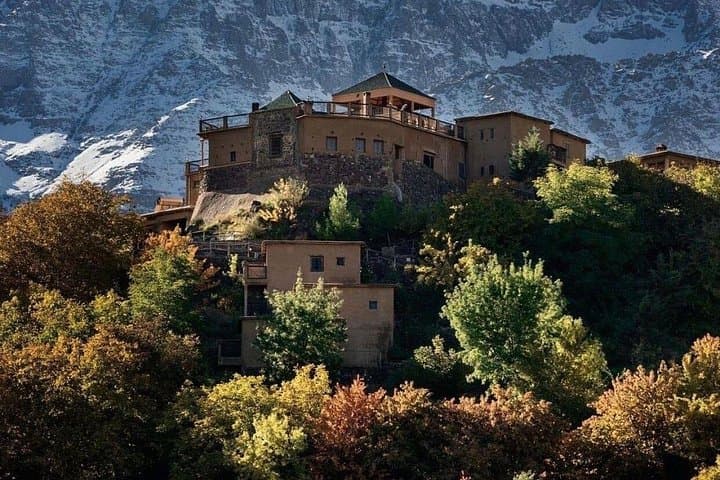
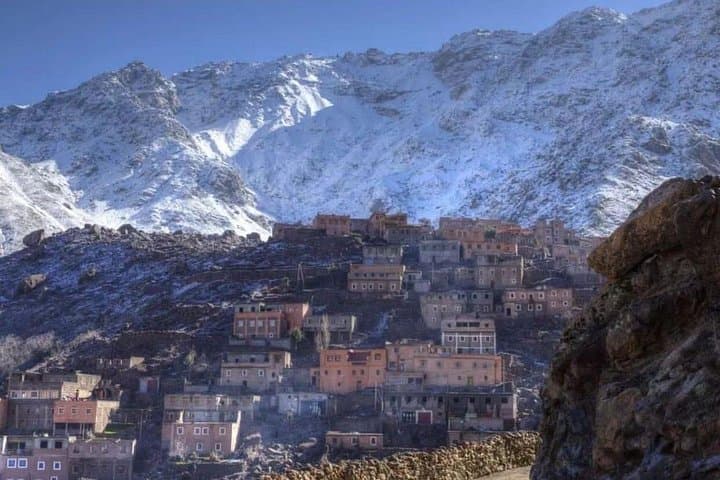
The Atlas range is geologically young, folded by the collision of the African and Eurasian plates; volcanic plugs and river-cut gorges still shape local routes. The valleys around Imlil and Asni have long been Berber homelands, with weekly markets and small cooperatives that process argan and olives. The Agafay is not a Sahara dune sea but a stony desert that challenges riders with its rolling, moonlike terrain.
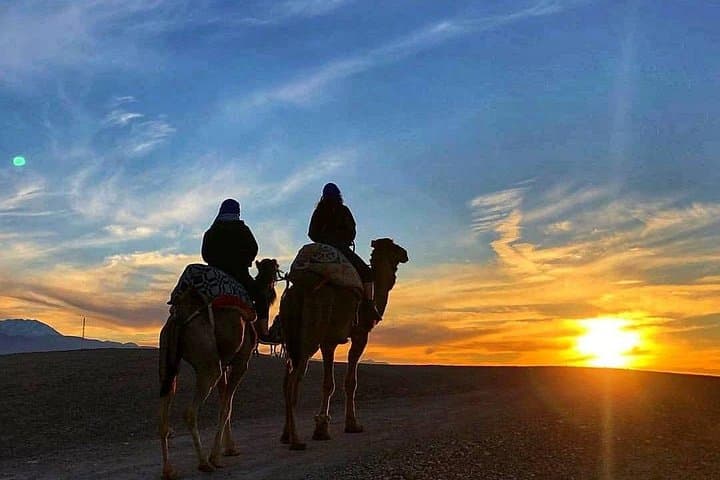
On this full-day expedition expect about 1–1.5 hours driving each way from central Marrakech, short guided walks to waterfalls of roughly 2–4 km on mixed dirt and paved paths with 100–300 m of cumulative elevation gain, and an optional camel ride across the Agafay’s rocky flats. Terrain alternates between village cobbles, terraces, and loose scree—nothing technical, but steady footing helps.
Practical tips: start early to avoid midday heat, carry 1–2 liters of water, and bring layered clothing—mountain mornings can be cool even when Marrakech is warm. Respect local customs at cooperatives and markets; purchases support small households. The day closes with a homemade Berber lunch—simple, filling, and a clear window into mountain hospitality—before the drive back as the High Atlas settles into late-afternoon light.
easy.
8 hours.
Suitable for most fitness levels; participants should be able to walk 2–4 km on uneven terrain and climb short inclines.
Expect about 1–1.5 hours each way depending on traffic and which villages are visited; the full tour is roughly 8 hours.
Walks are short (2–4 km) on mixed terrain with modest elevation gain; they are suitable for most people who can handle uneven paths.
A camel ride across the Agafay is offered as part of the day—confirm availability when booking and wear closed-toe shoes.
Yes; visits to an argan cooperative and village markets are part of the itinerary—purchases help local families and cooperatives.
The High Atlas has been occupied by Berber communities for millennia; trade and seasonal grazing shaped village networks and terraces still worked today.
Small cooperatives and responsible tour operators support local livelihoods; stick to paths, avoid single-use plastics, and buy locally made goods to reduce impact.
Day trip on the villages of the High Atlas Mountains operates guided outdoor trips and adventures with an emphasis on safety, stewardship, and memorable experiences.
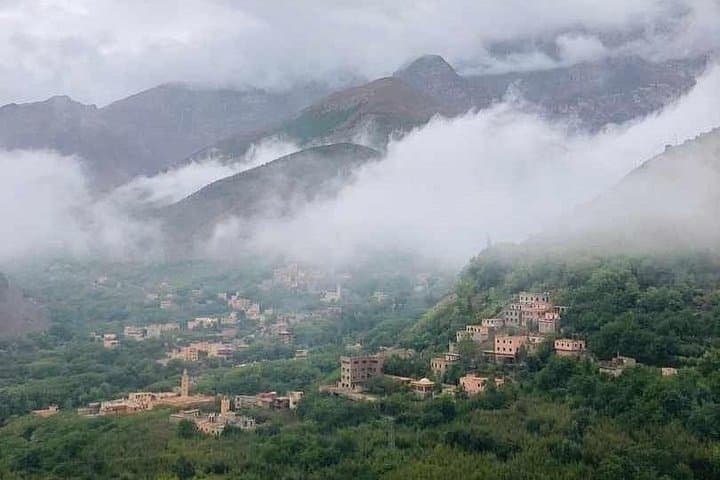
A dust-sweet road leaves Marrakech behind and climbs toward the High Atlas, the air cooling as the city’s heat gives way to stone terraces and mule tracks. By mid-morning the group disperses along narrow village lanes—women carrying argan, children watching visitors pass—while the mountains above the valley push clouds across the ridges.
A dust-sweet road leaves Marrakech behind and climbs toward the High Atlas, the air cooling as the city’s heat gives way to stone terraces and mule tracks. By mid-morning the group disperses along narrow village lanes—women carrying argan, children watching visitors pass—while the mountains above the valley push clouds across the ridges.
The Atlas range is geologically young, folded by the collision of the African and Eurasian plates; volcanic plugs and river-cut gorges still shape local routes. The valleys around Imlil and Asni have long been Berber homelands, with weekly markets and small cooperatives that process argan and olives. The Agafay is not a Sahara dune sea but a stony desert that challenges riders with its rolling, moonlike terrain.
On this full-day expedition expect about 1–1.5 hours driving each way from central Marrakech, short guided walks to waterfalls of roughly 2–4 km on mixed dirt and paved paths with 100–300 m of cumulative elevation gain, and an optional camel ride across the Agafay’s rocky flats. Terrain alternates between village cobbles, terraces, and loose scree—nothing technical, but steady footing helps.
Practical tips: start early to avoid midday heat, carry 1–2 liters of water, and bring layered clothing—mountain mornings can be cool even when Marrakech is warm. Respect local customs at cooperatives and markets; purchases support small households. The day closes with a homemade Berber lunch—simple, filling, and a clear window into mountain hospitality—before the drive back as the High Atlas settles into late-afternoon light.