THE ADVENTURE COLLECTIVE® · Independent discovery and booking for outdoor travel

Cross the High Atlas and step into Ait Ben Haddou’s ancient mud-brick alleys on a full-day trip from Marrakech. Expect dramatic mountain passes, a guided walk through a UNESCO ksar, and a peek behind the curtain at Ouarzazate’s film studios.
Cross the High Atlas and step into Ait Ben Haddou’s ancient mud-brick alleys on a full-day trip from Marrakech. Expect dramatic mountain passes, a guided walk through a UNESCO ksar, and a peek behind the curtain at Ouarzazate’s film studios.
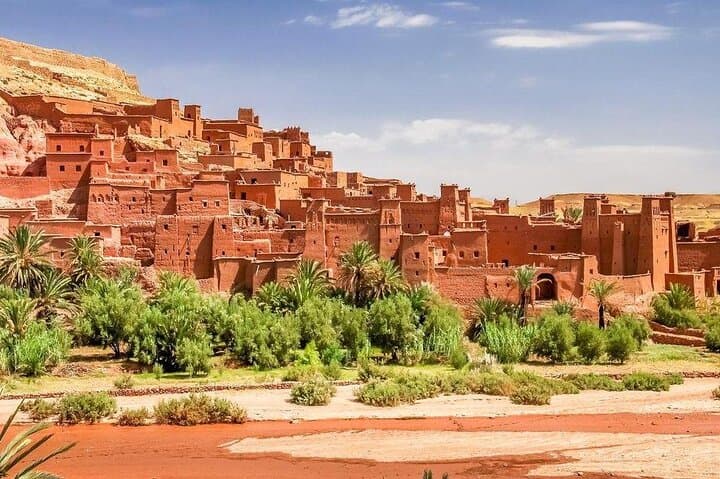
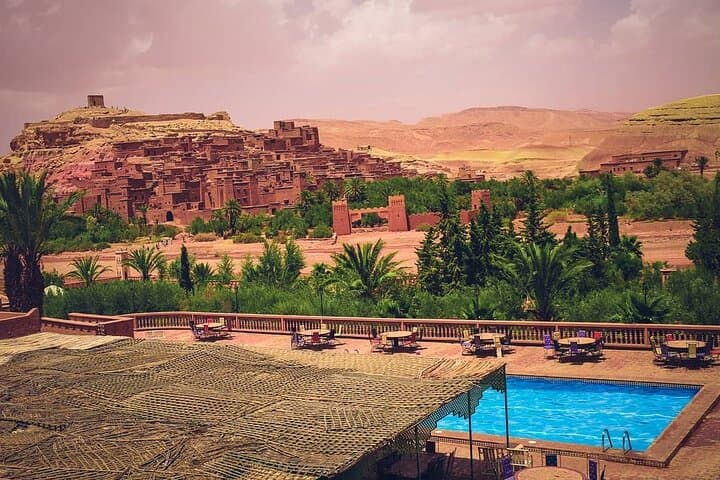
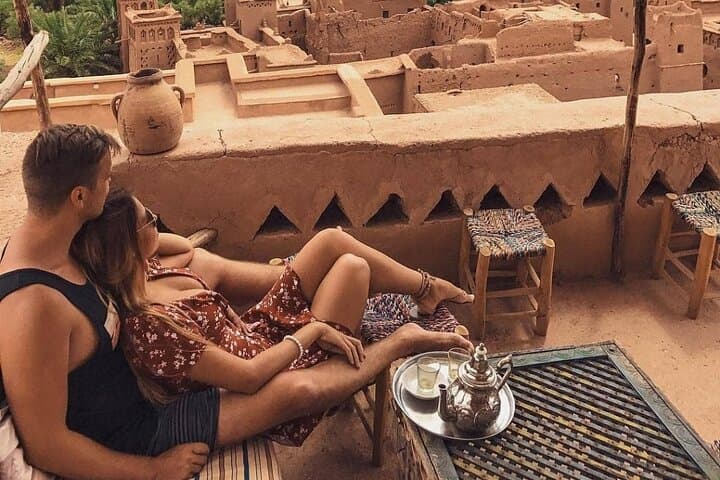
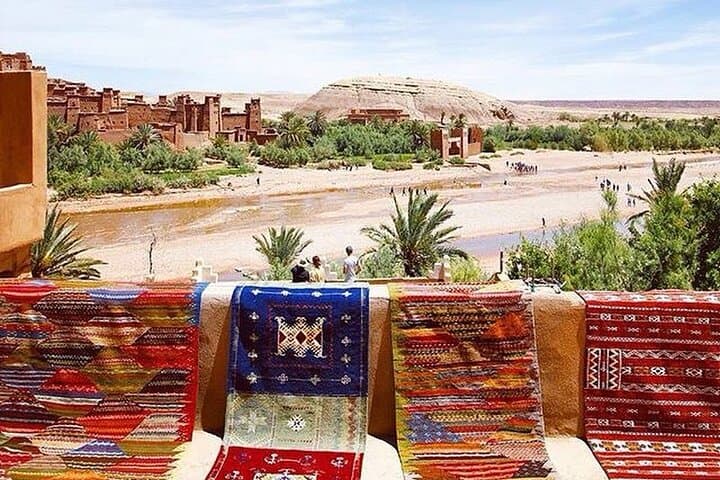
Dawn leaves Marrakech in a long ribbon of headlights, and the road climbs into the Atlas Mountains as sunlight pries color from the valley. The air-conditioned vehicle winds up to Tizi n’Tichka pass, where the High Atlas looms like a patient old guide; cliffs and stony ridges dare you to look away. From the pass the bus unspools toward the ksar of Ait Ben Haddou, its mud-brick walls glowing ochre against blue sky.
Verified experiences and guided adventures in the surrounding area.
Operated by Happy Morocco Holidays · Ouarzazate, Drâa-Tafilalet
Dawn leaves Marrakech in a long ribbon of headlights, and the road climbs into the Atlas Mountains as sunlight pries color from the valley. The air-conditioned vehicle winds up to Tizi n’Tichka pass, where the High Atlas looms like a patient old guide; cliffs and stony ridges dare you to look away. From the pass the bus unspools toward the ksar of Ait Ben Haddou, its mud-brick walls glowing ochre against blue sky.
Ait Ben Haddou is a fortified ksar and UNESCO World Heritage site—an example of traditional southern Moroccan earthen construction (pisé) that anchored trade routes between sub-Saharan Africa and the Mediterranean. Geologically, the High Atlas is young, tectonically active rock that rises abruptly from surrounding plains, shaping steep valleys and passes that drivers and travelers have used for centuries.
Culturally, the route threads Berber villages where hospitality and slow-paced markets remain constant. Ouarzazate earned the nickname “Hollywood of Morocco” when film sets and studios converted desert panoramas into international backdrops; CLA Studios offers a behind-the-scenes look at large-scale set construction.
Practical guidance: expect a long 12–13 hour day with several photo stops and guided walks—bring sturdy shoes for cobbled alleys, sun protection, and layers for variable mountain temperatures. Carry cash for small purchases and tipping; admission and studio tours may require modest fees. Hydration matters: plan for at least one liter per person plus snacks for energy during the drive. Finally, give yourself time after the return to Marrakech to stretch—this is a full-day cultural and landscape sprint that rewards early starts and patient eyes.
moderate.
12–13 hours.
Suitable for travelers with moderate fitness who can manage several short walks on uneven ground and handle a long day of travel.
The round trip is long—expect roughly 6–8 hours of driving total, depending on stops and traffic; the full tour runs about 12–13 hours.
Typical tours include guided visits but not all entrance fees; bring cash for any site admissions or optional studio fees.
The road over Tizi n’Tichka is usually passable, but snow or ice can affect travel—check weather and tour cancellation policies in winter months.
Most tours can accommodate simple dietary requests if notified in advance—use the booking questions to list special requirements.
Ait Ben Haddou was a fortified trans-Saharan caravan stop; its rammed-earth architecture exemplifies southern Moroccan defensive settlements used for trade and community continuity.
The ksar’s earthen buildings require ongoing maintenance—respect pathways, avoid climbing fragile walls, and support local conservation initiatives when possible.
Happy Morocco Holidays operates guided outdoor trips and adventures with an emphasis on safety, stewardship, and memorable experiences.
Dawn leaves Marrakech in a long ribbon of headlights, and the road climbs into the Atlas Mountains as sunlight pries color from the valley. The air-conditioned vehicle winds up to Tizi n’Tichka pass, where the High Atlas looms like a patient old guide; cliffs and stony ridges dare you to look away. From the pass the bus unspools toward the ksar of Ait Ben Haddou, its mud-brick walls glowing ochre against blue sky.
Dawn leaves Marrakech in a long ribbon of headlights, and the road climbs into the Atlas Mountains as sunlight pries color from the valley. The air-conditioned vehicle winds up to Tizi n’Tichka pass, where the High Atlas looms like a patient old guide; cliffs and stony ridges dare you to look away. From the pass the bus unspools toward the ksar of Ait Ben Haddou, its mud-brick walls glowing ochre against blue sky.
Ait Ben Haddou is a fortified ksar and UNESCO World Heritage site—an example of traditional southern Moroccan earthen construction (pisé) that anchored trade routes between sub-Saharan Africa and the Mediterranean. Geologically, the High Atlas is young, tectonically active rock that rises abruptly from surrounding plains, shaping steep valleys and passes that drivers and travelers have used for centuries.
Culturally, the route threads Berber villages where hospitality and slow-paced markets remain constant. Ouarzazate earned the nickname “Hollywood of Morocco” when film sets and studios converted desert panoramas into international backdrops; CLA Studios offers a behind-the-scenes look at large-scale set construction.
Practical guidance: expect a long 12–13 hour day with several photo stops and guided walks—bring sturdy shoes for cobbled alleys, sun protection, and layers for variable mountain temperatures. Carry cash for small purchases and tipping; admission and studio tours may require modest fees. Hydration matters: plan for at least one liter per person plus snacks for energy during the drive. Finally, give yourself time after the return to Marrakech to stretch—this is a full-day cultural and landscape sprint that rewards early starts and patient eyes.