THE ADVENTURE COLLECTIVE® · Independent discovery and booking for outdoor travel

Leave Marrakech for a full-day circuit through the High Atlas: Lalla Takerkoust’s lake, the Kik plateau, Asni’s market and Imlil valley—an immersive cultural drive with short walks, mountain views and a Berber lunch. Practical, vehicle-led and rich in local encounters.
Leave Marrakech for a full-day circuit through the High Atlas: Lalla Takerkoust’s lake, the Kik plateau, Asni’s market and Imlil valley—an immersive cultural drive with short walks, mountain views and a Berber lunch. Practical, vehicle-led and rich in local encounters.
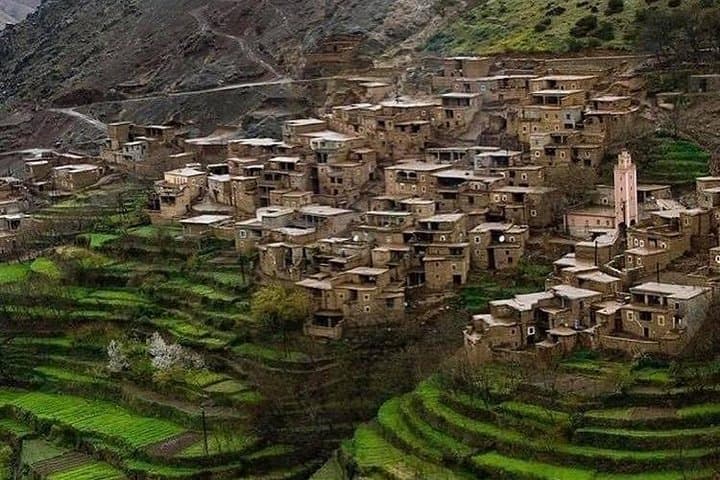
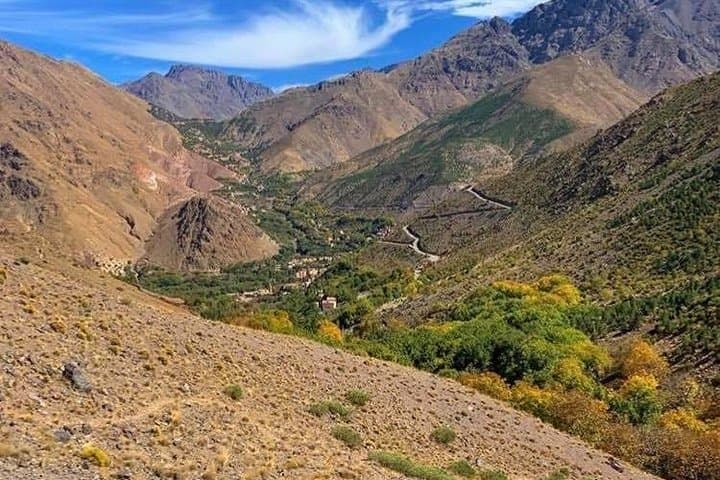
A cloud-creased sun lifts over the High Atlas as a private minivan threads out of Marrakech and up into hairpin turns. Passengers watch orange roofs shrink, then the valley opens—terraced fields and the dark line of cedar forest giving way to stone villages where children wave from flat roofs. The route moves between Lalla Takerkoust’s reflective lake, the plateau of Kik, Asni’s market rhythm and the paths of Imlil valley, each stop a different chapter of mountain life.
Verified experiences and guided adventures in the surrounding area.
Operated by Dafli Tours · Marrakech, Marrakesh-Safi
A cloud-creased sun lifts over the High Atlas as a private minivan threads out of Marrakech and up into hairpin turns. Passengers watch orange roofs shrink, then the valley opens—terraced fields and the dark line of cedar forest giving way to stone villages where children wave from flat roofs. The route moves between Lalla Takerkoust’s reflective lake, the plateau of Kik, Asni’s market rhythm and the paths of Imlil valley, each stop a different chapter of mountain life.
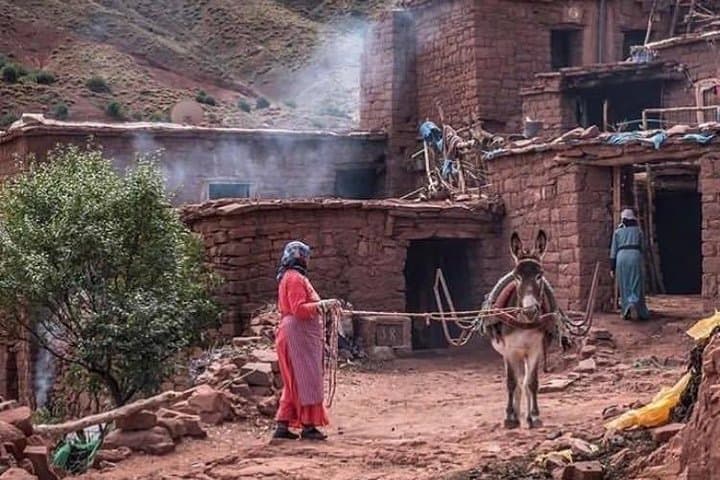
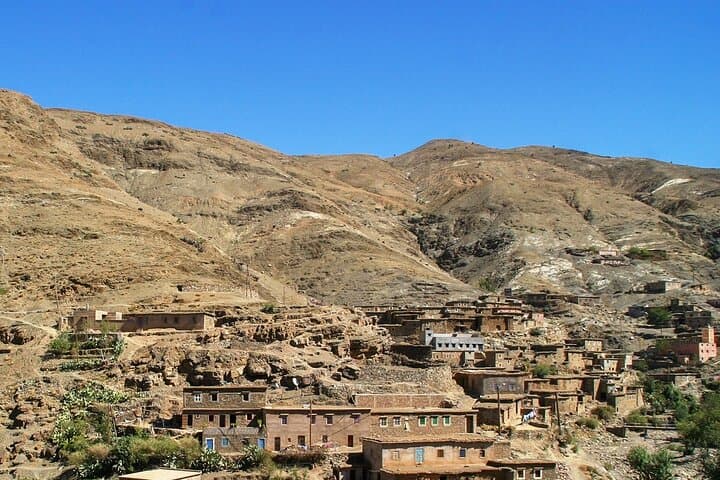
Geology here is honest: folded schist and shale pushed up by the African and Eurasian plates, carved by winter snow and summer runoff into steep gullies and stepped terraces. The area’s human story is equally long: Amazigh (Berber) communities have farmed and traded these slopes for centuries, their villages offering mud-brick homes, seasonal souks and simple tea offers to strangers. Imlil is the gateway for Toubkal trekkers; Asni keeps a weekly market where local produce and woven goods are most authentic.
Practical guidance is straightforward. Expect an 8–9 hour day dominated by driving with short, uneven walks; wear sturdy shoes and bring layers—the valley can be warm at midday but chilly at higher stops. Sun protection, a full water bottle and cash for tiny markets are essential. Photography opportunities are abundant but respect private homes and ask before entering village compounds. If winter snow has closed higher passes, operators will adjust the itinerary; book morning pickups and choose a private tour to move at your pace.
easy.
8–9 hours.
Light fitness; suitable for travelers comfortable with short walks on uneven ground and several hours in a vehicle.
Pickups and drop-offs are arranged in Marrakech; the operator provides a private transfer that returns you to your requested location in the city.
Walking is short and optional at viewpoints and villages—expect 10–45 minute stretches on uneven, sometimes steep paths.
Yes—this is a vehicle-led, easy physical day; however, those with limited mobility should confirm access for specific village stops in advance.
A local Berber lunch and bottled water are included; bring snacks if you have specific dietary needs or require extra energy between stops.
The High Atlas has been inhabited by Amazigh (Berber) communities for millennia; villages here preserved agricultural terraces and traditional crafts shaped by mountain life.
Tourism brings income but also pressure on water and trails; choose local guides, avoid single-use plastic and respect grazing and farming zones to reduce impact.
Dafli Tours operates guided outdoor trips and adventures with an emphasis on safety, stewardship, and memorable experiences.
A cloud-creased sun lifts over the High Atlas as a private minivan threads out of Marrakech and up into hairpin turns. Passengers watch orange roofs shrink, then the valley opens—terraced fields and the dark line of cedar forest giving way to stone villages where children wave from flat roofs. The route moves between Lalla Takerkoust’s reflective lake, the plateau of Kik, Asni’s market rhythm and the paths of Imlil valley, each stop a different chapter of mountain life.
A cloud-creased sun lifts over the High Atlas as a private minivan threads out of Marrakech and up into hairpin turns. Passengers watch orange roofs shrink, then the valley opens—terraced fields and the dark line of cedar forest giving way to stone villages where children wave from flat roofs. The route moves between Lalla Takerkoust’s reflective lake, the plateau of Kik, Asni’s market rhythm and the paths of Imlil valley, each stop a different chapter of mountain life.
Geology here is honest: folded schist and shale pushed up by the African and Eurasian plates, carved by winter snow and summer runoff into steep gullies and stepped terraces. The area’s human story is equally long: Amazigh (Berber) communities have farmed and traded these slopes for centuries, their villages offering mud-brick homes, seasonal souks and simple tea offers to strangers. Imlil is the gateway for Toubkal trekkers; Asni keeps a weekly market where local produce and woven goods are most authentic.
Practical guidance is straightforward. Expect an 8–9 hour day dominated by driving with short, uneven walks; wear sturdy shoes and bring layers—the valley can be warm at midday but chilly at higher stops. Sun protection, a full water bottle and cash for tiny markets are essential. Photography opportunities are abundant but respect private homes and ask before entering village compounds. If winter snow has closed higher passes, operators will adjust the itinerary; book morning pickups and choose a private tour to move at your pace.