THE ADVENTURE COLLECTIVE® · Independent discovery and booking for outdoor travel

Leave Marrakech for two days of high-plateau walking through the High Atlas: pass ridgelines, meet Berber villagers, and overnight in a local guest house. This compact trek blends steady hiking with cultural exchange and big mountain views.
Leave Marrakech for two days of high-plateau walking through the High Atlas: pass ridgelines, meet Berber villagers, and overnight in a local guest house. This compact trek blends steady hiking with cultural exchange and big mountain views.
Morning light on the High Atlas slices through almond trees as you leave Marrakech’s tiled roofs behind and climb toward narrow mule tracks. By mid-morning the road gives way to stone terraces and the guide’s voice marks the rhythm: a steady, human pace against ridgelines that seem to push the sky back.
Verified experiences and guided adventures in the surrounding area.
Operated by Atlas Mountain Trekking - Day Tours · Imlil, Marrakech-Safi
Morning light on the High Atlas slices through almond trees as you leave Marrakech’s tiled roofs behind and climb toward narrow mule tracks. By mid-morning the road gives way to stone terraces and the guide’s voice marks the rhythm: a steady, human pace against ridgelines that seem to push the sky back.
These two days trace passages used for centuries by Berber communities who farm steep slopes and trade across mountain passes. Geologically the High Atlas is young and rough—folded limestone and schist carved into sharp cols and deep valleys by winter torrents. Culture here is hands-on: guest houses in Tacheddirt host warm mint tea, stories and simple stews, and mules remain indispensable for moving supplies.
Expect 10–12 km of walking each day on maintained mule tracks, with a high point around Tizi n’Tamatert (~2,300 m) and village drops to 1,600–1,800 m. Trails are rocky and uneven, with short steep sections and plenty of switchbacks; weather can flip between hot sun and cool mountain wind.
Practical guidance: start early to avoid midday heat, carry 2–3 L water, and wear supportive boots with good traction. Follow local guidance on pacing—altitude effects are mild but real—and tip muleteers and guesthouse staff if service is good. The trip includes hotel pickup, a local guide, cook, two lunches and dinners, and an overnight in a Berber guest house, so the logistics are straightforward, letting you focus on the walking, the villages, and the views that keep pulling you forward.
moderate.
2 days (approx. 10–12 km walking per day).
Good baseline fitness with ability to hike 4–6 hours/day on uneven trails and short steep sections
The highest point is around Tizi n’Tamatert at roughly 2,300 m, where moderate acclimatization and steady pacing are sufficient for most people.
Overnight accommodation is in a local Berber guest house (shared rooms), not camping; basic comforts and home-cooked meals are provided.
Yes — hotel pickup/drop-off, two lunches, two dinners, breakfast, a local guide, cook, and private vehicle transport back to Marrakech are included.
Children aged 6 and older may join, but participants should have at least moderate fitness; infants must sit on laps in vehicles and specialized infant seats are available.
Berber (Amazigh) communities have farmed these valleys for centuries; mule tracks and passes trace historic routes between villages and seasonal pastures.
Trail users should stick to established paths to avoid erosion, conserve water, and support local guides to ensure economic benefits remain in the community.
Atlas Mountain Trekking - Day Tours operates guided outdoor trips and adventures with an emphasis on safety, stewardship, and memorable experiences.

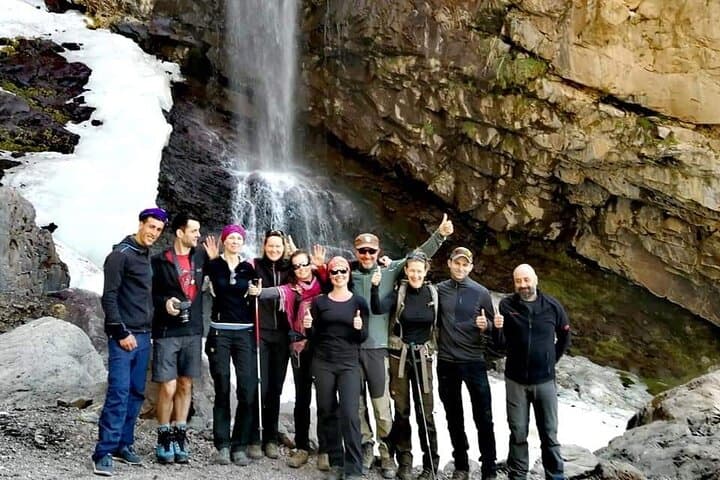


Morning light on the High Atlas slices through almond trees as you leave Marrakech’s tiled roofs behind and climb toward narrow mule tracks. By mid-morning the road gives way to stone terraces and the guide’s voice marks the rhythm: a steady, human pace against ridgelines that seem to push the sky back.
Morning light on the High Atlas slices through almond trees as you leave Marrakech’s tiled roofs behind and climb toward narrow mule tracks. By mid-morning the road gives way to stone terraces and the guide’s voice marks the rhythm: a steady, human pace against ridgelines that seem to push the sky back.
These two days trace passages used for centuries by Berber communities who farm steep slopes and trade across mountain passes. Geologically the High Atlas is young and rough—folded limestone and schist carved into sharp cols and deep valleys by winter torrents. Culture here is hands-on: guest houses in Tacheddirt host warm mint tea, stories and simple stews, and mules remain indispensable for moving supplies.
Expect 10–12 km of walking each day on maintained mule tracks, with a high point around Tizi n’Tamatert (~2,300 m) and village drops to 1,600–1,800 m. Trails are rocky and uneven, with short steep sections and plenty of switchbacks; weather can flip between hot sun and cool mountain wind.
Practical guidance: start early to avoid midday heat, carry 2–3 L water, and wear supportive boots with good traction. Follow local guidance on pacing—altitude effects are mild but real—and tip muleteers and guesthouse staff if service is good. The trip includes hotel pickup, a local guide, cook, two lunches and dinners, and an overnight in a Berber guest house, so the logistics are straightforward, letting you focus on the walking, the villages, and the views that keep pulling you forward.