THE ADVENTURE COLLECTIVE® · Independent discovery and booking for outdoor travel

Two days of classic High Atlas routes from Marrakech to Imlil, crossing high cols, Berber villages and waterfalls. This trip pairs sustained mountain hiking with evenings in village guesthouses and local meals.
Two days of classic High Atlas routes from Marrakech to Imlil, crossing high cols, Berber villages and waterfalls. This trip pairs sustained mountain hiking with evenings in village guesthouses and local meals.
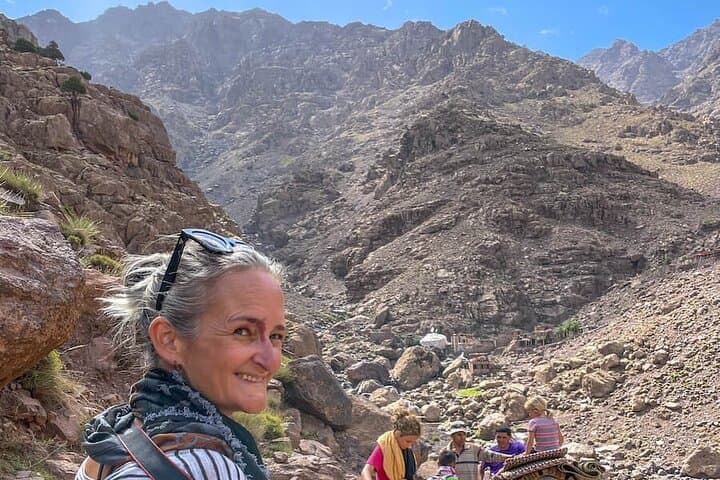
A dust-scented minibus eases out of Marrakech before dawn and the High Atlas rises like an answering wall: slate ridges, terraced fields and gullied valleys that push you onto the trail.
Verified experiences and guided adventures in the surrounding area.
Operated by Brahim's tour · Imlil, Marrakesh-Safi
A dust-scented minibus eases out of Marrakech before dawn and the High Atlas rises like an answering wall: slate ridges, terraced fields and gullied valleys that push you onto the trail.
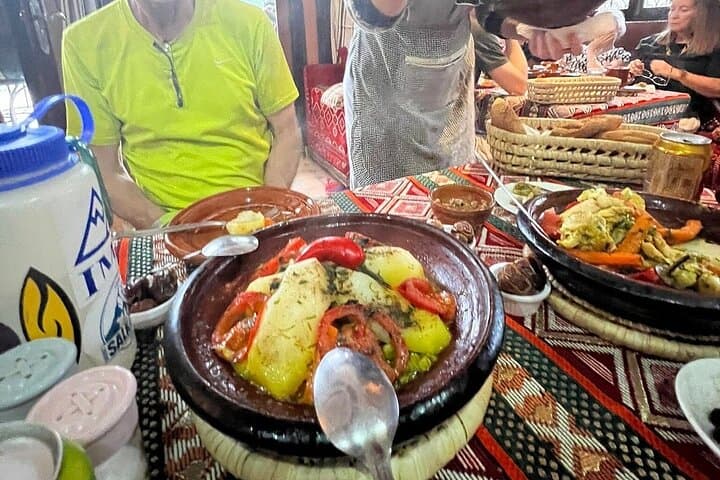
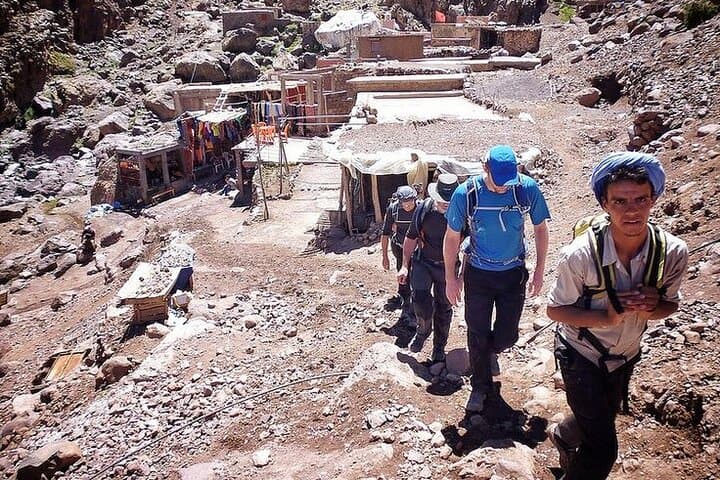
On day one walkers climb from the Imlil basin toward Tizi Ntamatert (≈2,379 m), following wind-scoured mule tracks that open into a broad col overlooking Jbel Oukaïmeden and a cradled plateau. The pass dares you with exposed sections and wide panoramas; lunch on the tizi is a quiet reward. The route descends through Imnane and into the Toubkal valley to a guesthouse in a Berber village for an evening of tagine and hammam.
Day two threads hamlets and orchards, rising again to Tizi N’izgaren (≈2,520 m) before dropping to Sidi Chamharouch and the Imlil waterfall, finishing back toward Marrakech. Geologically the High Atlas is young uplifted rock—sharp ridgelines, stacked metamorphic terraces and erosive gullies that channel winter runoff.
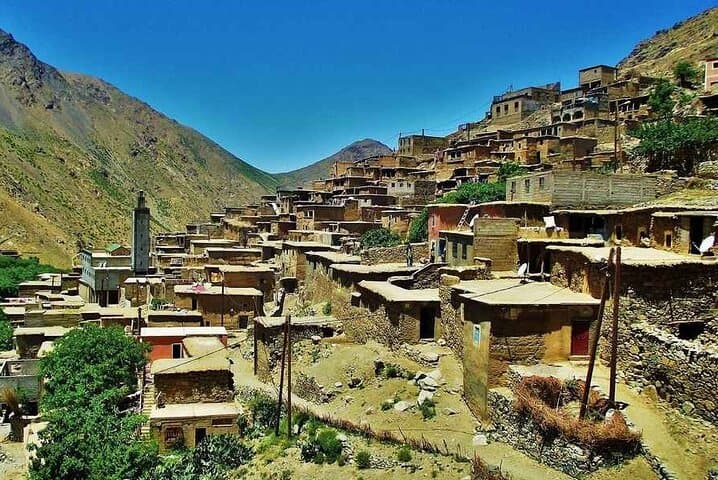
Culturally the trek crosses Aït Mizane and other Berber communities where terraced agriculture and mule transport remain daily practice.
Practical guidance: expect 5–7 hours on each hiking day with moderate elevation gain; trails are rocky and can be muddy after rain. Bring layered clothing, sturdy boots, and a small first-aid kit. Hydrate early and plan for strong sun at higher passes. If altitude or steep descents concern you, discuss pace and portage options with your guide before departure.
challenging.
2 days (5–7 hours hiking per day).
Good aerobic fitness and comfort with sustained uphill and downhill hiking at moderate altitude are required.
Expect sustained climbs to 2,300–2,500 m with uneven, rocky terrain; ascents are steady and descents can be steep—pace yourself and use trekking poles if you need extra stability.
A local English- or French-speaking Berber guide leads the trek; nights are in a mountain guesthouse/riad with shared rooms, meals included and access to a traditional hammam.
Operators may cancel in severe weather—snow or heavy rain make high passes hazardous; bring warm, water-resistant gear and heed guide guidance.
Children can join but must be physically capable of long daily hikes; check age and safety requirements with the operator and consider private pacing options.
The High Atlas has long been home to Berber (Amazigh) communities whose terraced agriculture and mule paths date back centuries, acting as trade and pastoral routes across the range.
Trail erosion and seasonal grazing pressure are local concerns; stick to established tracks, pack out waste, and respect village resources to reduce impact.
Brahim's tour operates guided outdoor trips and adventures with an emphasis on safety, stewardship, and memorable experiences.
A dust-scented minibus eases out of Marrakech before dawn and the High Atlas rises like an answering wall: slate ridges, terraced fields and gullied valleys that push you onto the trail.
A dust-scented minibus eases out of Marrakech before dawn and the High Atlas rises like an answering wall: slate ridges, terraced fields and gullied valleys that push you onto the trail.
On day one walkers climb from the Imlil basin toward Tizi Ntamatert (≈2,379 m), following wind-scoured mule tracks that open into a broad col overlooking Jbel Oukaïmeden and a cradled plateau. The pass dares you with exposed sections and wide panoramas; lunch on the tizi is a quiet reward. The route descends through Imnane and into the Toubkal valley to a guesthouse in a Berber village for an evening of tagine and hammam.
Day two threads hamlets and orchards, rising again to Tizi N’izgaren (≈2,520 m) before dropping to Sidi Chamharouch and the Imlil waterfall, finishing back toward Marrakech. Geologically the High Atlas is young uplifted rock—sharp ridgelines, stacked metamorphic terraces and erosive gullies that channel winter runoff.
Culturally the trek crosses Aït Mizane and other Berber communities where terraced agriculture and mule transport remain daily practice.
Practical guidance: expect 5–7 hours on each hiking day with moderate elevation gain; trails are rocky and can be muddy after rain. Bring layered clothing, sturdy boots, and a small first-aid kit. Hydrate early and plan for strong sun at higher passes. If altitude or steep descents concern you, discuss pace and portage options with your guide before departure.