THE ADVENTURE COLLECTIVE® · Independent discovery and booking for outdoor travel

Escape Marrakech for a seven-hour journey into the High Atlas: valley walks, seasonal waterfalls, a short camel ride and a visit to a Berber home. This day trip balances light hiking, cultural encounters and scenic stops—ideal for travelers wanting a straightforward mountain experience without multi-day logistics.
Escape Marrakech for a seven-hour journey into the High Atlas: valley walks, seasonal waterfalls, a short camel ride and a visit to a Berber home. This day trip balances light hiking, cultural encounters and scenic stops—ideal for travelers wanting a straightforward mountain experience without multi-day logistics.
You step out of Marrakech's heat into a cooler, stony air as the minivan climbs toward the High Atlas. The road bends, villages peer down from terraced slopes and a sluggish river dares you to follow its line toward cedar forests and sheer, weathered ridges.
Verified experiences and guided adventures in the surrounding area.
Operated by Art de Cuivre Travel · Marrakech, Marrakech-Safi
You step out of Marrakech's heat into a cooler, stony air as the minivan climbs toward the High Atlas. The road bends, villages peer down from terraced slopes and a sluggish river dares you to follow its line toward cedar forests and sheer, weathered ridges.
Geology here is blunt and old: uplifted Jurassic limestone and schist cut by winter torrents, forming the ravines and waterfalls that feed the valleys. The Berber presence predates the modern city—stone houses, roof terraces and a tradition of hospitality that turns strangers into tea-drinking guests. In Imlil and the three adjoining valleys you’ll pass Ait Miza and Moulay Brahim, places where traditional irrigation channels still guide meltwater and mule tracks remain primary routes.
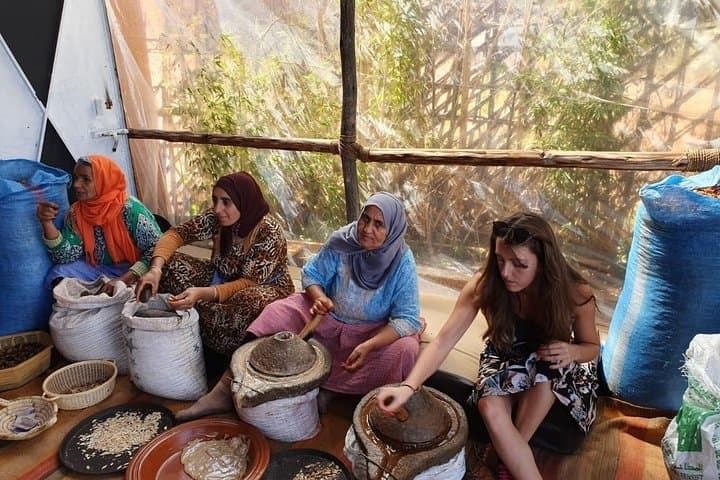
Expect a mix of light walking on rocky village lanes, a short camel ride in the Ourika approach, and a visit to a Berber home for tea and conversation. The waterfalls in the Imlil area are seasonal; spring brings swollen cascades, summer mellows flows but bright skies, and autumn cools the trails.
Practical side: the full-day excursion runs about seven hours with hotel pickup in Marrakech. Shoes with grip, sun protection and a small daypack keep you moving comfortably. Carry cash for a modest lunch or village purchases and be ready to step off the beaten path: terraces and narrow tracks can be uneven. Guides mediate the local experience—listen, ask, and respect private spaces. By dusk you return to the city having traded souk noise for mountain wind and the measured pace of valley life.
moderate.
7 hours.
Suitable for people with basic fitness who can walk 2–4 miles on uneven terrain; not technical but involves short climbs and steps.
Yes; the camel ride is a short, supervised experience on gentle terrain and requires no prior experience.
Lunch is not included—most groups stop at a local café where a simple meal costs around €7, or you can bring snacks.
Expect light to moderate walking—mostly on village lanes and short paths totaling a few kilometers, not technical hiking.
Yes—operators note the tour is suitable for a wide range of ages; infant seats and stroller access are sometimes available but check ahead for specifics.
The High Atlas has long been home to Amazigh (Berber) communities who managed terraced agriculture and trans-Saharan trade routes; villages still reflect those ancestral patterns.
Water is scarce in the region—stay on marked paths to avoid erosion, minimize water use, and support local guides who practice low-impact visits.
Art de Cuivre Travel operates guided outdoor trips and adventures with an emphasis on safety, stewardship, and memorable experiences.



You step out of Marrakech's heat into a cooler, stony air as the minivan climbs toward the High Atlas. The road bends, villages peer down from terraced slopes and a sluggish river dares you to follow its line toward cedar forests and sheer, weathered ridges.
You step out of Marrakech's heat into a cooler, stony air as the minivan climbs toward the High Atlas. The road bends, villages peer down from terraced slopes and a sluggish river dares you to follow its line toward cedar forests and sheer, weathered ridges.
Geology here is blunt and old: uplifted Jurassic limestone and schist cut by winter torrents, forming the ravines and waterfalls that feed the valleys. The Berber presence predates the modern city—stone houses, roof terraces and a tradition of hospitality that turns strangers into tea-drinking guests. In Imlil and the three adjoining valleys you’ll pass Ait Miza and Moulay Brahim, places where traditional irrigation channels still guide meltwater and mule tracks remain primary routes.
Expect a mix of light walking on rocky village lanes, a short camel ride in the Ourika approach, and a visit to a Berber home for tea and conversation. The waterfalls in the Imlil area are seasonal; spring brings swollen cascades, summer mellows flows but bright skies, and autumn cools the trails.
Practical side: the full-day excursion runs about seven hours with hotel pickup in Marrakech. Shoes with grip, sun protection and a small daypack keep you moving comfortably. Carry cash for a modest lunch or village purchases and be ready to step off the beaten path: terraces and narrow tracks can be uneven. Guides mediate the local experience—listen, ask, and respect private spaces. By dusk you return to the city having traded souk noise for mountain wind and the measured pace of valley life.