THE ADVENTURE COLLECTIVE® · Independent discovery and booking for outdoor travel

Escape Marrakech for a full‑day drive into the Atlas foothills where Berber villages, argan cooperatives and cascading waterfalls offer easy hikes and panoramic viewpoints. This day tour mixes short walks, cultural stops and mountain scenery suited to most fitness levels.
Escape Marrakech for a full‑day drive into the Atlas foothills where Berber villages, argan cooperatives and cascading waterfalls offer easy hikes and panoramic viewpoints. This day tour mixes short walks, cultural stops and mountain scenery suited to most fitness levels.
You step out of the air‑conditioned minivan and mountain air pulls at your shirt collar — a dry, cool breath compared with Marrakech’s spice‑thick streets. Olive terraces and flat‑roofted houses sit on the lower shoulders of the High Atlas; behind them the ridgelines climb in stepped ribs, clouds sometimes rubbing their tops. The guide points out a trail that threads toward a nearby cascade; goats watch you as if reading your pace.
Verified experiences and guided adventures in the surrounding area.
Operated by Marrakech Outdoor Trips · Marrakech, Marrakech-Safi
You step out of the air‑conditioned minivan and mountain air pulls at your shirt collar — a dry, cool breath compared with Marrakech’s spice‑thick streets. Olive terraces and flat‑roofted houses sit on the lower shoulders of the High Atlas; behind them the ridgelines climb in stepped ribs, clouds sometimes rubbing their tops. The guide points out a trail that threads toward a nearby cascade; goats watch you as if reading your pace.
This region has long been home to Amazigh (Berber) communities whose stone terraces and simple varnished doors mark centuries of mountain life. Geologically, the High Atlas rose as the African and Eurasian plates collided, exposing folded sedimentary and metamorphic rock and creating steep valleys that channel seasonal streams into waterfalls. Culturally, argan cooperatives and small markets offer a living link between town and mountain life — a place where trade and hospitality intersect.
On a shared full‑day tour from Marrakech expect photo stops at viewpoints, a visit to an argan cooperative, a market if your timing aligns, and one or more short hikes to waterfalls or village viewpoints. Trails are usually dirt and rocky, with modest elevation changes; most walks are 1–3 km segments suitable for moderate shoe traction.
Practical tips: bring layered clothing for temperature swings, sun protection, and a reusable water bottle; wear sturdy shoes for uneven surfaces. Morning departures avoid afternoon heat and give clearer light on the ridgelines. The trip is equal parts cultural stop and gentle mountain walk — a way to trade Marrakech’s bustle for a day shaped by stone, water, and simple village rhythms.
easy.
8–9 hours.
Suitable for travelers in regular, general fitness—able to walk short uneven trails and manage several hours away from the city.
The itinerary typically includes about 45–90 minutes of driving each way depending on the route and traffic; total trip time is usually 8–9 hours.
No — hikes on this tour are short, mostly on dirt or rocky paths with modest elevation change and suitable for most fitness levels.
Yes—the tour lists a local lunch included, often a communal meal in a village or a simple restaurant near the valley.
Most providers can accommodate common dietary requests if informed at booking; use the special requirements field to note allergies or preferences.
Amazigh (Berber) communities have inhabited these valleys for centuries, maintaining terrace farming and local crafts that connect mountain life to Marrakech’s markets.
Support local cooperatives and carry out waste; trail erosion and water demand are local concerns, so stick to paths and minimize single‑use plastics.
Marrakech Outdoor Trips operates guided outdoor trips and adventures with an emphasis on safety, stewardship, and memorable experiences.
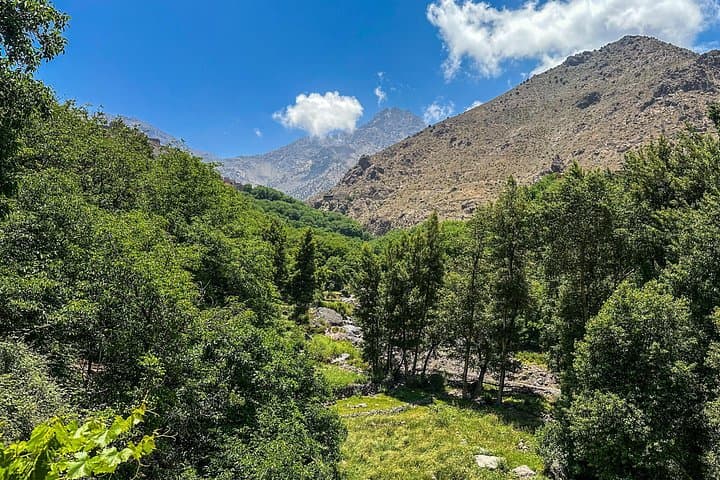
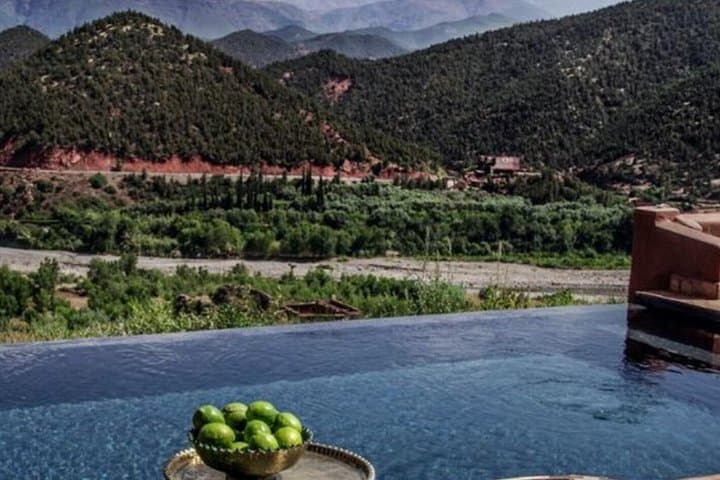
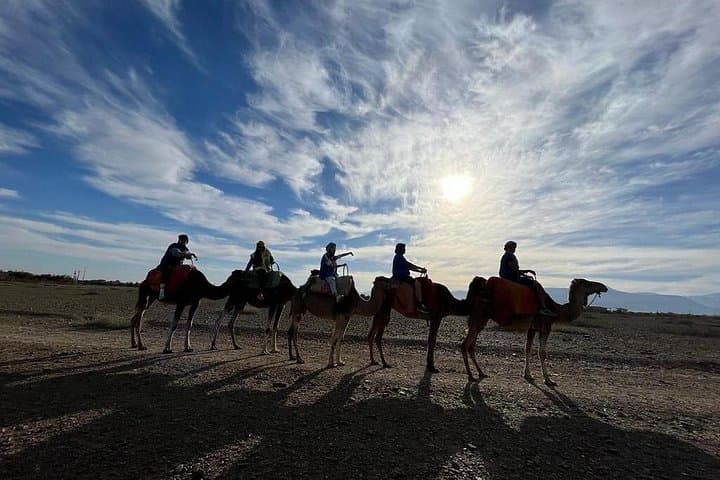
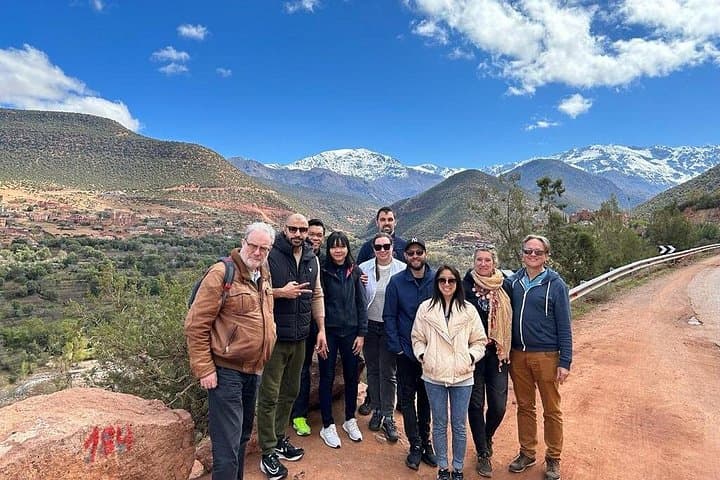
You step out of the air‑conditioned minivan and mountain air pulls at your shirt collar — a dry, cool breath compared with Marrakech’s spice‑thick streets. Olive terraces and flat‑roofted houses sit on the lower shoulders of the High Atlas; behind them the ridgelines climb in stepped ribs, clouds sometimes rubbing their tops. The guide points out a trail that threads toward a nearby cascade; goats watch you as if reading your pace.
You step out of the air‑conditioned minivan and mountain air pulls at your shirt collar — a dry, cool breath compared with Marrakech’s spice‑thick streets. Olive terraces and flat‑roofted houses sit on the lower shoulders of the High Atlas; behind them the ridgelines climb in stepped ribs, clouds sometimes rubbing their tops. The guide points out a trail that threads toward a nearby cascade; goats watch you as if reading your pace.
This region has long been home to Amazigh (Berber) communities whose stone terraces and simple varnished doors mark centuries of mountain life. Geologically, the High Atlas rose as the African and Eurasian plates collided, exposing folded sedimentary and metamorphic rock and creating steep valleys that channel seasonal streams into waterfalls. Culturally, argan cooperatives and small markets offer a living link between town and mountain life — a place where trade and hospitality intersect.
On a shared full‑day tour from Marrakech expect photo stops at viewpoints, a visit to an argan cooperative, a market if your timing aligns, and one or more short hikes to waterfalls or village viewpoints. Trails are usually dirt and rocky, with modest elevation changes; most walks are 1–3 km segments suitable for moderate shoe traction.
Practical tips: bring layered clothing for temperature swings, sun protection, and a reusable water bottle; wear sturdy shoes for uneven surfaces. Morning departures avoid afternoon heat and give clearer light on the ridgelines. The trip is equal parts cultural stop and gentle mountain walk — a way to trade Marrakech’s bustle for a day shaped by stone, water, and simple village rhythms.