THE ADVENTURE COLLECTIVE® · Independent discovery and booking for outdoor travel

Leave Marrakech for a full-day hike into the High Atlas: a steady 5–8 hour ascent past Berber villages with lunch at 2,500m. Expect about 900m of climbing, rocky terrain, and panoramic ridgelines.
Leave Marrakech for a full-day hike into the High Atlas: a steady 5–8 hour ascent past Berber villages with lunch at 2,500m. Expect about 900m of climbing, rocky terrain, and panoramic ridgelines.
The trail opens with the smell of dust and thyme as an air-conditioned transfer leaves Marrakech behind and the road tightens into the high valleys above Imlil. Mules pick their way on stone tracks; the mountains push skyward and the wind seems to dare you to keep climbing.
Verified experiences and guided adventures in the surrounding area.
Operated by ClimbingToubkal · Imlil, Marrakesh-Safi
The trail opens with the smell of dust and thyme as an air-conditioned transfer leaves Marrakech behind and the road tightens into the high valleys above Imlil. Mules pick their way on stone tracks; the mountains push skyward and the wind seems to dare you to keep climbing.
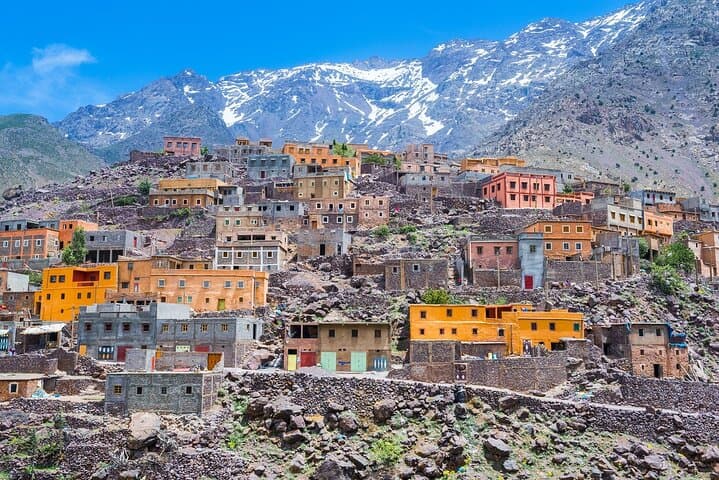
This day hike leads into the High Atlas, a range forged by tectonic collision and sculpted by millennia of snowfall and spring runoff. Berber villages scatter the slopes—stone houses with flat roofs, terraces for barley and almond trees—and the trail threads through centuries of pastoral life where seasonal herds still move between pastures. The landscape alternates scrubby, sun-baked inclines and cooler gullies carved by winter streams; cliffs occasionally open to long views across serrated ridgelines.
Expect a sustained uphill effort (roughly 900m of total ascent reported) spread over 5–8 hours, with a cooked lunch served at about 2,500m. Guides bring a mule and a cook who prepares hot food at the high stop, a welcome reward after steep switchbacks. Cultural moments—passing a small market on Saturday, greeting villagers—are part of the rhythm.
Practical guidance: start early to avoid midday heat, wear broken-in hiking boots and layered clothing for big temperature swings, and carry at least 2–3 liters of water. Be ready for rocky, uneven terrain and short steep pitches; pacing and steady breathing make the climb manageable. The trip suits hikers looking for a full-day, high-elevation exposure to Atlas life and landscapes without technical climbing.
challenging.
5–8 hours.
Suitable for hikers with good cardiovascular fitness and endurance for sustained uphill walking over several hours.
Yes—an air-conditioned vehicle collects guests from accommodations in Marrakech or nearby and drives to Imlil.
The route is a sustained uphill day with roughly 900m of ascent over rocky terrain; it’s challenging for those unaccustomed to long climbs but non-technical.
Yes—a cook accompanies the group and prepares a hot lunch served at about 2,500m; bottled water is also provided.
The operator may cancel for bad weather; the booking policy allows full refunds if canceled at least 24 hours in advance or if conditions are unsafe.
The High Atlas are home to Berber (Amazigh) communities whose mountain agriculture and stone terraces reflect centuries of adaptation to the rugged environment.
Stick to established trails, avoid single-use plastics, and respect grazing areas—highland soils are thin and trail erosion can be severe; using mules for heavy loads helps reduce footpath damage.
ClimbingToubkal operates guided outdoor trips and adventures with an emphasis on safety, stewardship, and memorable experiences.



The trail opens with the smell of dust and thyme as an air-conditioned transfer leaves Marrakech behind and the road tightens into the high valleys above Imlil. Mules pick their way on stone tracks; the mountains push skyward and the wind seems to dare you to keep climbing.
The trail opens with the smell of dust and thyme as an air-conditioned transfer leaves Marrakech behind and the road tightens into the high valleys above Imlil. Mules pick their way on stone tracks; the mountains push skyward and the wind seems to dare you to keep climbing.
This day hike leads into the High Atlas, a range forged by tectonic collision and sculpted by millennia of snowfall and spring runoff. Berber villages scatter the slopes—stone houses with flat roofs, terraces for barley and almond trees—and the trail threads through centuries of pastoral life where seasonal herds still move between pastures. The landscape alternates scrubby, sun-baked inclines and cooler gullies carved by winter streams; cliffs occasionally open to long views across serrated ridgelines.
Expect a sustained uphill effort (roughly 900m of total ascent reported) spread over 5–8 hours, with a cooked lunch served at about 2,500m. Guides bring a mule and a cook who prepares hot food at the high stop, a welcome reward after steep switchbacks. Cultural moments—passing a small market on Saturday, greeting villagers—are part of the rhythm.
Practical guidance: start early to avoid midday heat, wear broken-in hiking boots and layered clothing for big temperature swings, and carry at least 2–3 liters of water. Be ready for rocky, uneven terrain and short steep pitches; pacing and steady breathing make the climb manageable. The trip suits hikers looking for a full-day, high-elevation exposure to Atlas life and landscapes without technical climbing.