THE ADVENTURE COLLECTIVE® · Independent discovery and booking for outdoor travel

A full-day guided loop from Marrakech through five High Atlas valleys — cultural stops, the seven waterfalls hike at Setti Fatma, lunch in a Berber house, and views of Mount Toubkal. Expect orchard-lined lanes, rocky trails, and homemade tagine.
A full-day guided loop from Marrakech through five High Atlas valleys — cultural stops, the seven waterfalls hike at Setti Fatma, lunch in a Berber house, and views of Mount Toubkal. Expect orchard-lined lanes, rocky trails, and homemade tagine.
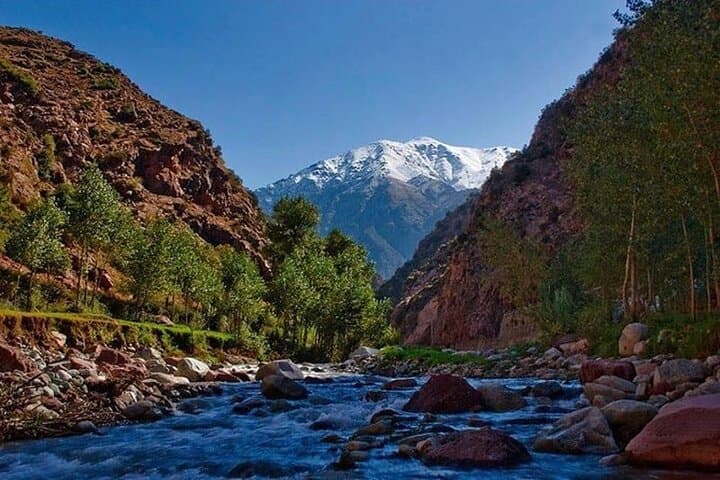
A cool morning lifts off the pavement outside Marrakech and the air-conditioned minivan threads the foothills toward the High Atlas. Olive groves slide by, then the road narrows and the Ourika River dares you with a roar beside the switchbacks. By mid-morning the landscape opens: apple orchards, terraced fields and villages stacked in ochre stone.
Verified experiences and guided adventures in the surrounding area.
Operated by Arib Voyages · Marrakech, Marrakech-Safi
A cool morning lifts off the pavement outside Marrakech and the air-conditioned minivan threads the foothills toward the High Atlas. Olive groves slide by, then the road narrows and the Ourika River dares you with a roar beside the switchbacks. By mid-morning the landscape opens: apple orchards, terraced fields and villages stacked in ochre stone.
This route follows ancient Berber tracks where trade and mountain life have shaped the valleys for centuries. The High Atlas rose when the African and Eurasian plates pushed together; you can see the raw geology in folded ridgelines and the shadow of Mount Toubkal—North Africa’s 4,167-meter peak—often wearing a snowcap. Local culture is visible in daily rhythms: souks on market day, women selling almonds, and houses where lunch is still a family-made tagine.
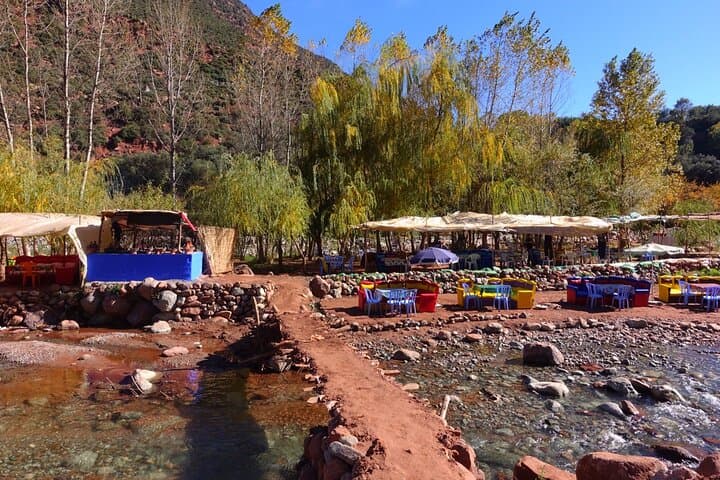
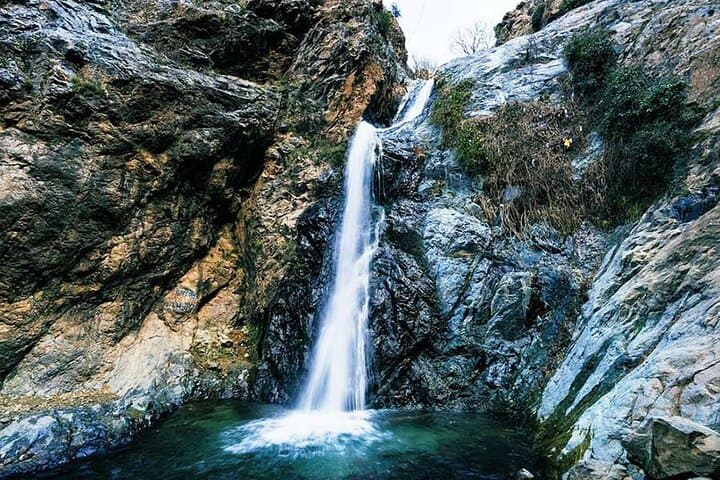
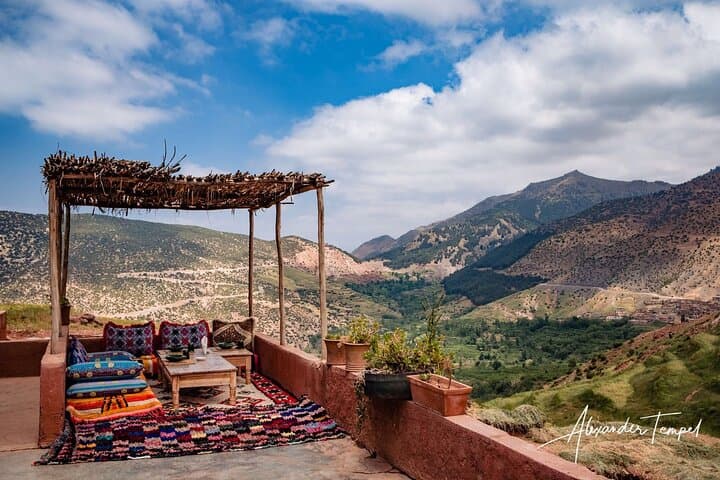
Expect a varied day: short cultural stops, a 60–90 minute guided hike at Setti Fatma to the seven waterfalls (steep, rocky sections require sure footing), then a longer drive higher to Sidi Fares for lunch in a Berber house overlooking the valleys. The afternoon eases into the greener Asni valley where orchards line the road back toward Marrakech.
Practical guide: plan for an 8-hour day; wear sturdy non-slip shoes, layers for changing elevation, and bring 1–2 liters of water. Notify the operator of dietary needs in advance. The itinerary suits travelers comfortable with moderate walking and mountain roads; mobility limits may make the waterfall hike difficult. Morning departures avoid mid-day heat and provide clearer mountain views.
moderate.
8 hours.
Moderately fit travelers who can handle 1–2 hours of steep hiking and be comfortable riding on mountain roads.
The ascent takes about 60–120 minutes depending on pace and stops; expect rocky steps and brief exposed sections.
Yes—home-cooked lunch in a Berber house is included; notify the operator in advance for vegetarian or other dietary requests.
Tours include pickup and drop-off from central Marrakech meeting points or hotels—details and exact pickup times are provided after booking.
Infants and small children can join, but the waterfall hike is strenuous and the tour is not recommended for pregnant travelers or those with serious cardiovascular issues.
The valleys are populated by Amazigh (Berber) communities whose mountain terraces and stone tracks reflect centuries of transhumance and local trade routes.
Water is scarce in summer and villages rely on spring-fed irrigation—stick to marked paths, avoid littering, and support local families by buying food or crafts directly.
Arib Voyages operates guided outdoor trips and adventures with an emphasis on safety, stewardship, and memorable experiences.
A cool morning lifts off the pavement outside Marrakech and the air-conditioned minivan threads the foothills toward the High Atlas. Olive groves slide by, then the road narrows and the Ourika River dares you with a roar beside the switchbacks. By mid-morning the landscape opens: apple orchards, terraced fields and villages stacked in ochre stone.
A cool morning lifts off the pavement outside Marrakech and the air-conditioned minivan threads the foothills toward the High Atlas. Olive groves slide by, then the road narrows and the Ourika River dares you with a roar beside the switchbacks. By mid-morning the landscape opens: apple orchards, terraced fields and villages stacked in ochre stone.
This route follows ancient Berber tracks where trade and mountain life have shaped the valleys for centuries. The High Atlas rose when the African and Eurasian plates pushed together; you can see the raw geology in folded ridgelines and the shadow of Mount Toubkal—North Africa’s 4,167-meter peak—often wearing a snowcap. Local culture is visible in daily rhythms: souks on market day, women selling almonds, and houses where lunch is still a family-made tagine.
Expect a varied day: short cultural stops, a 60–90 minute guided hike at Setti Fatma to the seven waterfalls (steep, rocky sections require sure footing), then a longer drive higher to Sidi Fares for lunch in a Berber house overlooking the valleys. The afternoon eases into the greener Asni valley where orchards line the road back toward Marrakech.
Practical guide: plan for an 8-hour day; wear sturdy non-slip shoes, layers for changing elevation, and bring 1–2 liters of water. Notify the operator of dietary needs in advance. The itinerary suits travelers comfortable with moderate walking and mountain roads; mobility limits may make the waterfall hike difficult. Morning departures avoid mid-day heat and provide clearer mountain views.