THE ADVENTURE COLLECTIVE® · Independent discovery and booking for outdoor travel

Leave Marrakech for a seven-hour family day in the High Atlas: mule rides, short valley walks and visits to Berber homes in Imlil. Practical and people-focused, this trip pairs easy mountain scenery with direct cultural exchange.
Leave Marrakech for a seven-hour family day in the High Atlas: mule rides, short valley walks and visits to Berber homes in Imlil. Practical and people-focused, this trip pairs easy mountain scenery with direct cultural exchange.
A dust-scented morning leaves Marrakech behind and the road climbs into the High Atlas, the air cooling as terraced fields and stone huts slide past the window. By the time the minivan eases into Imlil Valley, children are already pressed to the windows, watching goats and farmers move across slopes where the mountains seem to rise with purpose.
Verified experiences and guided adventures in the surrounding area.
A dust-scented morning leaves Marrakech behind and the road climbs into the High Atlas, the air cooling as terraced fields and stone huts slide past the window. By the time the minivan eases into Imlil Valley, children are already pressed to the windows, watching goats and farmers move across slopes where the mountains seem to rise with purpose.
The High Atlas are geologically young — folded and uplifted from tectonic collision — giving the valley its steep gullies and sharp ridgelines. The people here are predominantly Amazigh (Berber), whose villages retain rough stone architecture, flat roofs and communal tea rituals that draw visitors into everyday life rather than into staged performances.
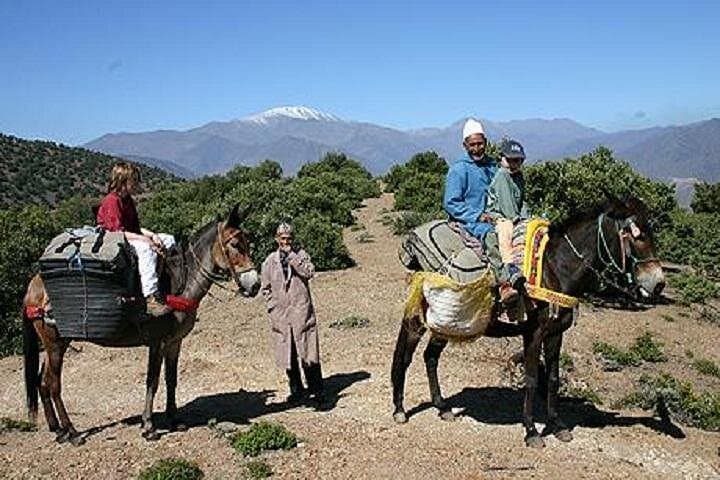
On this family-focused day trip, mule and short walks ease younger legs through olive groves, to modest family homes where mint tea is offered and children meet Berber peers. Guides introduce local customs and explain seasonal farming: barley, apples and transhumant herding still shape routines. Expect close contact with domestic animals, simple mountain paths and panoramic views back toward Marrakech on clear days.
Practical notes: bring sturdy shoes for uneven village tracks, sunscreen and a hat for exposed sections, and small bills for gratuities or purchases at homes. Water and snacks keep kids engaged between stops; follow your guide’s lead when entering private homes. Mules are accommodating but not a substitute for attentive supervision of children. The day is rewarding for families seeking cultural exchange and manageable mountain walking rather than technical hiking — a compact, human-scale introduction to the Atlas and Berber life.
moderate.
7 hours.
Suitable for families with children who can handle short walks and brief climbs; basic endurance for 3–5 miles of mixed walking.
Yes—this tour is designed for families; mules and short walks accommodate young children, but infants should be in a secure carrier and parents should check with the operator about age limits.
Yes, mule rides are available and popular with children; guides will assign animals and handle logistics.
Typical itineraries include mint tea and a visit to a local home where light refreshments are served; check the operator for full meal options or dietary needs.
The drive to Imlil Valley is about 60–75 minutes (roughly 64 km) depending on traffic and road conditions.
The High Atlas are home to Amazigh (Berber) communities whose presence predates modern Morocco; their stone villages and seasonal farming reflect centuries of mountain adaptation.
Respect private homes and local customs, avoid single-use plastics and purchase small goods from families to support local economy; stick to paths to reduce erosion.
A dust-scented morning leaves Marrakech behind and the road climbs into the High Atlas, the air cooling as terraced fields and stone huts slide past the window. By the time the minivan eases into Imlil Valley, children are already pressed to the windows, watching goats and farmers move across slopes where the mountains seem to rise with purpose.
A dust-scented morning leaves Marrakech behind and the road climbs into the High Atlas, the air cooling as terraced fields and stone huts slide past the window. By the time the minivan eases into Imlil Valley, children are already pressed to the windows, watching goats and farmers move across slopes where the mountains seem to rise with purpose.
The High Atlas are geologically young — folded and uplifted from tectonic collision — giving the valley its steep gullies and sharp ridgelines. The people here are predominantly Amazigh (Berber), whose villages retain rough stone architecture, flat roofs and communal tea rituals that draw visitors into everyday life rather than into staged performances.
On this family-focused day trip, mule and short walks ease younger legs through olive groves, to modest family homes where mint tea is offered and children meet Berber peers. Guides introduce local customs and explain seasonal farming: barley, apples and transhumant herding still shape routines. Expect close contact with domestic animals, simple mountain paths and panoramic views back toward Marrakech on clear days.
Practical notes: bring sturdy shoes for uneven village tracks, sunscreen and a hat for exposed sections, and small bills for gratuities or purchases at homes. Water and snacks keep kids engaged between stops; follow your guide’s lead when entering private homes. Mules are accommodating but not a substitute for attentive supervision of children. The day is rewarding for families seeking cultural exchange and manageable mountain walking rather than technical hiking — a compact, human-scale introduction to the Atlas and Berber life.