THE ADVENTURE COLLECTIVE® · Independent discovery and booking for outdoor travel

A day trip from Marrakech into the High Atlas that pairs a 1–2 hour mountain trek with waterfalls, Berber villages and a short camel ride. Expect terraced fields, mint tea stops and panoramic mountain views on a roughly 7-hour outing.
A day trip from Marrakech into the High Atlas that pairs a 1–2 hour mountain trek with waterfalls, Berber villages and a short camel ride. Expect terraced fields, mint tea stops and panoramic mountain views on a roughly 7-hour outing.
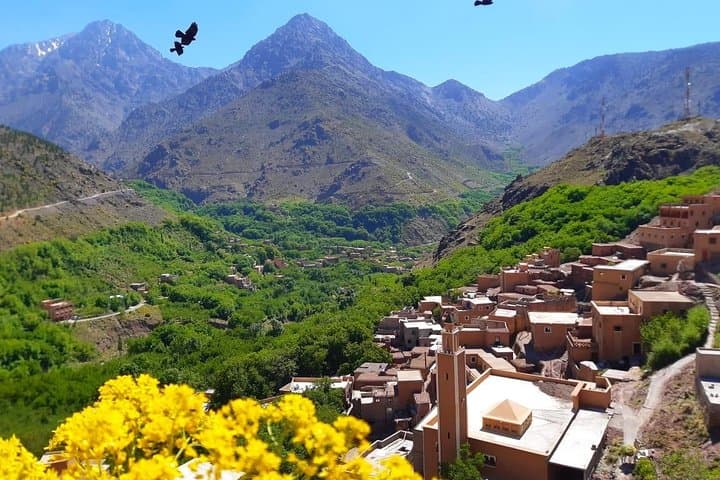
Morning air on the drive south from Marrakech smells of dust and eucalyptus; the city falls away and the Atlas range rises like a folded spine. By the time the van reaches Imlil (about 1,740 m), terraces and walnut trees press close to narrow tracks. A cup of mint tea sets the tempo, and the guide points the route south toward Aroumd, where a 1–2 hour trek unfolds across gullies, orchards and the occasional cascading fall.
Verified experiences and guided adventures in the surrounding area.
Operated by Marrakech Tour Experience · Imlil, Marrakech-Safi
Morning air on the drive south from Marrakech smells of dust and eucalyptus; the city falls away and the Atlas range rises like a folded spine. By the time the van reaches Imlil (about 1,740 m), terraces and walnut trees press close to narrow tracks. A cup of mint tea sets the tempo, and the guide points the route south toward Aroumd, where a 1–2 hour trek unfolds across gullies, orchards and the occasional cascading fall.
The High Atlas is young, geologically speaking—faulted and uplifted by the collision of the African and Eurasian plates—so you move over sharp ridgelines, terraced soils and streams that cut quickly through the rock. Culturally, this is Berber country: dry-stone terraces, irrigation channels (asifs) and villages where hospitality centers around shared flatbread and tagine.
Expect a varied trail: packed dirt, loose scree sections and short steep pitches. Typical trekking distance is 3–5 km roundtrip with roughly 150–300 m cumulative elevation gain depending on side paths you take. After lunch on a roof terrace at a family guesthouse, there’s time for mint tea with hosts and a short camel ride through Moulay Brahim’s low dunes and film-friendly scenery.
Practical guidance: start early to avoid mid-day heat, bring 1–2 L of water, sturdy shoes and a lightweight wind layer for higher exposure. The trek is moderate but accessible to most hikers who can handle uneven ground at altitude. Pickup and drop-off from Marrakech are usually included; plan for a 7-hour outing and basic but hearty Berber hospitality.
moderate.
7 hours.
Moderately fit—able to walk 3–5 km on uneven ground with short climbs at altitude
The transfer takes about 1.5–2 hours each way depending on traffic and stops, with scenic pulls at viewpoints along the route.
A short camel ride at Moulay Brahim is included as an optional activity—confirm availability when booking.
Yes—routes are offered at an easy-to-moderate pace; children who can walk on uneven terrain for up to 2 hours can usually participate.
Guides commonly speak English, French and Arabic; local Berber languages may be used during village visits.
The High Atlas villages are part of Amazigh (Berber) homelands with centuries-old irrigation and terrace farming that shaped the valley landscape.
Stick to marked trails and avoid collecting plants; local communities rely on limited water and sustainable grazing, so minimize waste and support family-run guesthouses.
Marrakech Tour Experience operates guided outdoor trips and adventures with an emphasis on safety, stewardship, and memorable experiences.
Morning air on the drive south from Marrakech smells of dust and eucalyptus; the city falls away and the Atlas range rises like a folded spine. By the time the van reaches Imlil (about 1,740 m), terraces and walnut trees press close to narrow tracks. A cup of mint tea sets the tempo, and the guide points the route south toward Aroumd, where a 1–2 hour trek unfolds across gullies, orchards and the occasional cascading fall.
Morning air on the drive south from Marrakech smells of dust and eucalyptus; the city falls away and the Atlas range rises like a folded spine. By the time the van reaches Imlil (about 1,740 m), terraces and walnut trees press close to narrow tracks. A cup of mint tea sets the tempo, and the guide points the route south toward Aroumd, where a 1–2 hour trek unfolds across gullies, orchards and the occasional cascading fall.
The High Atlas is young, geologically speaking—faulted and uplifted by the collision of the African and Eurasian plates—so you move over sharp ridgelines, terraced soils and streams that cut quickly through the rock. Culturally, this is Berber country: dry-stone terraces, irrigation channels (asifs) and villages where hospitality centers around shared flatbread and tagine.
Expect a varied trail: packed dirt, loose scree sections and short steep pitches. Typical trekking distance is 3–5 km roundtrip with roughly 150–300 m cumulative elevation gain depending on side paths you take. After lunch on a roof terrace at a family guesthouse, there’s time for mint tea with hosts and a short camel ride through Moulay Brahim’s low dunes and film-friendly scenery.
Practical guidance: start early to avoid mid-day heat, bring 1–2 L of water, sturdy shoes and a lightweight wind layer for higher exposure. The trek is moderate but accessible to most hikers who can handle uneven ground at altitude. Pickup and drop-off from Marrakech are usually included; plan for a 7-hour outing and basic but hearty Berber hospitality.