THE ADVENTURE COLLECTIVE® · Independent discovery and booking for outdoor travel

A full-day drive from Marrakesh across the High Atlas to Imlil and hidden waterfalls, combining short village walks, a home-cooked Berber lunch and sweeping plateau views. Perfect for travelers who want culture, geology and a light hike in one day.
A full-day drive from Marrakesh across the High Atlas to Imlil and hidden waterfalls, combining short village walks, a home-cooked Berber lunch and sweeping plateau views. Perfect for travelers who want culture, geology and a light hike in one day.
You leave Marrakesh behind and the red city’s heat folds away as the High Atlas rises like a weathered wall. Narrow roads climb past stony fields and olive groves; every hairpin reveals a new valley, a scatter of flat-roofed houses, and the pale ribbon of a mountain stream daring you to follow.
Verified experiences and guided adventures in the surrounding area.
Operated by Marrakesh Travel Guide · Marrakech, Marrakech-Safi
You leave Marrakesh behind and the red city’s heat folds away as the High Atlas rises like a weathered wall. Narrow roads climb past stony fields and olive groves; every hairpin reveals a new valley, a scatter of flat-roofed houses, and the pale ribbon of a mountain stream daring you to follow.
This full-day excursion threads three distinct valleys—Tahanout, Asni and Imlil—each shaped by the Atlas’s volcanic roots and glacial scars. The Berber people have farmed these slopes for centuries, building stone terraces and sustaining village life with goat herds, seasonal markets and cooperative craft traditions. You’ll stop at a women’s cooperative to see argan or wool work, taste mint tea offered with practiced hospitality, and walk a gentle path to a secluded waterfall that marks the day’s high point.
Geologically, the High Atlas is older than the coastal ranges; quartz-rich beds and folded strata give way to scree and limestone bluffs. Cultural traces—small shrines, stacked stones, painted doorways—speak to a rural life paced by seasons.
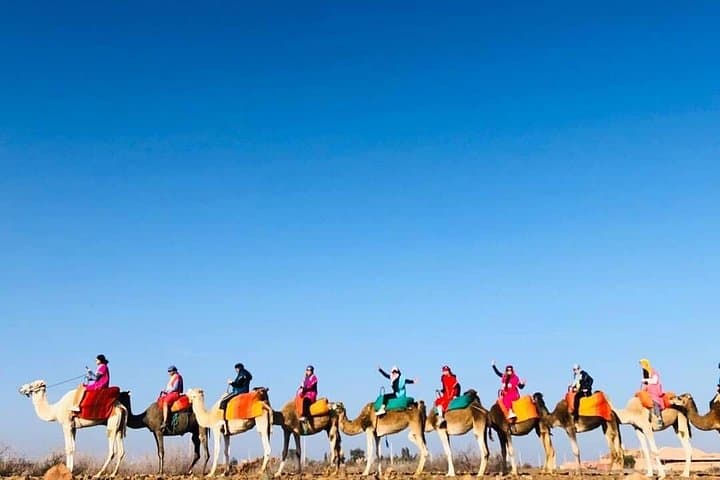
Practical guidance: the walking sections are short and beginner-friendly but often on uneven rock and dirt; bring sturdy shoes, sun protection and a light layer for higher elevations. Expect a 6–7 hour outing with hotel pickup in Marrakech, a home-cooked lunch in a Berber house, and an optional short camel ride on the Kik plateau near the Takerkoust views. Hydrate early and budget time for photos—this is a day of slow climbs, sharp vistas and hands-on cultural moments.
moderate.
6–7 hours.
Suitable for most people who can walk on uneven ground for short periods; not strenuous but requires balance and basic fitness.
The tour includes roughly 45–90 minutes of driving each way depending on stops; the full program runs about 6–7 hours.
The hike is short and classified easy to moderate; paths are unpaved and may be steep in sections, so good shoes help.
Yes—lunch is prepared in a local family home and tea is offered at stops; inform the operator of dietary restrictions in advance.
Yes, the itinerary is family-friendly with vehicle transfers and short walks; infant seats are available and camel rides are optional.
The High Atlas has been inhabited by Amazigh (Berber) communities for millennia; terraces and village layouts reflect long-standing agrarian practices tied to seasonal water flows.
Water scarcity and trail erosion are concerns—stay on paths, avoid single-use plastics, and support local cooperatives to keep tourism benefits in the community.
Marrakesh Travel Guide operates guided outdoor trips and adventures with an emphasis on safety, stewardship, and memorable experiences.


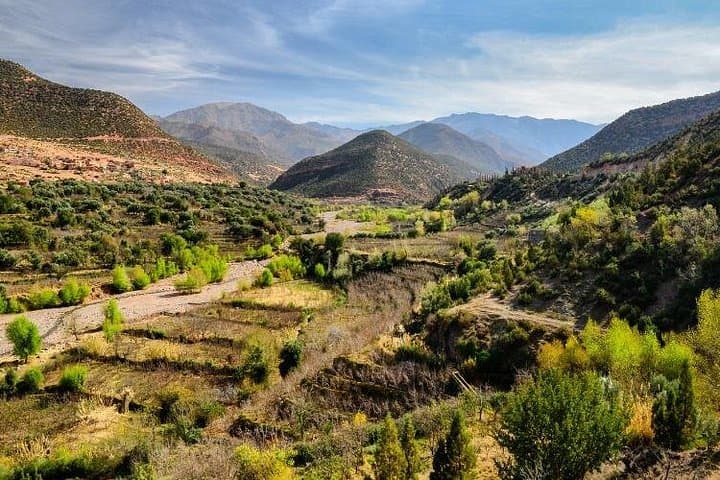
You leave Marrakesh behind and the red city’s heat folds away as the High Atlas rises like a weathered wall. Narrow roads climb past stony fields and olive groves; every hairpin reveals a new valley, a scatter of flat-roofed houses, and the pale ribbon of a mountain stream daring you to follow.
You leave Marrakesh behind and the red city’s heat folds away as the High Atlas rises like a weathered wall. Narrow roads climb past stony fields and olive groves; every hairpin reveals a new valley, a scatter of flat-roofed houses, and the pale ribbon of a mountain stream daring you to follow.
This full-day excursion threads three distinct valleys—Tahanout, Asni and Imlil—each shaped by the Atlas’s volcanic roots and glacial scars. The Berber people have farmed these slopes for centuries, building stone terraces and sustaining village life with goat herds, seasonal markets and cooperative craft traditions. You’ll stop at a women’s cooperative to see argan or wool work, taste mint tea offered with practiced hospitality, and walk a gentle path to a secluded waterfall that marks the day’s high point.
Geologically, the High Atlas is older than the coastal ranges; quartz-rich beds and folded strata give way to scree and limestone bluffs. Cultural traces—small shrines, stacked stones, painted doorways—speak to a rural life paced by seasons.
Practical guidance: the walking sections are short and beginner-friendly but often on uneven rock and dirt; bring sturdy shoes, sun protection and a light layer for higher elevations. Expect a 6–7 hour outing with hotel pickup in Marrakech, a home-cooked lunch in a Berber house, and an optional short camel ride on the Kik plateau near the Takerkoust views. Hydrate early and budget time for photos—this is a day of slow climbs, sharp vistas and hands-on cultural moments.