THE ADVENTURE COLLECTIVE® · Independent discovery and booking for outdoor travel

Spend a full day from Marrakech exploring the High Atlas foothills: visit an argan cooperative, shop Asni market, trek from Imlil to Aroumd past waterfalls and orchards, enjoy a Berber guesthouse lunch and a short camel ride. Practical, scenic, and accessible for most visitors.
Spend a full day from Marrakech exploring the High Atlas foothills: visit an argan cooperative, shop Asni market, trek from Imlil to Aroumd past waterfalls and orchards, enjoy a Berber guesthouse lunch and a short camel ride. Practical, scenic, and accessible for most visitors.
Morning light on the High Atlas arrives quick and sharp: you leave Marrakech and push south through the Moulay Brahim gorges, the road carving a ribbon between ochre cliffs and fruit trees.
Verified experiences and guided adventures in the surrounding area.
Operated by Atlas mountains tours · Imlil, Marrakesh-Safi
Morning light on the High Atlas arrives quick and sharp: you leave Marrakech and push south through the Moulay Brahim gorges, the road carving a ribbon between ochre cliffs and fruit trees.
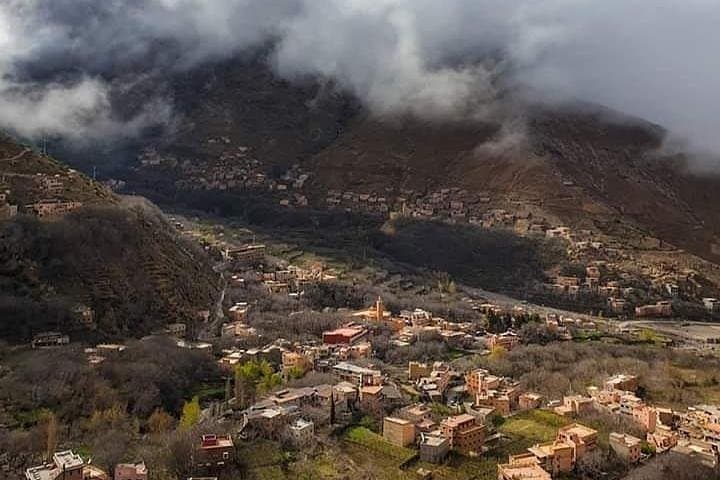
By mid-morning the argan cooperative in Tahnaout and the busy Saturday market at Asni give a human rhythm to the landscape—women sorting oil, merchants calling prices, the scent of spices on the air. The village of Imlil (1,740 m) opens into a network of trails, clear streams and terraces stacked like steps down a hillside. After a welcome glass of mint tea you begin a guided trek toward Aroumd, passing waterfalls, cherry and walnut orchards, and irrigated barley fields that reflect centuries of Berber farming.
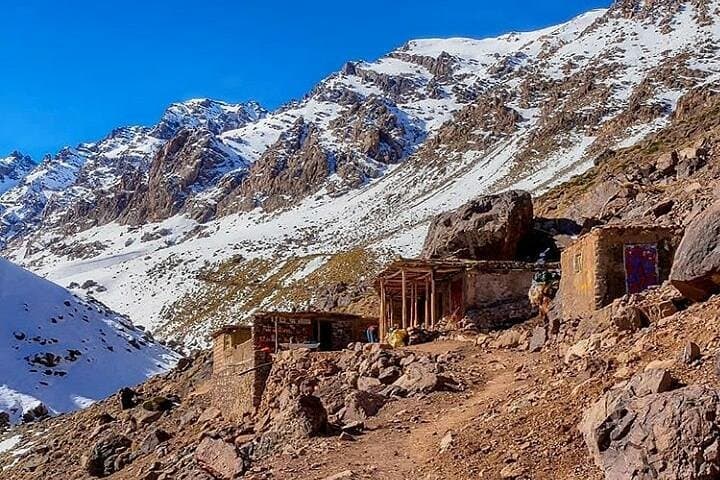
Geologically the High Atlas is young and steep—uplifted by the collision of the African and Eurasian plates—so expect rocky paths and sudden viewpoints across the Toubkal massif, including Aksouâl and Jbel Aguelzim. Culturally the route threads real villages where lunch on a guesthouse roof is simple and local: tagine, salad, and fresh dessert served with conversation.
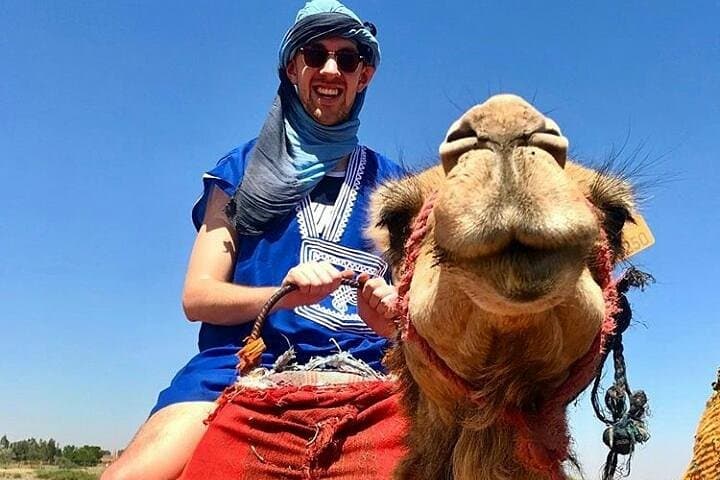
Practical details: the full-day excursion is about 9 hours with roughly 3–6 miles of walking on uneven dirt and stone tracks and short elevation changes (approximately 100–200 m gains on typical routes). Wear sturdy shoes, carry sun protection and at least 1–2 liters of water, and bring small bills for market purchases and tips. A short camel ride through the Moulay Brahim area rounds the afternoon before the return drive to Marrakech around early evening.
This trip balances easy cultural contact with authentic mountain walking—good for travelers who want a full-day immersion without technical climbing.
easy.
9 hours.
Suitable for most fitness levels; expect several hours of walking on uneven trails and short climbs.
Expect about a 1.5–2 hour drive each way, depending on traffic and stops at the argan cooperative and Asni market.
Yes—the itinerary includes a short camel ride near Moulay Brahim as part of the return journey.
The tour lists accessibility options and is generally suitable for families; the trek sections can be adjusted, but some walking over uneven ground is required.
Lunch and bottled water are provided, but bring extra water, snacks, and small cash for market purchases and tips.
The villages in these valleys are predominantly Berber and have farmed terraced fields and orchards for centuries, maintaining traditional irrigation systems and building styles.
Visit with respect—stick to trails, avoid leaving litter, and support local cooperatives and guesthouses to keep tourism benefits in the community.
Atlas mountains tours operates guided outdoor trips and adventures with an emphasis on safety, stewardship, and memorable experiences.
Morning light on the High Atlas arrives quick and sharp: you leave Marrakech and push south through the Moulay Brahim gorges, the road carving a ribbon between ochre cliffs and fruit trees.
Morning light on the High Atlas arrives quick and sharp: you leave Marrakech and push south through the Moulay Brahim gorges, the road carving a ribbon between ochre cliffs and fruit trees.
By mid-morning the argan cooperative in Tahnaout and the busy Saturday market at Asni give a human rhythm to the landscape—women sorting oil, merchants calling prices, the scent of spices on the air. The village of Imlil (1,740 m) opens into a network of trails, clear streams and terraces stacked like steps down a hillside. After a welcome glass of mint tea you begin a guided trek toward Aroumd, passing waterfalls, cherry and walnut orchards, and irrigated barley fields that reflect centuries of Berber farming.
Geologically the High Atlas is young and steep—uplifted by the collision of the African and Eurasian plates—so expect rocky paths and sudden viewpoints across the Toubkal massif, including Aksouâl and Jbel Aguelzim. Culturally the route threads real villages where lunch on a guesthouse roof is simple and local: tagine, salad, and fresh dessert served with conversation.
Practical details: the full-day excursion is about 9 hours with roughly 3–6 miles of walking on uneven dirt and stone tracks and short elevation changes (approximately 100–200 m gains on typical routes). Wear sturdy shoes, carry sun protection and at least 1–2 liters of water, and bring small bills for market purchases and tips. A short camel ride through the Moulay Brahim area rounds the afternoon before the return drive to Marrakech around early evening.
This trip balances easy cultural contact with authentic mountain walking—good for travelers who want a full-day immersion without technical climbing.