THE ADVENTURE COLLECTIVE® · Independent discovery and booking for outdoor travel

A full-day excursion from Marrakech that pairs a gentle mountain hike into Imlil with a short camel ride and visits to Berber villages. Expect river valleys, rocky mule tracks, a rooftop lunch and panoramic views of Jebel Toubkal.
A full-day excursion from Marrakech that pairs a gentle mountain hike into Imlil with a short camel ride and visits to Berber villages. Expect river valleys, rocky mule tracks, a rooftop lunch and panoramic views of Jebel Toubkal.
The day begins before the buzz of Marrakech fades, the minivan steering out across ochre plains toward the rising spine of the High Atlas. By the time the road narrows and the air cools, you’re under stone cliffs, the river below daring you to follow its course upward. A short camel ride—typically offered near the Palm Grove or at a nearby camp—adds a contrasting, desert-flavored interlude before the trail takes you into mountain terrain.
Verified experiences and guided adventures in the surrounding area.
Operated by Trips From Marrakech · Imlil, Marrakech-Safi
The day begins before the buzz of Marrakech fades, the minivan steering out across ochre plains toward the rising spine of the High Atlas. By the time the road narrows and the air cools, you’re under stone cliffs, the river below daring you to follow its course upward. A short camel ride—typically offered near the Palm Grove or at a nearby camp—adds a contrasting, desert-flavored interlude before the trail takes you into mountain terrain.
This excursion threads together natural history and Berber life: terraced fields clinging to steep slopes, ancient mule tracks, and villages where rooftop riads double as communal lookouts. The High Atlas is geologically young rock folded and uplifted by tectonic forces; Jebel Toubkal—North Africa’s highest peak at 4,167 m—dominates the skyline above Imlil (village elevation ~1,700–1,800 m). Expect a guided walk of roughly 3 hours through river valleys and pastoral paths (approximately 6–8 km; moderate, with intermittent climbs and rocky footing), punctuated by a market visit on certain days and a rooftop lunch in a restored Berber house.
Practical guidance: wear sturdy, broken-in hiking shoes and layered clothing—the valley warms quickly but shade and wind can keep temperatures cool—carry 1–2 liters of water and sun protection. The full experience is a 7-hour round trip including hotel pickup; the pace is approachable for most hikers, but uneven terrain rewards attention. Respect private household spaces in villages, tip local guides, and pack out waste—these mountains are living landscape and a livelihood for local communities.
moderate.
7 hours (approx.).
Moderate fitness: able to handle several hours of walking on uneven uphill and downhill terrain.
Driving time is typically 60–90 minutes each way depending on traffic and the exact pickup location in Marrakech.
No—the camel ride is a short, separate activity usually offered near Marrakech’s palmeraie or a nearby camp before or after the mountain segment.
Bring layers, comfortable hiking shoes, 1–2 liters of water, cash for markets/tips, sun protection and a light rain jacket in cooler months.
Yes—this tour is advertised as suitable for all fitness levels, but parents should assess terrain challenges and altitude for young children.
The High Atlas has long been home to Amazigh (Berber) communities; villages around Imlil preserve traditional mud-brick architecture and centuries-old pastoral practices.
The park’s fragile water sources and alpine pastures are vulnerable to litter and overuse—support local guides, stay on trails and pack out waste to reduce impact.
Trips From Marrakech operates guided outdoor trips and adventures with an emphasis on safety, stewardship, and memorable experiences.

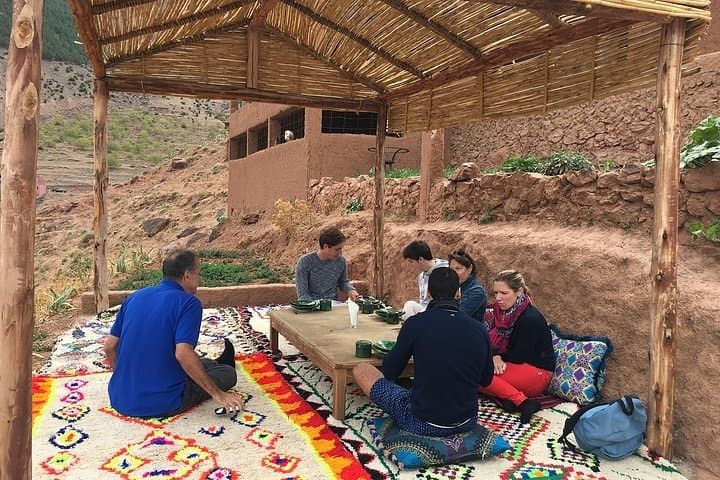


The day begins before the buzz of Marrakech fades, the minivan steering out across ochre plains toward the rising spine of the High Atlas. By the time the road narrows and the air cools, you’re under stone cliffs, the river below daring you to follow its course upward. A short camel ride—typically offered near the Palm Grove or at a nearby camp—adds a contrasting, desert-flavored interlude before the trail takes you into mountain terrain.
The day begins before the buzz of Marrakech fades, the minivan steering out across ochre plains toward the rising spine of the High Atlas. By the time the road narrows and the air cools, you’re under stone cliffs, the river below daring you to follow its course upward. A short camel ride—typically offered near the Palm Grove or at a nearby camp—adds a contrasting, desert-flavored interlude before the trail takes you into mountain terrain.
This excursion threads together natural history and Berber life: terraced fields clinging to steep slopes, ancient mule tracks, and villages where rooftop riads double as communal lookouts. The High Atlas is geologically young rock folded and uplifted by tectonic forces; Jebel Toubkal—North Africa’s highest peak at 4,167 m—dominates the skyline above Imlil (village elevation ~1,700–1,800 m). Expect a guided walk of roughly 3 hours through river valleys and pastoral paths (approximately 6–8 km; moderate, with intermittent climbs and rocky footing), punctuated by a market visit on certain days and a rooftop lunch in a restored Berber house.
Practical guidance: wear sturdy, broken-in hiking shoes and layered clothing—the valley warms quickly but shade and wind can keep temperatures cool—carry 1–2 liters of water and sun protection. The full experience is a 7-hour round trip including hotel pickup; the pace is approachable for most hikers, but uneven terrain rewards attention. Respect private household spaces in villages, tip local guides, and pack out waste—these mountains are living landscape and a livelihood for local communities.