THE ADVENTURE COLLECTIVE® · Independent discovery and booking for outdoor travel

Leave Marrakech for a seven-hour circuit through the Atlas foothills: a camel trek, village visits, argan cooperative stops and lunch in Ait Souka with sweeping views of Toubkal. Expect easy walking, cultural stops, and authentic Berber hospitality.
Leave Marrakech for a seven-hour circuit through the Atlas foothills: a camel trek, village visits, argan cooperative stops and lunch in Ait Souka with sweeping views of Toubkal. Expect easy walking, cultural stops, and authentic Berber hospitality.
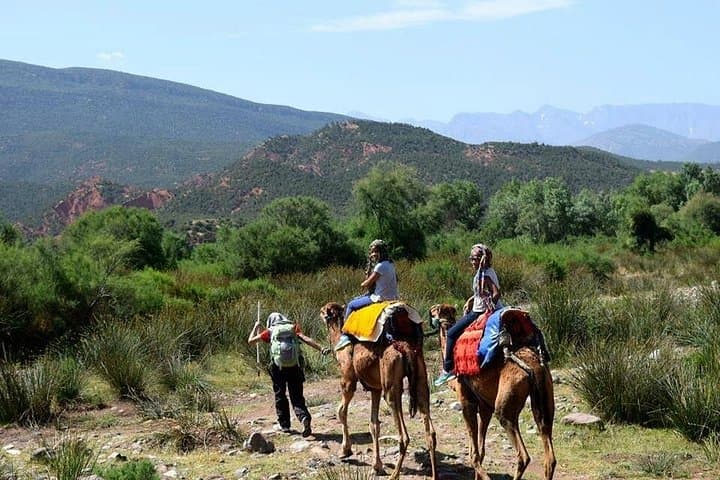
Morning light breaks over Marrakech as the minivan climbs out of the city and the Atlas Mountains grow sharp on the horizon. Travelers trade medina noise for wind along terraced fields; camels wait at a foothill camp and lead a slow, steady line across olive groves and orchards. The rhythm of the animals and the crunch of dry trail set the pace for a day of village visits and short walks that place the High Atlas within easy reach of the city.
Verified experiences and guided adventures in the surrounding area.
Operated by Atlas Mountains Guided Tour · Marrakesh, Marrakesh-Safi
Morning light breaks over Marrakech as the minivan climbs out of the city and the Atlas Mountains grow sharp on the horizon. Travelers trade medina noise for wind along terraced fields; camels wait at a foothill camp and lead a slow, steady line across olive groves and orchards. The rhythm of the animals and the crunch of dry trail set the pace for a day of village visits and short walks that place the High Atlas within easy reach of the city.
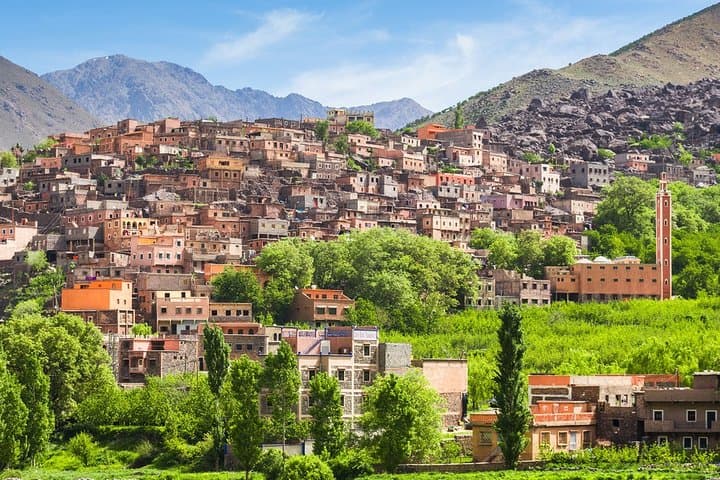
Geology here is immediate: craggy limestone and volcanic intrusions shaped by eons of uplift, carving valleys like Imlil and Asni. The people are as visible as the stone — Berber communities maintain traditional houses, and small cooperatives still press argan oil by hand. A mint tea offered in a family home is both a welcome and a lesson in local hospitality; nearby, Ait Souka sits at roughly 1,800 meters with views toward Toubkal, North Africa’s highest peak.
Practically speaking, expect a 7-hour day with guided drives, a short camel trek across foothills, a one-hour walking recommendation on rocky, sometimes dusty terrain, and a home-cooked lunch in a Berber house. Wear sturdy shoes with some traction, layer for changing temperatures, and carry water for hiking and sun protection for exposed stretches. Cameras and curiosity reward you here — interactions are real but respect local customs and ask before photographing people. The route is family-friendly but uneven; take time on the climb and enjoy the steady pace the landscape sets.
moderate.
7 hours.
Suitable for travelers in light-to-moderate fitness who can walk for an hour on uneven ground and manage brief climbs.
The camel trek across the foothills is short—typically 30–60 minutes—designed for photo stops and easy riding rather than long-distance travel.
Yes; a traditional Berber lunch in a house in Ait Souka is included, featuring tagine, couscous and local fruit.
Yes, the day includes a guided walk recommended for about one hour on uneven mountain paths plus short village strolls; it’s light-to-moderate activity.
Families are welcome; infant seats are available on request and camel rides can usually accommodate children, but check with the operator for weight or age limits.
The High Atlas is home to Amazigh (Berber) communities whose agricultural terraces and argan oil traditions have been practiced for centuries.
Support local cooperatives and limit single-use plastics; water is scarce in the region and tourism revenue helps conserve traditional practices.
Atlas Mountains Guided Tour operates guided outdoor trips and adventures with an emphasis on safety, stewardship, and memorable experiences.


Morning light breaks over Marrakech as the minivan climbs out of the city and the Atlas Mountains grow sharp on the horizon. Travelers trade medina noise for wind along terraced fields; camels wait at a foothill camp and lead a slow, steady line across olive groves and orchards. The rhythm of the animals and the crunch of dry trail set the pace for a day of village visits and short walks that place the High Atlas within easy reach of the city.
Morning light breaks over Marrakech as the minivan climbs out of the city and the Atlas Mountains grow sharp on the horizon. Travelers trade medina noise for wind along terraced fields; camels wait at a foothill camp and lead a slow, steady line across olive groves and orchards. The rhythm of the animals and the crunch of dry trail set the pace for a day of village visits and short walks that place the High Atlas within easy reach of the city.
Geology here is immediate: craggy limestone and volcanic intrusions shaped by eons of uplift, carving valleys like Imlil and Asni. The people are as visible as the stone — Berber communities maintain traditional houses, and small cooperatives still press argan oil by hand. A mint tea offered in a family home is both a welcome and a lesson in local hospitality; nearby, Ait Souka sits at roughly 1,800 meters with views toward Toubkal, North Africa’s highest peak.
Practically speaking, expect a 7-hour day with guided drives, a short camel trek across foothills, a one-hour walking recommendation on rocky, sometimes dusty terrain, and a home-cooked lunch in a Berber house. Wear sturdy shoes with some traction, layer for changing temperatures, and carry water for hiking and sun protection for exposed stretches. Cameras and curiosity reward you here — interactions are real but respect local customs and ask before photographing people. The route is family-friendly but uneven; take time on the climb and enjoy the steady pace the landscape sets.