THE ADVENTURE COLLECTIVE® · Independent discovery and booking for outdoor travel

Spend a full day in the High Atlas with a short camel ride, a guided valley hike, a visit to an argan cooperative and a home-cooked Berber lunch. This accessible day trip blends light trekking, cultural encounters and scenic mountain views—ideal for travelers based in Marrakech.
Spend a full day in the High Atlas with a short camel ride, a guided valley hike, a visit to an argan cooperative and a home-cooked Berber lunch. This accessible day trip blends light trekking, cultural encounters and scenic mountain views—ideal for travelers based in Marrakech.
A pale dawn lifts off Marrakech’s rooftops as an air-conditioned minivan threads out toward the High Atlas, the city shrinking behind dry palms and bruised hills.
Verified experiences and guided adventures in the surrounding area.
Operated by Atlas Mountains Day Trip · Marrakech, Marrakesh-Safi
A pale dawn lifts off Marrakech’s rooftops as an air-conditioned minivan threads out toward the High Atlas, the city shrinking behind dry palms and bruised hills.
You arrive first at the foot of the mountains where a short camel ride across scrub and gentle dunes gives a playful, slow-motion view of the range. The guide hands you a djellaba and a scarf for photos; mint tea and a traditional breakfast of fresh bread, olive oil, honey and amlou follow—simple fuel for the day.
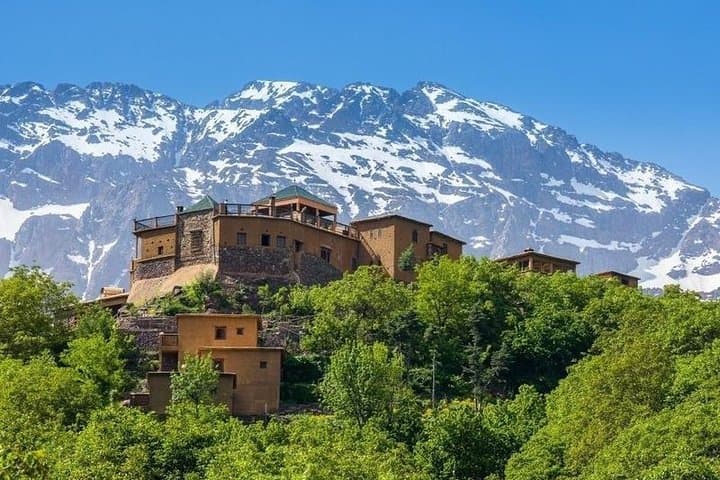
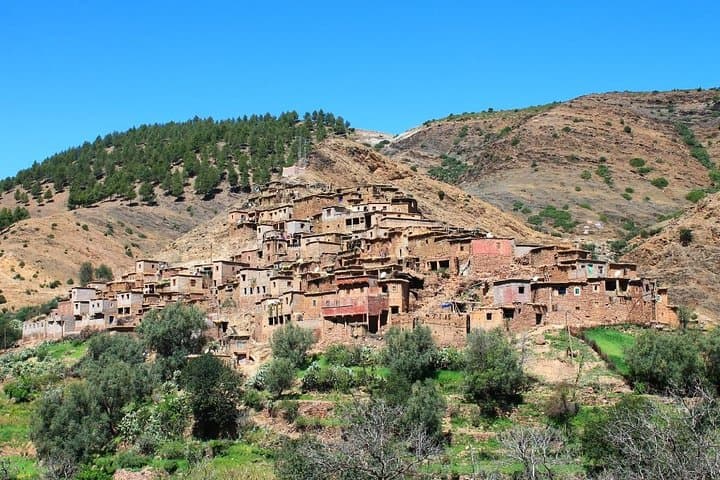
Geology here is blunt: folded, uplifted rock from the African-Eurasian collision forms steep valleys and terraced slopes. Berber villages cling to those terraces, their agriculture and argan groves reflecting centuries of local stewardship. At a cooperative you’ll see argan kernels crushed by hand and learn why the tree is central to rural livelihoods.
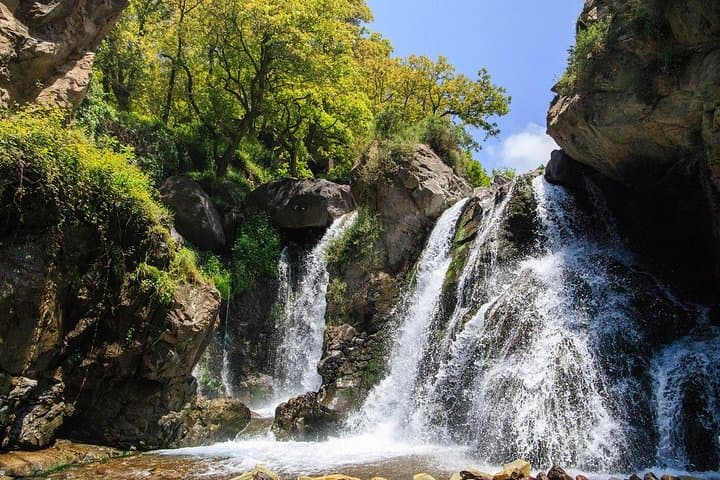
Midday often brings a lively souk if your schedule matches market day—spices, woven goods and seasonal produce in a compact, sensory circuit. A guided 1-hour hike moves through stone paths and terraced fields (expect uneven footing and 100–300 m of gentle elevation change), with views that widen as you climb.
Practical edge: carry at least 1–1.5 L of water, wear sturdy shoes with grip, and layer for sun and wind. Cultural notes: accept invitations into homes with modesty and curiosity, and ask before photographing people. The day ends with a home-cooked Berber lunch—tagine, couscous and strong mint tea—then a comfortable return to Marrakech as late afternoon light fattens the ridgelines.
easy.
7–8 hours.
Suitable for people with basic fitness—able to walk 3–5 km on uneven terrain and handle short elevation changes.
Most tours include hotel pickup in Marrakech; confirm your pickup point when you book and be ready at the scheduled time.
The guided hike is about one hour on uneven footpaths with modest elevation change—suitable for most people in reasonable health.
Traditional Berber lunches can accommodate vegetarian diets if notified in advance; inform organizers of allergies or special requests when booking.
The trip is family-friendly but not recommended for individuals with serious back problems or cardiovascular conditions; camel rides and some paths may be challenging for limited mobility.
The High Atlas is home to Amazigh (Berber) communities whose agricultural terraces and argan cultivation reflect centuries of local adaptation to a dry, uplifted landscape.
Argan cooperatives support sustainable harvesting and local incomes; visitors should avoid disturbing grazing areas and minimize plastic use to reduce local environmental impact.
Atlas Mountains Day Trip operates guided outdoor trips and adventures with an emphasis on safety, stewardship, and memorable experiences.
A pale dawn lifts off Marrakech’s rooftops as an air-conditioned minivan threads out toward the High Atlas, the city shrinking behind dry palms and bruised hills.
A pale dawn lifts off Marrakech’s rooftops as an air-conditioned minivan threads out toward the High Atlas, the city shrinking behind dry palms and bruised hills.
You arrive first at the foot of the mountains where a short camel ride across scrub and gentle dunes gives a playful, slow-motion view of the range. The guide hands you a djellaba and a scarf for photos; mint tea and a traditional breakfast of fresh bread, olive oil, honey and amlou follow—simple fuel for the day.
Geology here is blunt: folded, uplifted rock from the African-Eurasian collision forms steep valleys and terraced slopes. Berber villages cling to those terraces, their agriculture and argan groves reflecting centuries of local stewardship. At a cooperative you’ll see argan kernels crushed by hand and learn why the tree is central to rural livelihoods.
Midday often brings a lively souk if your schedule matches market day—spices, woven goods and seasonal produce in a compact, sensory circuit. A guided 1-hour hike moves through stone paths and terraced fields (expect uneven footing and 100–300 m of gentle elevation change), with views that widen as you climb.
Practical edge: carry at least 1–1.5 L of water, wear sturdy shoes with grip, and layer for sun and wind. Cultural notes: accept invitations into homes with modesty and curiosity, and ask before photographing people. The day ends with a home-cooked Berber lunch—tagine, couscous and strong mint tea—then a comfortable return to Marrakech as late afternoon light fattens the ridgelines.