THE ADVENTURE COLLECTIVE® · Independent discovery and booking for outdoor travel

A full-day drive and trek into the High Atlas that pairs short mountain hikes with camel rides and home-cooked Berber hospitality. Expect stone trails, terraced fields, mint tea stops, and 2–4 hours of walking through Imlil valley and Moulay Brahim.
A full-day drive and trek into the High Atlas that pairs short mountain hikes with camel rides and home-cooked Berber hospitality. Expect stone trails, terraced fields, mint tea stops, and 2–4 hours of walking through Imlil valley and Moulay Brahim.
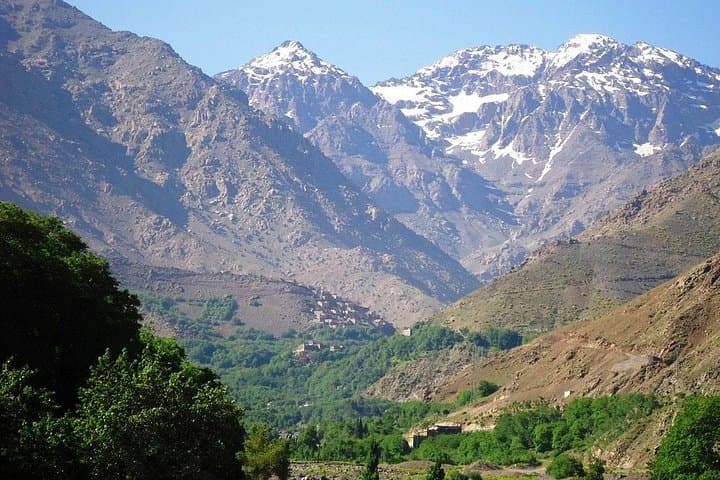
You step out of Marrakech's morning haze and the road climbs; the air sharpens and the Atlas pulls you upward. By the time the minivan reaches the Moulay Brahim trailhead, streams are carving gullies and the gorges dare you to follow their courses. A short camel ride along braided paths feels oddly alpine — the animals steady, the gorge walls watching.
Verified experiences and guided adventures in the surrounding area.
Operated by Tours From Marrakech · Marrakech, Marrakech-Safi
You step out of Marrakech's morning haze and the road climbs; the air sharpens and the Atlas pulls you upward. By the time the minivan reaches the Moulay Brahim trailhead, streams are carving gullies and the gorges dare you to follow their courses. A short camel ride along braided paths feels oddly alpine — the animals steady, the gorge walls watching.
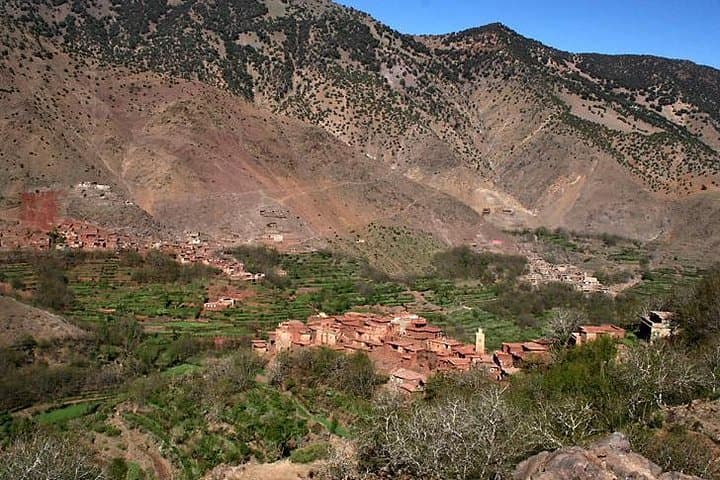
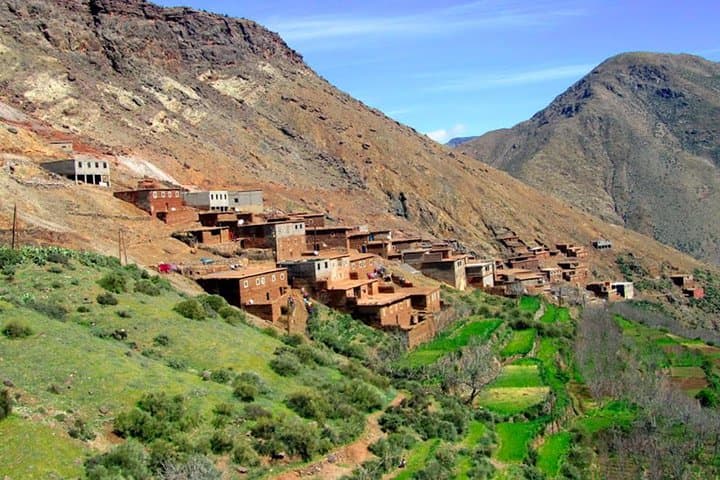
The route threads through Berber hamlets whose stacked stone houses reflect centuries of mountain agriculture. The Imlil valley sits around 1,740 m, a gateway to Toubkal, and villages like Armed (roughly 1,850–1,900 m) grew where water could be channeled into terraces. Geology here is predominantly schist and limestone, shaped by glacial and fluvial action into steep-sided valleys and irrigated fields of barley, corn and fruit trees.
Cultural pauses — mint tea with a family in Ait Souka, a lunch prepared from local vegetables — are as much part of the day as the walking. Expect 2–4 hours of trekking on stone tracks and pack trails, roughly 4–8 km of walking with 300–600 m of ascent on the steeper sections.
Practical notes: wear stout hiking shoes, bring sun protection and at least 2 liters of water, and plan for temperature swings from sun-baked valley floors to cooler village shaded alleys. The trail is non-technical but can be uneven; go early to avoid mid-day heat and allow time for cultural stops. The trip delivers compact mountain scenery, local hospitality, and an accessible taste of High Atlas life.
moderate.
8–10 hours.
Moderate fitness: able to walk 4–8 km with sustained uphill sections and uneven terrain.
Expect 2–4 hours of guided trekking spread across the day, covering roughly 4–8 km with some steep sections.
Yes; camel rides at the Moulay Brahim trailhead are short and family-friendly, but supervision is required for young children.
Lunch, mint tea and bottled water are included; special dietary requests should be noted when booking.
No technical experience is required, but general mobility and basic hiking fitness are recommended for the uphill sections.
The Imlil valley has long been a seasonal agricultural hub for Berber communities and a staging area for ascents of Toubkal; terraces and irrigation systems reflect centuries of mountain farming.
Stick to established trails to protect fragile alpine soils and terraced fields; support local guides and family-run meals to keep tourism benefits in the community.
Tours From Marrakech operates guided outdoor trips and adventures with an emphasis on safety, stewardship, and memorable experiences.
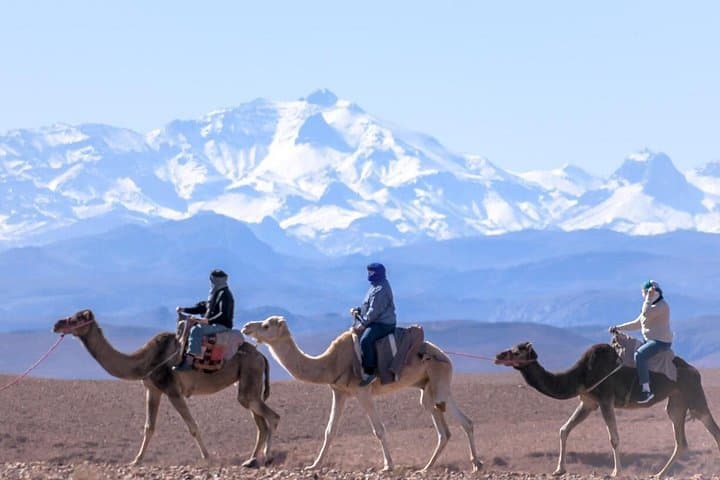
You step out of Marrakech's morning haze and the road climbs; the air sharpens and the Atlas pulls you upward. By the time the minivan reaches the Moulay Brahim trailhead, streams are carving gullies and the gorges dare you to follow their courses. A short camel ride along braided paths feels oddly alpine — the animals steady, the gorge walls watching.
You step out of Marrakech's morning haze and the road climbs; the air sharpens and the Atlas pulls you upward. By the time the minivan reaches the Moulay Brahim trailhead, streams are carving gullies and the gorges dare you to follow their courses. A short camel ride along braided paths feels oddly alpine — the animals steady, the gorge walls watching.
The route threads through Berber hamlets whose stacked stone houses reflect centuries of mountain agriculture. The Imlil valley sits around 1,740 m, a gateway to Toubkal, and villages like Armed (roughly 1,850–1,900 m) grew where water could be channeled into terraces. Geology here is predominantly schist and limestone, shaped by glacial and fluvial action into steep-sided valleys and irrigated fields of barley, corn and fruit trees.
Cultural pauses — mint tea with a family in Ait Souka, a lunch prepared from local vegetables — are as much part of the day as the walking. Expect 2–4 hours of trekking on stone tracks and pack trails, roughly 4–8 km of walking with 300–600 m of ascent on the steeper sections.
Practical notes: wear stout hiking shoes, bring sun protection and at least 2 liters of water, and plan for temperature swings from sun-baked valley floors to cooler village shaded alleys. The trail is non-technical but can be uneven; go early to avoid mid-day heat and allow time for cultural stops. The trip delivers compact mountain scenery, local hospitality, and an accessible taste of High Atlas life.