THE ADVENTURE COLLECTIVE® · Independent discovery and booking for outdoor travel

Escape Marrakech for a day of mountain tracks, Berber villages and distant views of Jbel Toubkal. This practical day trip mixes short village hikes, a home-cooked lunch and cultural encounters in the High Atlas.
Escape Marrakech for a day of mountain tracks, Berber villages and distant views of Jbel Toubkal. This practical day trip mixes short village hikes, a home-cooked lunch and cultural encounters in the High Atlas.
You leave Marrakech’s ochre walls and within an hour the city noise thins into high dry air and the first terraced fields of the High Atlas unfold. The van drops you in Imlil and a local guide pours mint tea while the river below rips past—an unhurried soundtrack to the day’s walking.
Verified experiences and guided adventures in the surrounding area.
Operated by Omar Adventures · Imlil, Marrakesh-Safi
You leave Marrakech’s ochre walls and within an hour the city noise thins into high dry air and the first terraced fields of the High Atlas unfold. The van drops you in Imlil and a local guide pours mint tea while the river below rips past—an unhurried soundtrack to the day’s walking.
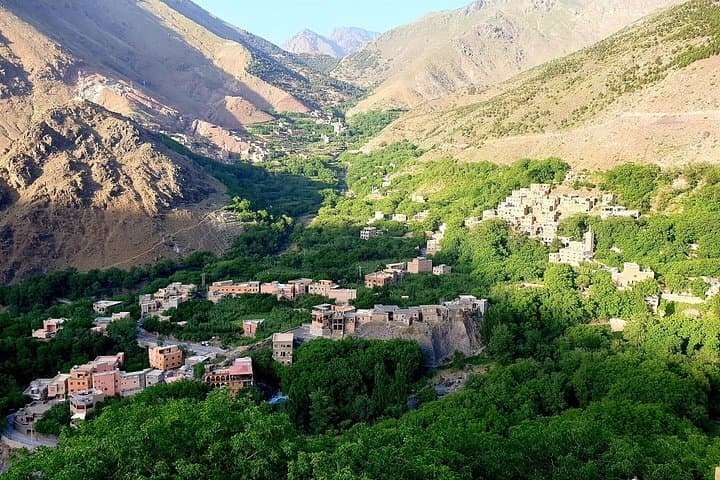
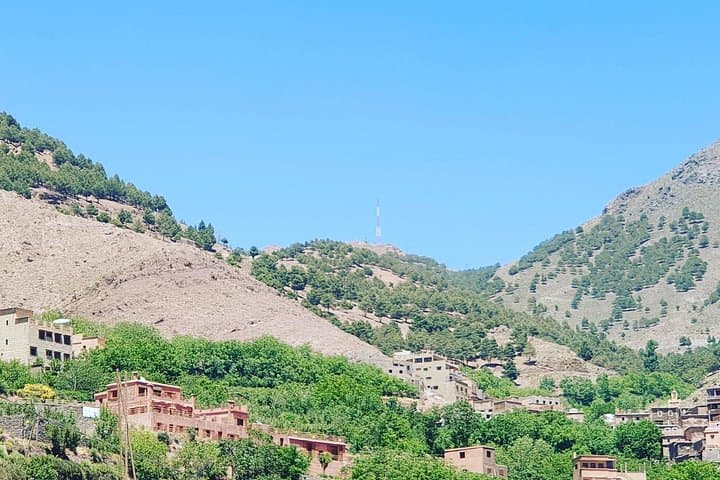
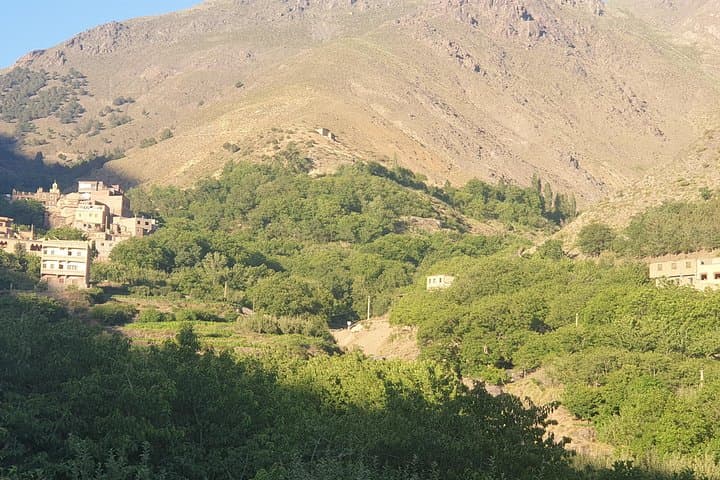
This route threads small Berber villages and the Ait Mizane valley, where stone houses and barley terraces climb toward the dark bulk of Jbel Toubkal (4,167 m), visible from distance as a steady, snow-capped ridge in winter and spring. Geologically the High Atlas is young, uplifted by the collision of the African and Eurasian plates, so expect rocky paths, cobbled mule tracks and short, steep pitches where scree and packed soil alternate. Culturally this is working-mountain country: mule trains, seasonal barley plots and mountain gites that serve simple, home-cooked tagines.
Practicalities: the shared day trip runs about 5–7 hours including driving; on-foot sections are generally short walks of 2–6 km on uneven terrain with occasional climbs of a few hundred meters. Wear sturdy shoes, carry 1–2 liters of water, and layer for sun and wind—temperature swings are common. A home-cooked lunch at a gite and time to meet local families are usually included; the overall pace is relaxed and suitable for most hikers comfortable on rocky village trails. Return to Marrakech by early evening with fresh-air lungs and a clearer sense of mountain life in Morocco.
easy.
5–7 hours.
Suitable for most people who can walk 2–6 km on uneven ground and handle short climbs; not technical.
The transfer typically takes about 45–75 minutes depending on traffic and the exact pickup location in Marrakech.
No technical skills are required; walks are short and on village/mule tracks, though some uneven terrain and short climbs are involved.
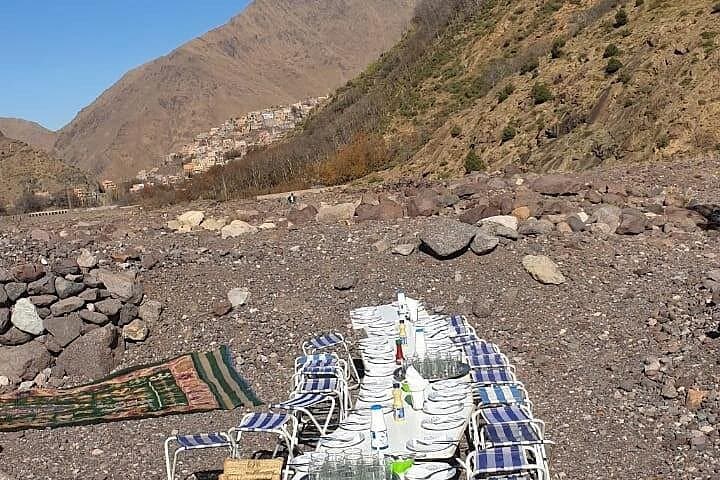
Yes—this day trip usually includes a home-cooked lunch at a traditional gite and time to meet local hosts.
Yes—operators describe the excursion as suitable for most ages, though those with mobility or cardiovascular issues should consult the provider before booking.
The High Atlas has been inhabited by Berber (Amazigh) communities for centuries; many villages still practice subsistence agriculture and maintain traditional hospitality customs.
Toubkal area is sensitive to erosion and overgrazing—stick to established trails, avoid single-use plastics, and support local guides and gites to keep tourism benefits in the valley.
Omar Adventures operates guided outdoor trips and adventures with an emphasis on safety, stewardship, and memorable experiences.
You leave Marrakech’s ochre walls and within an hour the city noise thins into high dry air and the first terraced fields of the High Atlas unfold. The van drops you in Imlil and a local guide pours mint tea while the river below rips past—an unhurried soundtrack to the day’s walking.
You leave Marrakech’s ochre walls and within an hour the city noise thins into high dry air and the first terraced fields of the High Atlas unfold. The van drops you in Imlil and a local guide pours mint tea while the river below rips past—an unhurried soundtrack to the day’s walking.
This route threads small Berber villages and the Ait Mizane valley, where stone houses and barley terraces climb toward the dark bulk of Jbel Toubkal (4,167 m), visible from distance as a steady, snow-capped ridge in winter and spring. Geologically the High Atlas is young, uplifted by the collision of the African and Eurasian plates, so expect rocky paths, cobbled mule tracks and short, steep pitches where scree and packed soil alternate. Culturally this is working-mountain country: mule trains, seasonal barley plots and mountain gites that serve simple, home-cooked tagines.
Practicalities: the shared day trip runs about 5–7 hours including driving; on-foot sections are generally short walks of 2–6 km on uneven terrain with occasional climbs of a few hundred meters. Wear sturdy shoes, carry 1–2 liters of water, and layer for sun and wind—temperature swings are common. A home-cooked lunch at a gite and time to meet local families are usually included; the overall pace is relaxed and suitable for most hikers comfortable on rocky village trails. Return to Marrakech by early evening with fresh-air lungs and a clearer sense of mountain life in Morocco.