THE ADVENTURE COLLECTIVE® · Independent discovery and booking for outdoor travel

Travelers move from Marrakech into Berber valleys and end on Agafay’s rocky plains for an overnight camp, camel ride, and traditional dinner show. Expect moderate hiking through waterfalls and villages, cultural stops at argan cooperatives, and sunrise-to-sunset photo opportunities.
Travelers move from Marrakech into Berber valleys and end on Agafay’s rocky plains for an overnight camp, camel ride, and traditional dinner show. Expect moderate hiking through waterfalls and villages, cultural stops at argan cooperatives, and sunrise-to-sunset photo opportunities.
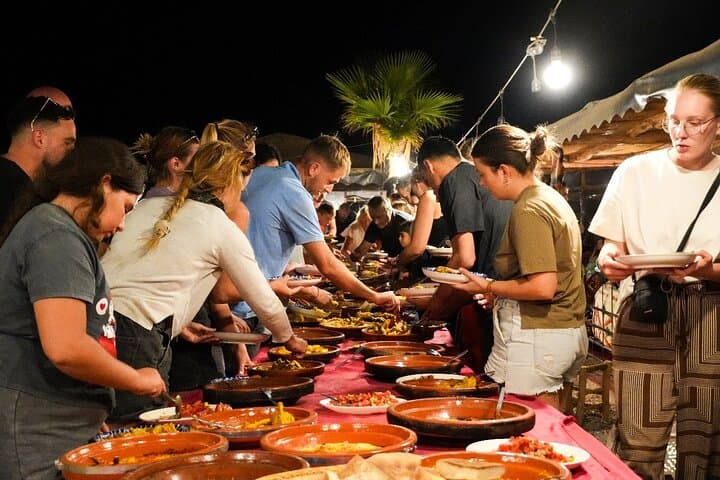
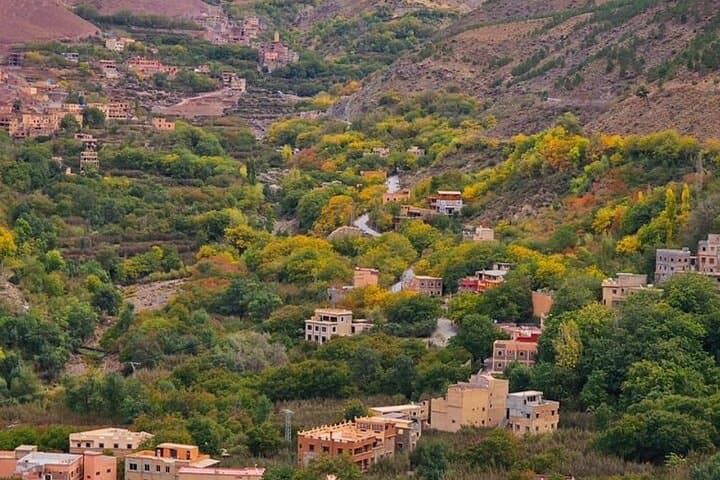
Dusty light slides over a low ridge as the minivan eases out of Marrakech and the air sharpens with cedar and thyme. Travelers find themselves moving from riad courtyards into the wide, worked valleys of the High Atlas — terraced fields, mud-brick villages, and the steady shape of the mountains cutting the sky. By afternoon the landscape opens to Agafay’s rocky plains where a camel line waits for sunset and a low-profile desert camp prepares a tagine and drums.
Verified experiences and guided adventures in the surrounding area.
Operated by Beldi Desert Nights · Marrakech, Marrakesh-Safi
Dusty light slides over a low ridge as the minivan eases out of Marrakech and the air sharpens with cedar and thyme. Travelers find themselves moving from riad courtyards into the wide, worked valleys of the High Atlas — terraced fields, mud-brick villages, and the steady shape of the mountains cutting the sky. By afternoon the landscape opens to Agafay’s rocky plains where a camel line waits for sunset and a low-profile desert camp prepares a tagine and drums.
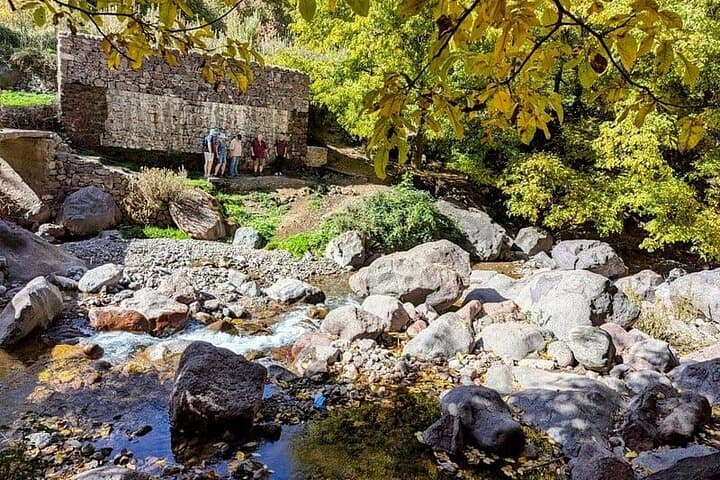
The region spans foothills that lead toward Toubkal National Park and the artificial mirror of Lalla Takerkoust Dam. Geologically the Atlas is an uplifted chain of folded sedimentary rock and volcanic intrusions; water-carved gullies still feed small waterfalls that supply village agriculture. Culturally the route threads Berber communities and argan cooperatives, where traditional pressing and collective sales remain important income sources.
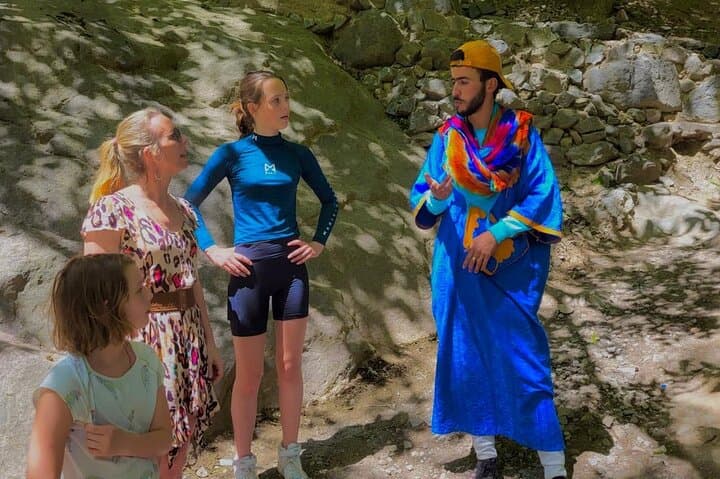
Expect a moderate day: valley walks of 2–6 km with intermittent climbs (commonly 200–400 m cumulative gain), village trails over rocky paths, and flat, stony terrain for the camel trek. Sunrise and sunset light are prime for photos; mornings are cooler for hiking. Guides stop at cooperatives, weekly souks, and village homes for shared lunch and local music.
Practical notes: wear sturdy trail shoes, sun protection, and layered clothing for temperature swings between mountain shade and desert wind. Carry 1–2 liters of water for daytime hiking and a small headlamp for camp. If you’re new to camels, sit back and follow the handler’s brief — mounts are steady but dismounts can be sudden. The trip pairs natural scenery with cultural contact, making it accessible for most outdoors-oriented travelers.
moderate.
28 hours (overnight).
Suitable for travelers comfortable with 2–4 hours of walking on uneven terrain and short climbs; not strenuous but requires basic mobility.
Transfer times vary by traffic, typically 30–60 minutes to Atlas foothills and roughly 30–45 minutes to Agafay from central Marrakech.
Yes — camels used in tourist camps are trained and guided; attendants handle mounting and give safety instructions; avoid sudden movements during saddling or dismounting.
Overnight options are usually private or shared tents in a desert camp with basic bedding and blankets; facilities vary between simple and more comfortable setups depending on the operator.
The tour is family-friendly but not recommended for people with serious back or heart conditions; camels and uneven walking may be challenging for very young children or those with limited mobility.
Berber communities have farmed Atlas foothills for centuries; local argan production and cooperative work reflect long-standing women's economic roles in the region.
Respect water sources and village lands; stick to established tracks to limit erosion, and purchase argan products from verified cooperatives that pay producers fairly.
Beldi Desert Nights operates guided outdoor trips and adventures with an emphasis on safety, stewardship, and memorable experiences.
Dusty light slides over a low ridge as the minivan eases out of Marrakech and the air sharpens with cedar and thyme. Travelers find themselves moving from riad courtyards into the wide, worked valleys of the High Atlas — terraced fields, mud-brick villages, and the steady shape of the mountains cutting the sky. By afternoon the landscape opens to Agafay’s rocky plains where a camel line waits for sunset and a low-profile desert camp prepares a tagine and drums.
Dusty light slides over a low ridge as the minivan eases out of Marrakech and the air sharpens with cedar and thyme. Travelers find themselves moving from riad courtyards into the wide, worked valleys of the High Atlas — terraced fields, mud-brick villages, and the steady shape of the mountains cutting the sky. By afternoon the landscape opens to Agafay’s rocky plains where a camel line waits for sunset and a low-profile desert camp prepares a tagine and drums.
The region spans foothills that lead toward Toubkal National Park and the artificial mirror of Lalla Takerkoust Dam. Geologically the Atlas is an uplifted chain of folded sedimentary rock and volcanic intrusions; water-carved gullies still feed small waterfalls that supply village agriculture. Culturally the route threads Berber communities and argan cooperatives, where traditional pressing and collective sales remain important income sources.
Expect a moderate day: valley walks of 2–6 km with intermittent climbs (commonly 200–400 m cumulative gain), village trails over rocky paths, and flat, stony terrain for the camel trek. Sunrise and sunset light are prime for photos; mornings are cooler for hiking. Guides stop at cooperatives, weekly souks, and village homes for shared lunch and local music.
Practical notes: wear sturdy trail shoes, sun protection, and layered clothing for temperature swings between mountain shade and desert wind. Carry 1–2 liters of water for daytime hiking and a small headlamp for camp. If you’re new to camels, sit back and follow the handler’s brief — mounts are steady but dismounts can be sudden. The trip pairs natural scenery with cultural contact, making it accessible for most outdoors-oriented travelers.