THE ADVENTURE COLLECTIVE® · Independent discovery and booking for outdoor travel

Drive from Marrakech into the High Atlas for a six- to seven-hour day of terraced farms, Berber village visits, and valley viewpoints. Expect short walks, local markets, and a close-up look at traditional mountain life.
Drive from Marrakech into the High Atlas for a six- to seven-hour day of terraced farms, Berber village visits, and valley viewpoints. Expect short walks, local markets, and a close-up look at traditional mountain life.
Morning light lifts off Marrakech and the city’s ochre walls fall away as the minivan climbs toward the High Atlas. Within an hour the air sharpens, terraces appear on steep slopes, and the landscape begins to push back—rivers cutting gullies, granite ridges wearing soft scree, and villages that work with the land rather than against it.
Verified experiences and guided adventures in the surrounding area.
Operated by Marrakech experiences · Marrakech, Marrakesh-Safi
Morning light lifts off Marrakech and the city’s ochre walls fall away as the minivan climbs toward the High Atlas. Within an hour the air sharpens, terraces appear on steep slopes, and the landscape begins to push back—rivers cutting gullies, granite ridges wearing soft scree, and villages that work with the land rather than against it.
This full-day tour threads the Ourika, Imlil and Ait Mezan valleys, passing seasonal rivers, almond and olive groves, and adobe houses where Berber families still follow agricultural calendars set generations ago. Geologically the High Atlas is a collision zone—folded sedimentary layers and exposed granite—so expect sudden shifts from red clay soils to pale scree and stone outcrops.
Culture arrives in small rituals: shared mint tea, the slow rhythm of market bargaining in Asni, and craftsmen shaping wool and metal for local use. Guides usually include a short walk in a village (100–300m elevation change possible) and a visit inside a family home, plus an optional camel ride on the Agafay-like rocky plains.
Practical notes: the tour runs about 6–7 hours door-to-door from Marrakech; most driving is paved but winding; wear sturdy walking shoes and layers—the temperature can drop above 1,500 m. Bring cash for small purchases, a refillable water bottle, and a hat. Time your visit for morning light in the valleys; late afternoon returns can be hazy. Respect privacy during home visits and accept tea invitations as part of local hospitality. This trip suits travelers who want cultural contact with light walking through dramatic mountain scenery.
easy.
6–7 hours.
Suitable for travelers in average physical condition; includes short, gentle village walks and low-impact terrain.
Expect roughly 1–1.5 hours each way depending on the valley visited and traffic; total trip time is about 6–7 hours.
Yes—this is a low-impact day tour suitable for most ages, though those with mobility limitations should note village paths can be uneven.
Lunch, bottled water, and hot drinks are included; bring extra cash for snacks, souvenirs, or additional purchases.
Tipping is customary; small amounts for guides and drivers are appreciated and support local livelihoods.
The Berber (Amazigh) communities in these valleys have practiced terrace agriculture and pastoralism for centuries, preserving language and crafts distinct from urban Marrakech.
Water is a scarce resource here—stick to refillable bottles, avoid single-use plastics, and support local guides and producers to keep tourism benefits in the community.
Marrakech experiences operates guided outdoor trips and adventures with an emphasis on safety, stewardship, and memorable experiences.

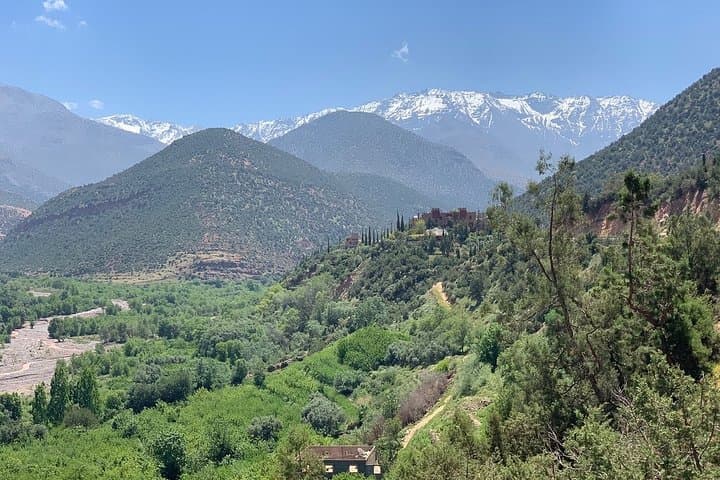


Morning light lifts off Marrakech and the city’s ochre walls fall away as the minivan climbs toward the High Atlas. Within an hour the air sharpens, terraces appear on steep slopes, and the landscape begins to push back—rivers cutting gullies, granite ridges wearing soft scree, and villages that work with the land rather than against it.
Morning light lifts off Marrakech and the city’s ochre walls fall away as the minivan climbs toward the High Atlas. Within an hour the air sharpens, terraces appear on steep slopes, and the landscape begins to push back—rivers cutting gullies, granite ridges wearing soft scree, and villages that work with the land rather than against it.
This full-day tour threads the Ourika, Imlil and Ait Mezan valleys, passing seasonal rivers, almond and olive groves, and adobe houses where Berber families still follow agricultural calendars set generations ago. Geologically the High Atlas is a collision zone—folded sedimentary layers and exposed granite—so expect sudden shifts from red clay soils to pale scree and stone outcrops.
Culture arrives in small rituals: shared mint tea, the slow rhythm of market bargaining in Asni, and craftsmen shaping wool and metal for local use. Guides usually include a short walk in a village (100–300m elevation change possible) and a visit inside a family home, plus an optional camel ride on the Agafay-like rocky plains.
Practical notes: the tour runs about 6–7 hours door-to-door from Marrakech; most driving is paved but winding; wear sturdy walking shoes and layers—the temperature can drop above 1,500 m. Bring cash for small purchases, a refillable water bottle, and a hat. Time your visit for morning light in the valleys; late afternoon returns can be hazy. Respect privacy during home visits and accept tea invitations as part of local hospitality. This trip suits travelers who want cultural contact with light walking through dramatic mountain scenery.