THE ADVENTURE COLLECTIVE® · Independent discovery and booking for outdoor travel

Escape Marrakech for a day of high valleys, walnut orchards and waterfalls in the shadow of Jbel Toubkal. This guided trip combines a gentle village walk, a home-cooked Berber lunch and panoramic photo stops in the Atlas Mountains.
Escape Marrakech for a day of high valleys, walnut orchards and waterfalls in the shadow of Jbel Toubkal. This guided trip combines a gentle village walk, a home-cooked Berber lunch and panoramic photo stops in the Atlas Mountains.
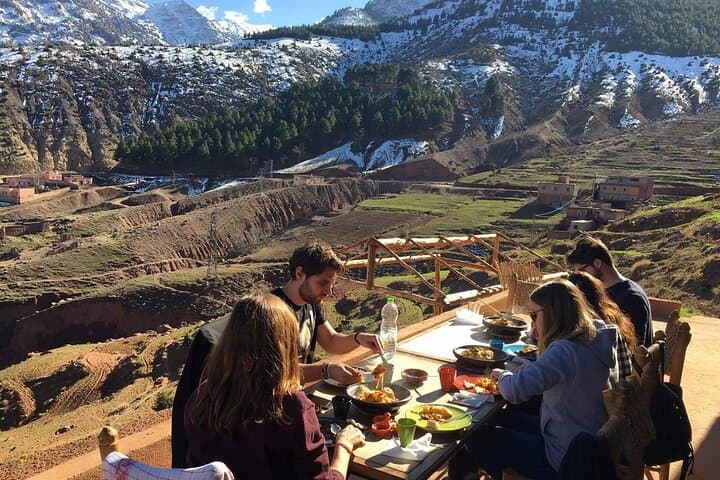
You leave Marrakech behind as the city’s heat folds into a cooler, terraced landscape—olive groves give way to green walnut orchards and a chain of pale ridges. The road climbs toward the Toubkal massif and the Imlil Valley, where a local guide meets you with mint tea on a sun-scrubbed rooftop and a sweeping view down the valley.
Verified experiences and guided adventures in the surrounding area.
Operated by Marrakech experiences · Imlil, Marrakesh-Safi
You leave Marrakech behind as the city’s heat folds into a cooler, terraced landscape—olive groves give way to green walnut orchards and a chain of pale ridges. The road climbs toward the Toubkal massif and the Imlil Valley, where a local guide meets you with mint tea on a sun-scrubbed rooftop and a sweeping view down the valley.
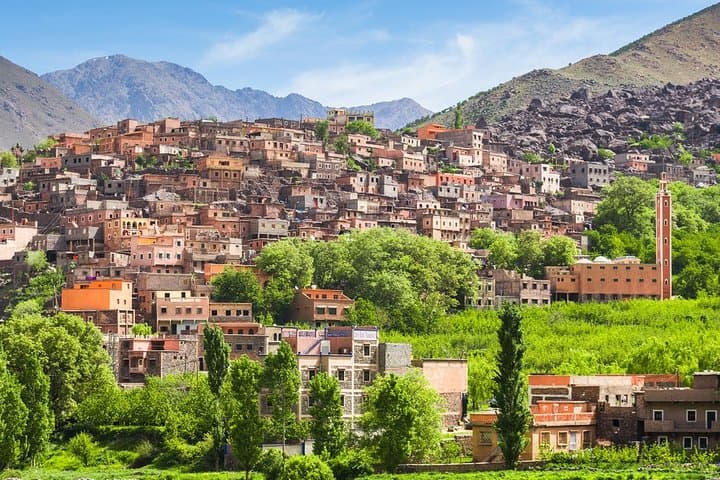
The High Atlas is young, tectonic rock pushed up as Africa met Eurasia. Rivers have carved steep gorges and nourished villages that have been home to Amazigh (Berber) communities for centuries. Imlil’s stone houses, irrigated terraces and narrow mule tracks reflect an agricultural life adapted to high-altitude seasons; the massif culminates at Jbel Toubkal (4,167 m), Morocco’s highest peak, a landmark for mountaineers and a weather anchor for the surrounding valleys.
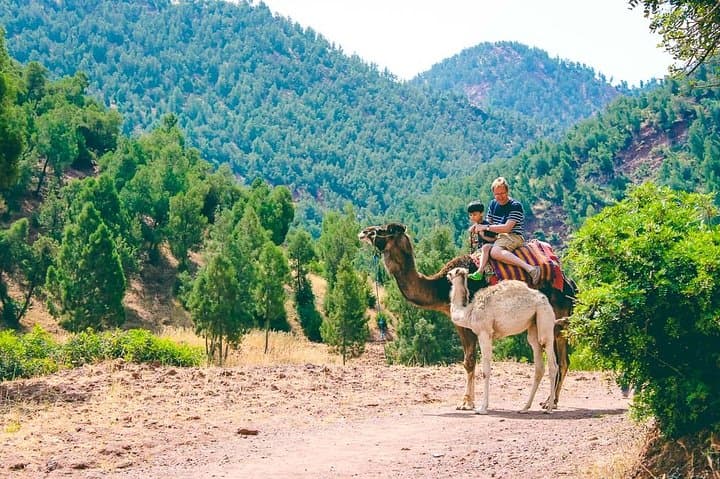
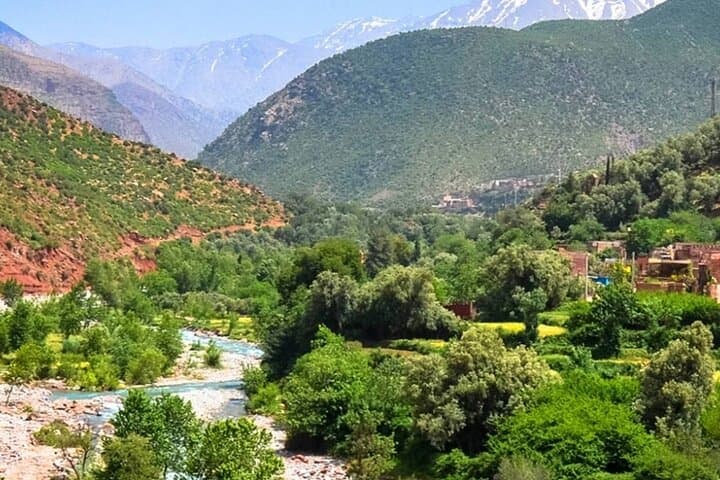
On this guided day trip expect a short cultural stop in Azrou, photo pulls at Moulay Brahim viewpoints, and a flexible 1–2 hour walk through orchards, past waterfalls and between villages—enough to stretch legs without technical climbing. Lunch is typically a home-cooked tagine or couscous with tea shared on a family terrace.
Practical edge: start early to avoid midday heat, wear sturdy shoes for rocky village tracks, bring 1–2 liters of water and a light layer for shifting mountain winds. The walk is suitable for most people in reasonable shape, and guides offer cultural context plus transport back to Marrakech by late afternoon. Carry local cash and respect private terraces and grazing areas.
moderate.
6–7 hours.
Suitable for travelers who can handle 1–2 hours of walking on uneven terrain; basic fitness required for hills and uneven paths.
Yes—pickup and drop-off from Marrakech hotels or riads is included in the tour price.
The guided walk is 1–2 hours on largely well-worn village trails with some short uphill sections—no technical climbing required.
Lunch (typically salad and a tagine or couscous) plus tea and bottled water are included as described in the tour inclusions.
Yes, the tour is suitable for most ages; people with serious heart conditions are advised not to participate and you should notify the operator of mobility limits.
The High Atlas has been inhabited by Amazigh (Berber) communities for millennia; villages around Imlil retain traditional stone architecture and terraced agriculture.
Stick to marked tracks, avoid trampling irrigated terraces, and minimize plastic waste—local ecosystems are sensitive to increased tourist pressure.
Marrakech experiences operates guided outdoor trips and adventures with an emphasis on safety, stewardship, and memorable experiences.
You leave Marrakech behind as the city’s heat folds into a cooler, terraced landscape—olive groves give way to green walnut orchards and a chain of pale ridges. The road climbs toward the Toubkal massif and the Imlil Valley, where a local guide meets you with mint tea on a sun-scrubbed rooftop and a sweeping view down the valley.
You leave Marrakech behind as the city’s heat folds into a cooler, terraced landscape—olive groves give way to green walnut orchards and a chain of pale ridges. The road climbs toward the Toubkal massif and the Imlil Valley, where a local guide meets you with mint tea on a sun-scrubbed rooftop and a sweeping view down the valley.
The High Atlas is young, tectonic rock pushed up as Africa met Eurasia. Rivers have carved steep gorges and nourished villages that have been home to Amazigh (Berber) communities for centuries. Imlil’s stone houses, irrigated terraces and narrow mule tracks reflect an agricultural life adapted to high-altitude seasons; the massif culminates at Jbel Toubkal (4,167 m), Morocco’s highest peak, a landmark for mountaineers and a weather anchor for the surrounding valleys.
On this guided day trip expect a short cultural stop in Azrou, photo pulls at Moulay Brahim viewpoints, and a flexible 1–2 hour walk through orchards, past waterfalls and between villages—enough to stretch legs without technical climbing. Lunch is typically a home-cooked tagine or couscous with tea shared on a family terrace.
Practical edge: start early to avoid midday heat, wear sturdy shoes for rocky village tracks, bring 1–2 liters of water and a light layer for shifting mountain winds. The walk is suitable for most people in reasonable shape, and guides offer cultural context plus transport back to Marrakech by late afternoon. Carry local cash and respect private terraces and grazing areas.