THE ADVENTURE COLLECTIVE® · Independent discovery and booking for outdoor travel

Leave Marrakech for a day in the High Atlas where terraced fields, a short waterfall and traditional Berber villages form the backdrop to a family-style lunch and a chance to see Jbel Toubkal up close. This accessible day tour balances mild hiking with cultural encounters.
Leave Marrakech for a day in the High Atlas where terraced fields, a short waterfall and traditional Berber villages form the backdrop to a family-style lunch and a chance to see Jbel Toubkal up close. This accessible day tour balances mild hiking with cultural encounters.
A gravel road unfurls out of Marrakech and, within an hour, the city’s heat gives way to stone terraces and the low chatter of village life. By the time participants reach Imlil, mint tea is waiting and a trail slips upward between walnut orchards and dry-stone walls. The path rises and falls through cultivated fields, past a small waterfall that hurls itself over limestone, before climbing to the village of Armed where the high ridge frames North Africa’s highest peak, Jbel Toubkal.
Verified experiences and guided adventures in the surrounding area.
Operated by Marrakech Tours · Imlil, Marrakesh-Safi
A gravel road unfurls out of Marrakech and, within an hour, the city’s heat gives way to stone terraces and the low chatter of village life. By the time participants reach Imlil, mint tea is waiting and a trail slips upward between walnut orchards and dry-stone walls. The path rises and falls through cultivated fields, past a small waterfall that hurls itself over limestone, before climbing to the village of Armed where the high ridge frames North Africa’s highest peak, Jbel Toubkal.
The High Atlas is young, rugged folded rock where rivers have cut deep valleys and local people have shaped steep slopes into productive terraces for centuries. The villages are Amazigh (Berber) communities whose pottery, stone homes and irrigation channels reflect a long mountain farming tradition. On this day tour you’ll pass a weekly souk at Tahnaouet some days, see traditional pottery and share lunch with a Berber family—an immediate cultural exchange rooted in everyday mountain life.
Practically: expect uneven village tracks, short steep pitches and about 10–14 km of walking spread across the day with roughly 300–600 m of cumulative ascent and descent depending on the route. Wear broken-in shoes, carry 1–2 liters of water, and plan for strong sun and sudden cool in shade or later afternoon. The guide handles logistics—pick-up from Marrakech, bottled water, and lunch—leaving you to move at a steady pace, photograph terraced plots, and listen to the valley’s wind as it pushes you onward.
moderate.
6–7 hours.
Suitable for travelers with moderate fitness able to walk several miles on uneven terrain and short steep sections.
The day includes roughly 10–14 km of walking spread around the villages and valley with about 300–600 m of cumulative ascent and descent depending on the exact route.
The itinerary is described as suitable for all fitness levels but involves unpaved paths and some steep sections—consider mobility and speak with the operator about alternative options like shorter walks or more vehicle time.
Lunch, bottled water and tea/coffee are included; inform the operator ahead of time about dietary restrictions.
Guides typically speak English and French; the tour includes hotel pick-up and drop-off in Marrakech or a central meeting point if preferred.
The High Atlas has been inhabited by Amazigh (Berber) communities for millennia; villages rely on terraced agriculture and local trade routes that predate modern roads.
Water is scarce in the region—support local guides, avoid single-use plastics when possible, and stick to trails to protect fragile terraces and erosion-prone slopes.
Marrakech Tours operates guided outdoor trips and adventures with an emphasis on safety, stewardship, and memorable experiences.
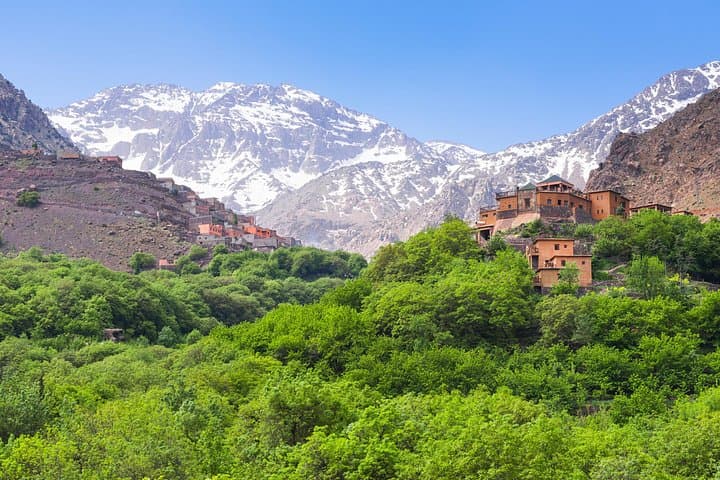
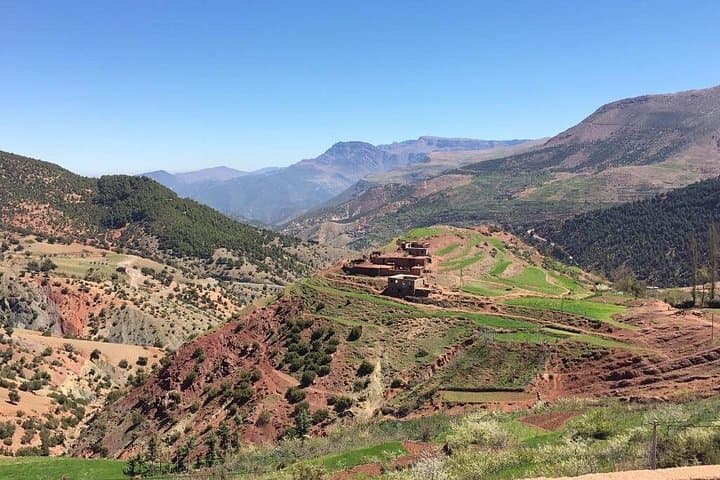
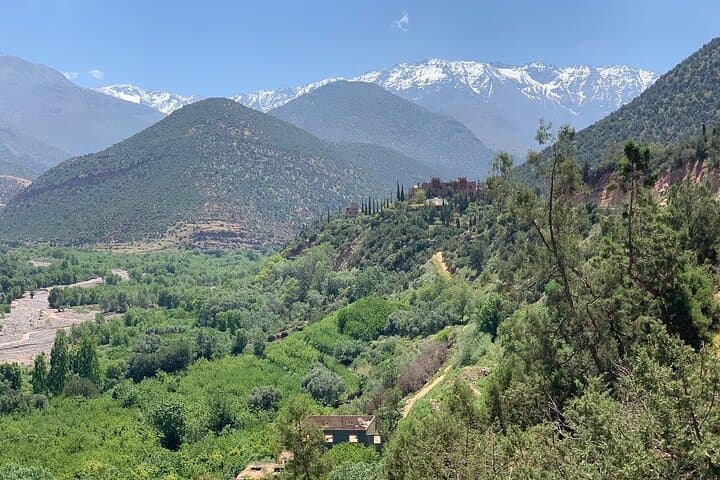
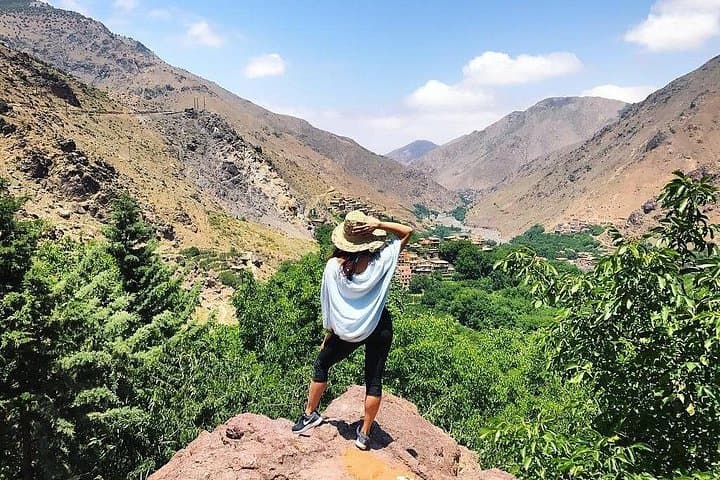
A gravel road unfurls out of Marrakech and, within an hour, the city’s heat gives way to stone terraces and the low chatter of village life. By the time participants reach Imlil, mint tea is waiting and a trail slips upward between walnut orchards and dry-stone walls. The path rises and falls through cultivated fields, past a small waterfall that hurls itself over limestone, before climbing to the village of Armed where the high ridge frames North Africa’s highest peak, Jbel Toubkal.
A gravel road unfurls out of Marrakech and, within an hour, the city’s heat gives way to stone terraces and the low chatter of village life. By the time participants reach Imlil, mint tea is waiting and a trail slips upward between walnut orchards and dry-stone walls. The path rises and falls through cultivated fields, past a small waterfall that hurls itself over limestone, before climbing to the village of Armed where the high ridge frames North Africa’s highest peak, Jbel Toubkal.
The High Atlas is young, rugged folded rock where rivers have cut deep valleys and local people have shaped steep slopes into productive terraces for centuries. The villages are Amazigh (Berber) communities whose pottery, stone homes and irrigation channels reflect a long mountain farming tradition. On this day tour you’ll pass a weekly souk at Tahnaouet some days, see traditional pottery and share lunch with a Berber family—an immediate cultural exchange rooted in everyday mountain life.
Practically: expect uneven village tracks, short steep pitches and about 10–14 km of walking spread across the day with roughly 300–600 m of cumulative ascent and descent depending on the route. Wear broken-in shoes, carry 1–2 liters of water, and plan for strong sun and sudden cool in shade or later afternoon. The guide handles logistics—pick-up from Marrakech, bottled water, and lunch—leaving you to move at a steady pace, photograph terraced plots, and listen to the valley’s wind as it pushes you onward.