THE ADVENTURE COLLECTIVE® · Independent discovery and booking for outdoor travel

Swap Marrakech’s bustle for a seven-hour High Atlas day trip that mixes a gentle camel ride with village walks, waterfalls, and a home-cooked Berber lunch. Expect orchard-filled valleys, mountain views of Toubkal, and hands-on cultural encounters.
Swap Marrakech’s bustle for a seven-hour High Atlas day trip that mixes a gentle camel ride with village walks, waterfalls, and a home-cooked Berber lunch. Expect orchard-filled valleys, mountain views of Toubkal, and hands-on cultural encounters.
Early light from Marrakech catches the jagged ridgelines of the High Atlas as the air-conditioned transfer peels away from the city. Within an hour the landscape changes: scrub gives way to terraced orchards, a broad gorge opens, and the guide points toward snow-dusted peaks that frame the valley. The day alternates between slow, deliberate camel steps along arid tracks and brisk walks on stone-packed footpaths into small Berber villages.
Verified experiences and guided adventures in the surrounding area.
Operated by Marrakech Expetrince · Marrakech, Marrakech-Safi
Early light from Marrakech catches the jagged ridgelines of the High Atlas as the air-conditioned transfer peels away from the city. Within an hour the landscape changes: scrub gives way to terraced orchards, a broad gorge opens, and the guide points toward snow-dusted peaks that frame the valley. The day alternates between slow, deliberate camel steps along arid tracks and brisk walks on stone-packed footpaths into small Berber villages.
The route threads through historically Amazigh (Berber) farming country where kasbah-style houses and irrigation terraces reveal a centuries-old mountain agriculture. Geologically the High Atlas is young and rugged—folded sedimentary rock pushed up against volcanic intrusions—so expect steep-sided valleys, stepped fields, and seasonal waterfalls after winter rains. Cultural moments center on family hospitality: shared mint tea at a homestead, a home-cooked tajine in Ait Souka, and conversation with local villagers whose livelihoods still hinge on mule transport and small-scale orchards.
Practicalities: the trip is a full day (about seven hours) with included hotel pickup, a camel segment suitable for first-timers, and predominantly easy-to-moderate walking on uneven ground. Wear sturdy shoes and sun protection, carry 1–2 liters of water, and budget time for photography at viewpoints and waterfalls. Respect local customs—ask before photographing people—and leave no trace on trails and in villages. Return to Marrakech in the evening with a clearer sense of Atlas life: rocky, hospitable, and quietly persistent.
moderate.
7 hours.
Suitable for travelers in reasonable shape who can handle several short walks on uneven ground; minimal stamina required for camel segments.
The tour is about 7 hours and includes hotel pickup/drop-off, an English-speaking guide, camel ride, lunch in a village home, and transportation in an air-conditioned vehicle.
Yes; the camel section is gentle and suitable for first-time riders, with guides assisting mounting and dismounting.
Walks are generally easy to moderate on uneven stone paths; mules are available for those who prefer not to walk.
Most operators can accommodate common dietary requests if informed at booking—use the special requirements field to notify them.
The High Atlas is home to Amazigh (Berber) communities whose terrace farming and stone kasbahs reflect centuries of mountain adaptation and trade routes linking Marrakech to the south.
Water is a precious resource in the Atlas; travel choices that minimize litter, respect grazing areas, and support local guides help sustain fragile mountain ecosystems.
Marrakech Expetrince operates guided outdoor trips and adventures with an emphasis on safety, stewardship, and memorable experiences.
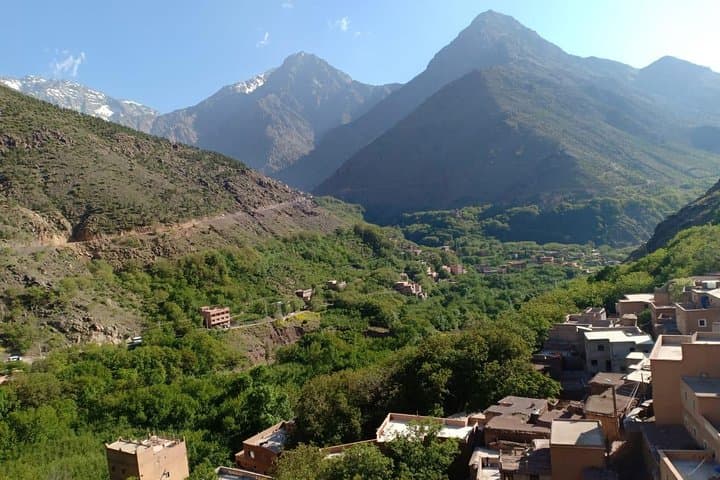
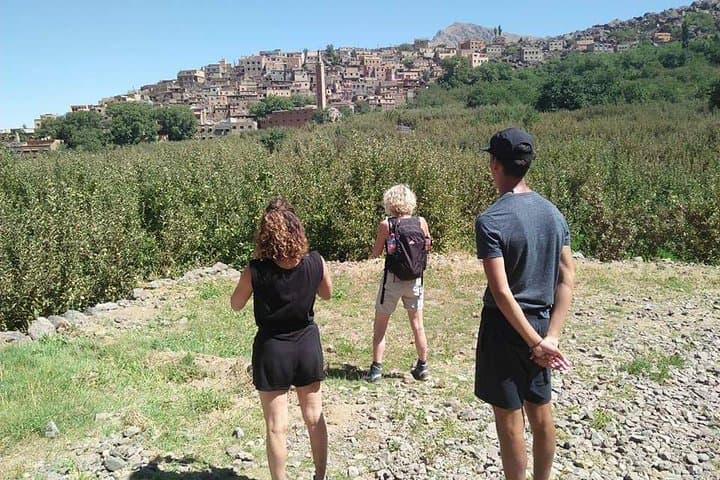
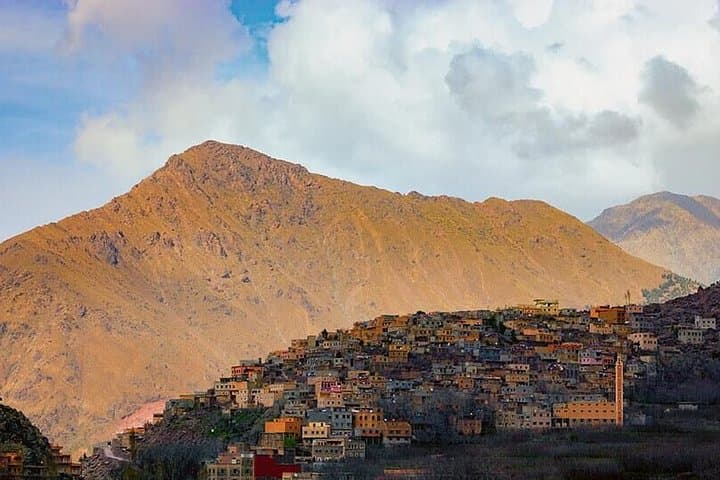
Early light from Marrakech catches the jagged ridgelines of the High Atlas as the air-conditioned transfer peels away from the city. Within an hour the landscape changes: scrub gives way to terraced orchards, a broad gorge opens, and the guide points toward snow-dusted peaks that frame the valley. The day alternates between slow, deliberate camel steps along arid tracks and brisk walks on stone-packed footpaths into small Berber villages.
Early light from Marrakech catches the jagged ridgelines of the High Atlas as the air-conditioned transfer peels away from the city. Within an hour the landscape changes: scrub gives way to terraced orchards, a broad gorge opens, and the guide points toward snow-dusted peaks that frame the valley. The day alternates between slow, deliberate camel steps along arid tracks and brisk walks on stone-packed footpaths into small Berber villages.
The route threads through historically Amazigh (Berber) farming country where kasbah-style houses and irrigation terraces reveal a centuries-old mountain agriculture. Geologically the High Atlas is young and rugged—folded sedimentary rock pushed up against volcanic intrusions—so expect steep-sided valleys, stepped fields, and seasonal waterfalls after winter rains. Cultural moments center on family hospitality: shared mint tea at a homestead, a home-cooked tajine in Ait Souka, and conversation with local villagers whose livelihoods still hinge on mule transport and small-scale orchards.
Practicalities: the trip is a full day (about seven hours) with included hotel pickup, a camel segment suitable for first-timers, and predominantly easy-to-moderate walking on uneven ground. Wear sturdy shoes and sun protection, carry 1–2 liters of water, and budget time for photography at viewpoints and waterfalls. Respect local customs—ask before photographing people—and leave no trace on trails and in villages. Return to Marrakech in the evening with a clearer sense of Atlas life: rocky, hospitable, and quietly persistent.