THE ADVENTURE COLLECTIVE® · Independent discovery and booking for outdoor travel

Travel from Marrakech into the High Atlas to cook with a Berber family in Imlil. This 6–8 hour day trip blends light mountain scenery with a hands-on lesson in traditional Moroccan dishes.
Travel from Marrakech into the High Atlas to cook with a Berber family in Imlil. This 6–8 hour day trip blends light mountain scenery with a hands-on lesson in traditional Moroccan dishes.
You leave Marrakech before the heat builds, the city shrinking behind orange walls as the road climbs into the High Atlas. Cedar slopes and terraced fields slide past the van window; the air sharpens with altitude. In the village of Imlil (about 1,740 m) a Berber family greets the group and leads you into a small kitchen where clay tagines steam and flatbreads blister on a hot griddle.
Verified experiences and guided adventures in the surrounding area.
Operated by Marrakech Day Trips · Imlil, Marrakech-Safi
You leave Marrakech before the heat builds, the city shrinking behind orange walls as the road climbs into the High Atlas. Cedar slopes and terraced fields slide past the van window; the air sharpens with altitude. In the village of Imlil (about 1,740 m) a Berber family greets the group and leads you into a small kitchen where clay tagines steam and flatbreads blister on a hot griddle.
The High Atlas is both a cultural and geological border: Jbel Toubkal (4,167 m) towers nearby, the range acting as Morocco’s east–west weather barrier and shaping local farming and village life. Imlil’s stone houses, mule tracks and irrigation channels reflect centuries of Amazigh (Berber) mountain living—food traditions born from barley, preserved olives and seasonal vegetables.
In practical terms this is half cultural immersion, half cooking lesson: expect a hands-on session where a small group learns starters, a main and dessert, then sits down to eat what you prepared. Organizers provide ingredients, water, an English-speaking guide and transport from Marrakech by 4WD or minibus; total outing time is roughly 6–8 hours. The walking is minimal, but the mountain air is cooler—layers recommended.
Tips for a smooth day: communicate dietary needs in advance, bring modest clothing for village customs, carry small bills for tips or purchases, and plan the day early to avoid Marrakech traffic. This trip balances easy mountain scenery with authentic home cooking—a compact way to meet local culture without an overnight trek.
easy.
6–8 hours.
Suitable for most fitness levels; minimal walking required, but expect short uneven steps at homesteads
Travel time is typically 60–90 minutes each way depending on traffic and chosen route; the full tour lasts about 6–8 hours.
Yes—ingredients for the cooking class, water and the meal you prepare are included in the price.
Infants can join but must sit on an adult's lap; organizers note stroller access and infant seats are available.
No—hosts welcome beginners and will guide you through each step of preparing traditional starters, a main dish and dessert.
The Amazigh (Berber) communities of the High Atlas have farmed terraced land and kept transhumant flocks for centuries; many village recipes reflect preserved and seasonal ingredients.
The High Atlas is ecologically sensitive—stay on paths, avoid single-use plastics, and support local families to direct tourism benefits to the community.
Marrakech Day Trips operates guided outdoor trips and adventures with an emphasis on safety, stewardship, and memorable experiences.
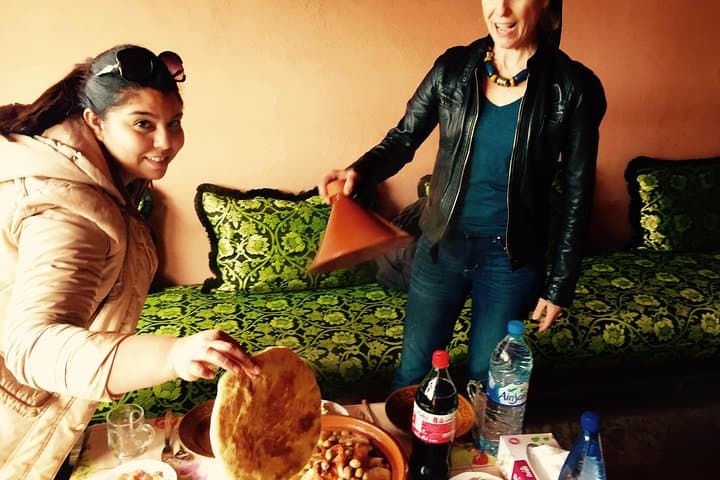


You leave Marrakech before the heat builds, the city shrinking behind orange walls as the road climbs into the High Atlas. Cedar slopes and terraced fields slide past the van window; the air sharpens with altitude. In the village of Imlil (about 1,740 m) a Berber family greets the group and leads you into a small kitchen where clay tagines steam and flatbreads blister on a hot griddle.
You leave Marrakech before the heat builds, the city shrinking behind orange walls as the road climbs into the High Atlas. Cedar slopes and terraced fields slide past the van window; the air sharpens with altitude. In the village of Imlil (about 1,740 m) a Berber family greets the group and leads you into a small kitchen where clay tagines steam and flatbreads blister on a hot griddle.
The High Atlas is both a cultural and geological border: Jbel Toubkal (4,167 m) towers nearby, the range acting as Morocco’s east–west weather barrier and shaping local farming and village life. Imlil’s stone houses, mule tracks and irrigation channels reflect centuries of Amazigh (Berber) mountain living—food traditions born from barley, preserved olives and seasonal vegetables.
In practical terms this is half cultural immersion, half cooking lesson: expect a hands-on session where a small group learns starters, a main and dessert, then sits down to eat what you prepared. Organizers provide ingredients, water, an English-speaking guide and transport from Marrakech by 4WD or minibus; total outing time is roughly 6–8 hours. The walking is minimal, but the mountain air is cooler—layers recommended.
Tips for a smooth day: communicate dietary needs in advance, bring modest clothing for village customs, carry small bills for tips or purchases, and plan the day early to avoid Marrakech traffic. This trip balances easy mountain scenery with authentic home cooking—a compact way to meet local culture without an overnight trek.