THE ADVENTURE COLLECTIVE® · Independent discovery and booking for outdoor travel

A compact 5-day loop from Marrakech that pairs a Toubkal summit push with a Sahara camel ride across Erg Chebbi. Expect high mountain trails, remote Berber villages, Tizi n’Tichka’s pass, and a night under desert stars.
A compact 5-day loop from Marrakech that pairs a Toubkal summit push with a Sahara camel ride across Erg Chebbi. Expect high mountain trails, remote Berber villages, Tizi n’Tichka’s pass, and a night under desert stars.
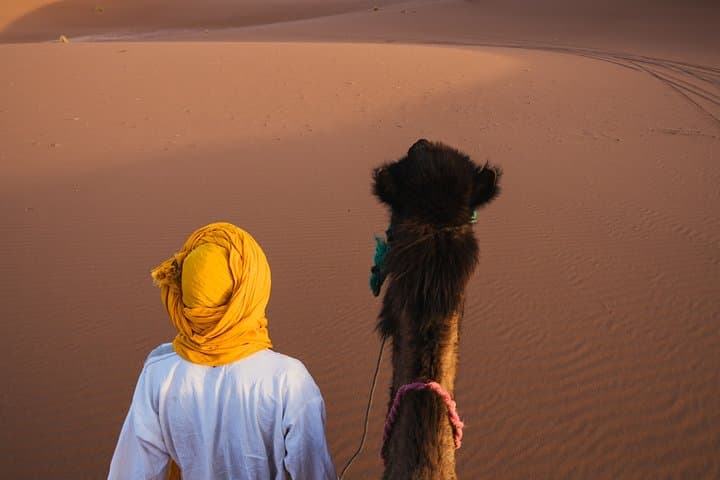
You step out of Marrakech before dawn, the city’s tile roofs shrinking behind the minibus as the road climbs into the High Atlas. By mid-morning the air thins, the path narrows into switchbacks and the trail begins to bite—rock, scree and the scent of juniper. The first nights are in mountain guesthouses and a high refuge at 3,206 m; the second half of the trip opens into orange light and the slow, rhythmic rise of dunes at Erg Chebbi.
Verified experiences and guided adventures in the surrounding area.
Operated by Toubkal Guide · Marrakech, Marrakech-Safi
You step out of Marrakech before dawn, the city’s tile roofs shrinking behind the minibus as the road climbs into the High Atlas. By mid-morning the air thins, the path narrows into switchbacks and the trail begins to bite—rock, scree and the scent of juniper. The first nights are in mountain guesthouses and a high refuge at 3,206 m; the second half of the trip opens into orange light and the slow, rhythmic rise of dunes at Erg Chebbi.
Geology here reads like a cross-section of Morocco: volcanic and metamorphic ridges folded into the High Atlas, then the eroded palimpsest that gives way to the wind-sculpted sand of the Sahara. Culturally, Berber villages—Imlil, Ait Ben Haddou—are living history, mud-brick kasbahs and terraces that show how communities shaped travel and trade routes across these extremes.
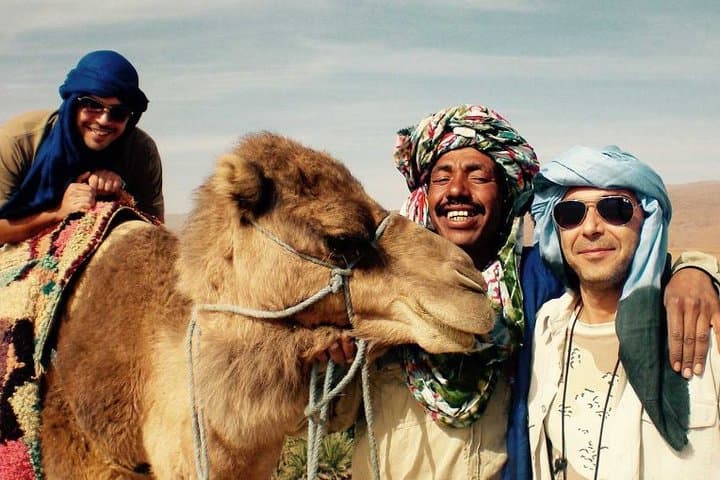
Practical guide: the itinerary includes a summit attempt on Jebel Toubkal (4,167 m) via the Toubkal Refuge, a drive over Tizi n’Tichka (≈2,260 m), a visit to Ait Ben Haddou, Todra Gorge, and a camel-backed sunset into Erg Chebbi where you sleep in a tented camp. Expect varied terrain: steep alpine trails and loose scree on the ascent, long paved and desert drives, and sand underfoot in the dunes. Altitude is the primary challenge—pace yourself, carry layers for cold nights at elevation, and be ready for full days with early starts. Guided logistics cover meals, transport and tents, but personal readiness—good boots, a daypack and hydration—makes the difference between a tough trip and a memorable one.
challenging.
5 days.
Good cardiovascular fitness and leg strength recommended; summit day requires sustained climbs and coping with altitude.
The summit day is long and steep, gaining roughly 1,000 m from the refuge; prior high-elevation hiking experience and good fitness help, and the guide manages pacing and rope-free route-finding.
Accommodation mixes guesthouses, a high mountain refuge and an overnight tented Berber camp in the dunes; meals are included as per the itinerary.
No prior experience required—camel rides are guided and short (dune approach and return), but they involve sitting on and mounting animals and some balance.
Yes—air-conditioned vehicle transfers between Marrakech, Atlas passes, Ait Ben Haddou, Todra Gorge and Erg Chebbi are included in the tour price.
Ait Ben Haddou sits on historic trans-Saharan trade routes and has been a fortified stop since the 17th century; local kasbahs reflect the adobe architecture of southern Morocco.
Stick to marked trails and follow guide instructions to protect fragile alpine flora and avoid trampling dune vegetation; water is scarce in the desert—use it sparingly.
Toubkal Guide operates guided outdoor trips and adventures with an emphasis on safety, stewardship, and memorable experiences.


You step out of Marrakech before dawn, the city’s tile roofs shrinking behind the minibus as the road climbs into the High Atlas. By mid-morning the air thins, the path narrows into switchbacks and the trail begins to bite—rock, scree and the scent of juniper. The first nights are in mountain guesthouses and a high refuge at 3,206 m; the second half of the trip opens into orange light and the slow, rhythmic rise of dunes at Erg Chebbi.
You step out of Marrakech before dawn, the city’s tile roofs shrinking behind the minibus as the road climbs into the High Atlas. By mid-morning the air thins, the path narrows into switchbacks and the trail begins to bite—rock, scree and the scent of juniper. The first nights are in mountain guesthouses and a high refuge at 3,206 m; the second half of the trip opens into orange light and the slow, rhythmic rise of dunes at Erg Chebbi.
Geology here reads like a cross-section of Morocco: volcanic and metamorphic ridges folded into the High Atlas, then the eroded palimpsest that gives way to the wind-sculpted sand of the Sahara. Culturally, Berber villages—Imlil, Ait Ben Haddou—are living history, mud-brick kasbahs and terraces that show how communities shaped travel and trade routes across these extremes.
Practical guide: the itinerary includes a summit attempt on Jebel Toubkal (4,167 m) via the Toubkal Refuge, a drive over Tizi n’Tichka (≈2,260 m), a visit to Ait Ben Haddou, Todra Gorge, and a camel-backed sunset into Erg Chebbi where you sleep in a tented camp. Expect varied terrain: steep alpine trails and loose scree on the ascent, long paved and desert drives, and sand underfoot in the dunes. Altitude is the primary challenge—pace yourself, carry layers for cold nights at elevation, and be ready for full days with early starts. Guided logistics cover meals, transport and tents, but personal readiness—good boots, a daypack and hydration—makes the difference between a tough trip and a memorable one.