THE ADVENTURE COLLECTIVE® · Independent discovery and booking for outdoor travel

Escape Marrakech for a full-day loop through the High Atlas, stopping at Imlil’s waterfall trails, a Berber family lunch and the moonlike Agafay plateau. This 7–8 hour trip blends short hikes, cultural visits and desert sundown views.
Escape Marrakech for a full-day loop through the High Atlas, stopping at Imlil’s waterfall trails, a Berber family lunch and the moonlike Agafay plateau. This 7–8 hour trip blends short hikes, cultural visits and desert sundown views.
You leave Marrakech as the city hums behind you and the road opens to ochre plains and the first foothills of the High Atlas. The air sharpens; the river in the Imlil valley threads down the slope, daring you to follow it uphill. By midmorning walnut groves and terraced fields replace paved streets, and small stone villages sit like folded pages against the mountain.
Verified experiences and guided adventures in the surrounding area.
Operated by Atlas Mountains Guided Tour · Marrakech, Marrakesh-Safi
You leave Marrakech as the city hums behind you and the road opens to ochre plains and the first foothills of the High Atlas. The air sharpens; the river in the Imlil valley threads down the slope, daring you to follow it uphill. By midmorning walnut groves and terraced fields replace paved streets, and small stone villages sit like folded pages against the mountain.
The route traces centuries of Berber settlement and irrigation engineering — simple terracing, seasonal orchards and mule tracks that once linked farmsteads. Geology here shifts quickly: volcanic rock and limestone of the High Atlas give steep gullies and waterfalls, while the Agafay plateau is a stony, sandstone-scoured expanse that catches evening light like bronze.
Culture is immediate: a home-cooked three-course lunch in Tamatert or Ait Mizan, mint tea at a cooperative, and the option to ride a mule or camel for the gentlest parts of the terrain. Guides explain local farming calendars — almond blossom in spring, apple harvest later — and how water shapes village life.
Practical side: expect a 7–8 hour day with about 1–1.5 hours driving each way from Marrakech. Trails in Imlil are rocky with short steep sections; elevation around 1,400–1,800 m in villages. Wear sturdy footwear, carry 2 liters of water, sun protection and layers for variable temperatures. The tour includes hotel pickup, an AC vehicle, snacks and a guided walk; be prepared for moderate exertion and for small-group pacing. Time your visit for spring blossom or late-afternoon light over Agafay for the best photography and atmosphere.
moderate.
7–8 hours.
Moderate fitness—comfortable walking on uneven ground, short uphill sections and ability to handle prolonged standing for up to 3 hours of walking.
The drive varies by route: roughly 40–70 km, typically 1–1.5 hours to Imlil and similar or shorter to Agafay depending on traffic and stops.
Yes—families can do shorter walks and opt for mule rides; children should be able to walk on uneven surfaces for short stretches.
Most hosts can adapt meals with advance notice; indicate restrictions when booking so the guide can arrange alternatives.
Tipping is customary but discretionary—roughly 5–10% for guides and a small gesture to a host family is appreciated.
The High Atlas valleys have been shaped by Berber agricultural practices and mule trails that have linked remote villages for centuries.
Water is scarce here—support local cooperatives, avoid single-use plastic and respect grazing areas to minimize impact.
Atlas Mountains Guided Tour operates guided outdoor trips and adventures with an emphasis on safety, stewardship, and memorable experiences.
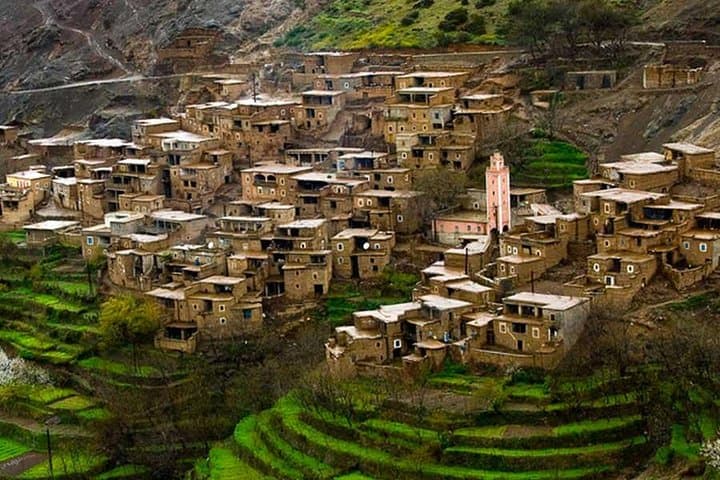


You leave Marrakech as the city hums behind you and the road opens to ochre plains and the first foothills of the High Atlas. The air sharpens; the river in the Imlil valley threads down the slope, daring you to follow it uphill. By midmorning walnut groves and terraced fields replace paved streets, and small stone villages sit like folded pages against the mountain.
You leave Marrakech as the city hums behind you and the road opens to ochre plains and the first foothills of the High Atlas. The air sharpens; the river in the Imlil valley threads down the slope, daring you to follow it uphill. By midmorning walnut groves and terraced fields replace paved streets, and small stone villages sit like folded pages against the mountain.
The route traces centuries of Berber settlement and irrigation engineering — simple terracing, seasonal orchards and mule tracks that once linked farmsteads. Geology here shifts quickly: volcanic rock and limestone of the High Atlas give steep gullies and waterfalls, while the Agafay plateau is a stony, sandstone-scoured expanse that catches evening light like bronze.
Culture is immediate: a home-cooked three-course lunch in Tamatert or Ait Mizan, mint tea at a cooperative, and the option to ride a mule or camel for the gentlest parts of the terrain. Guides explain local farming calendars — almond blossom in spring, apple harvest later — and how water shapes village life.
Practical side: expect a 7–8 hour day with about 1–1.5 hours driving each way from Marrakech. Trails in Imlil are rocky with short steep sections; elevation around 1,400–1,800 m in villages. Wear sturdy footwear, carry 2 liters of water, sun protection and layers for variable temperatures. The tour includes hotel pickup, an AC vehicle, snacks and a guided walk; be prepared for moderate exertion and for small-group pacing. Time your visit for spring blossom or late-afternoon light over Agafay for the best photography and atmosphere.