THE ADVENTURE COLLECTIVE® · Independent discovery and booking for outdoor travel

Leave Marrakech for a five-hour circuit through three Atlas valleys—waterfalls, Berber villages, a camel ride at sunset and a mountain-side tagine beneath a dark, starlit sky. This private day trip pairs accessible walks with cultural stops and panoramic viewpoints.
Leave Marrakech for a five-hour circuit through three Atlas valleys—waterfalls, Berber villages, a camel ride at sunset and a mountain-side tagine beneath a dark, starlit sky. This private day trip pairs accessible walks with cultural stops and panoramic viewpoints.
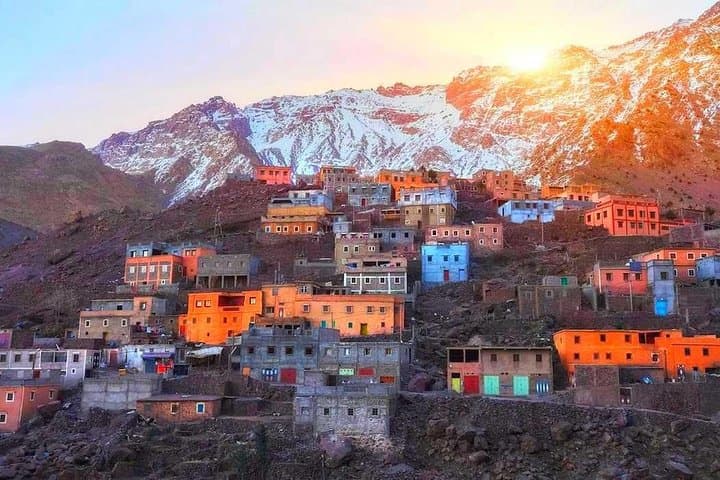
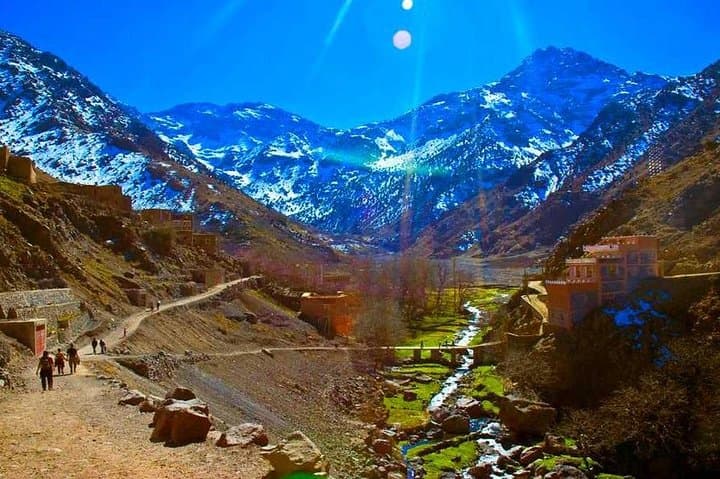
The road climbs out of Marrakech and the city’s heat thins into cool Atlas air—olive terraces and ochre berber houses slide by as the driver threads hairpin turns toward craggy ridgelines. You arrive to a landscape where gullies carve three distinct valleys: Tachdirt’s green slopes, Ckik’s terraced fields and Amizmiz’s more rugged ravines. A short walk to a local waterfall brings the sound of water alive; light fractures through pine and almond trees.
Verified experiences and guided adventures in the surrounding area.
Operated by Marrakech Tour Experience · Marrakech, Marrakech-Safi
The road climbs out of Marrakech and the city’s heat thins into cool Atlas air—olive terraces and ochre berber houses slide by as the driver threads hairpin turns toward craggy ridgelines. You arrive to a landscape where gullies carve three distinct valleys: Tachdirt’s green slopes, Ckik’s terraced fields and Amizmiz’s more rugged ravines. A short walk to a local waterfall brings the sound of water alive; light fractures through pine and almond trees.
This region sits on the southern flank of the High Atlas, Morocco’s young, tectonically uplifted range whose granite and schist reveal glacier-polished basins and steep valleys. The valleys are worked by Amazigh (Berber) communities for centuries—stone farmhouses, narrow mule paths and cooperative argan presses mark a culture shaped by altitude and aridity.
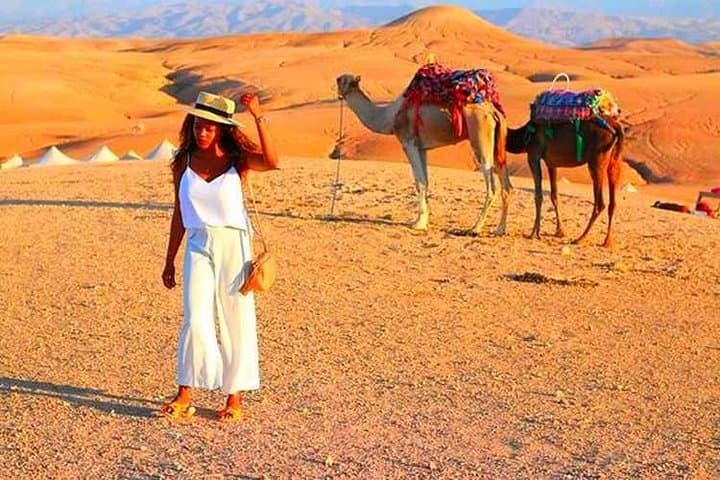
The afternoon eases into a sunset camel ride across the Agafay-style plains near higher ridges, where dust and light trade colors and the sky opens for dinner under stars. Dinner near local peaks features tagine and salads, made with produce from mountain gardens, served with panoramic views toward Mount Toubkal.
Practical notes: the day is not technical but includes uneven trails and short ascents—sturdy shoes and sun protection matter. Expect a 5‑hour, private excursion with hotel pickup; bring water, a light layer for evening cold and small cash for the village visit or tip. The pace favors curiosity: short walks, cultural stops, a calm camel leg and a clear-sky finish.
easy.
5 hours.
Suitable for most fitness levels; expect short uphill walks and uneven terrain requiring basic mobility.
The round-trip is about 1–1.5 hours each way depending on exact stops; total tour time is roughly five hours.
Yes—camel rides provided are gentle and short; operators often have options or assistance for less mobile guests.
A traditional dinner with salad, tagine and fruit is included; notify at booking for dietary restrictions so hosts can adapt dishes.
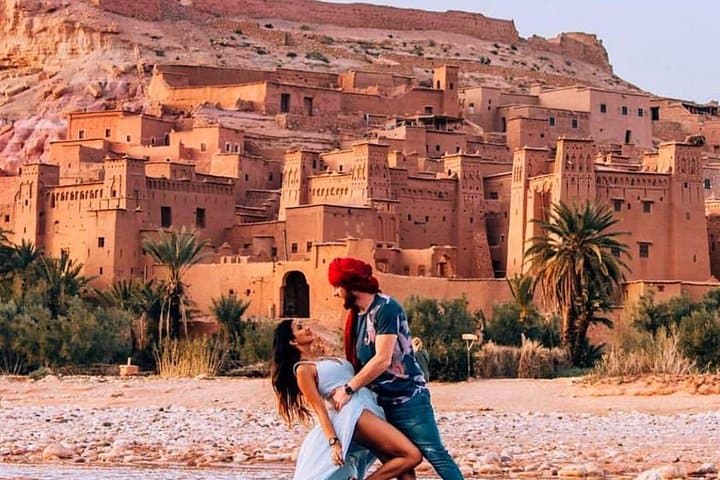
Yes, the itinerary typically includes a visit to a Berber household for tea and an argan women’s cooperative stop—bring small cash for purchases.
The High Atlas has been inhabited by Amazigh (Berber) communities for millennia; stone farms and terraced agriculture reflect adaptive mountain living.
Water is scarce in places—stick to marked trails, avoid littering and support local cooperatives to help preserve traditional land use.
Marrakech Tour Experience operates guided outdoor trips and adventures with an emphasis on safety, stewardship, and memorable experiences.
The road climbs out of Marrakech and the city’s heat thins into cool Atlas air—olive terraces and ochre berber houses slide by as the driver threads hairpin turns toward craggy ridgelines. You arrive to a landscape where gullies carve three distinct valleys: Tachdirt’s green slopes, Ckik’s terraced fields and Amizmiz’s more rugged ravines. A short walk to a local waterfall brings the sound of water alive; light fractures through pine and almond trees.
The road climbs out of Marrakech and the city’s heat thins into cool Atlas air—olive terraces and ochre berber houses slide by as the driver threads hairpin turns toward craggy ridgelines. You arrive to a landscape where gullies carve three distinct valleys: Tachdirt’s green slopes, Ckik’s terraced fields and Amizmiz’s more rugged ravines. A short walk to a local waterfall brings the sound of water alive; light fractures through pine and almond trees.
This region sits on the southern flank of the High Atlas, Morocco’s young, tectonically uplifted range whose granite and schist reveal glacier-polished basins and steep valleys. The valleys are worked by Amazigh (Berber) communities for centuries—stone farmhouses, narrow mule paths and cooperative argan presses mark a culture shaped by altitude and aridity.
The afternoon eases into a sunset camel ride across the Agafay-style plains near higher ridges, where dust and light trade colors and the sky opens for dinner under stars. Dinner near local peaks features tagine and salads, made with produce from mountain gardens, served with panoramic views toward Mount Toubkal.
Practical notes: the day is not technical but includes uneven trails and short ascents—sturdy shoes and sun protection matter. Expect a 5‑hour, private excursion with hotel pickup; bring water, a light layer for evening cold and small cash for the village visit or tip. The pace favors curiosity: short walks, cultural stops, a calm camel leg and a clear-sky finish.