THE ADVENTURE COLLECTIVE® · Independent discovery and booking for outdoor travel

A full-day escape from Marrakech into the High Atlas: river valleys, Setti Fatma’s waterfalls, mint-tea stops in Berber villages, and a camel ride by the river. This intimate circuit delivers mountain scenery and local culture with minimal hiking and full-day logistics handled.
A full-day escape from Marrakech into the High Atlas: river valleys, Setti Fatma’s waterfalls, mint-tea stops in Berber villages, and a camel ride by the river. This intimate circuit delivers mountain scenery and local culture with minimal hiking and full-day logistics handled.
You leave Marrakech’s pink-stone bustle behind and climb into a landscape that shifts like a film: terraced fields, tight Berber villages clinging to slopes, and a river that seems to dare you to follow it upstream.
Verified experiences and guided adventures in the surrounding area.
Operated by DEEP SOUTH TRAVEL · Marrakech, Marrakech-Safi
You leave Marrakech’s pink-stone bustle behind and climb into a landscape that shifts like a film: terraced fields, tight Berber villages clinging to slopes, and a river that seems to dare you to follow it upstream.
The route threads the Ourika Valley to Setti Fatma — origin of the seven waterfalls — then continues higher toward Oukaïmeden and the plateau of Kik. Geologically the High Atlas is young and sharply folded rock; the road cuts reveal granite and metamorphic beds that rise abruptly from river-carved valleys. Culturally, the villages you pass are part of a centuries-old Berber network of agriculture and mountain trade; mint tea invitations are routine and offer a clear window into daily life.
Expect short, guided walks to reach the waterfalls, a riverside lunch of tagine and salads, and a light camel ride across a low valley plain. The hike sections are on rocky, sometimes uneven trails with short steep pitches rather than long ascents.
Practical edge: start early to avoid mid-day heat, bring sun protection and at least 1.5–2 liters of water, and wear sturdy shoes for wet rocks at waterfall sites. Local guides speak English and know safe footpaths — follow their lead on narrow sections.
This trip is ideal for travelers wanting a compact, varied snapshot of Atlas life and landscape without overnight logistics. It’s a chance to trade Marrakech’s intensity for mountain air, waterfalls, and village hospitality, all returned to the city by evening.
easy.
8–9 hours.
Suitable for most fitness levels; able to walk short uneven trails and manage brief elevation changes.
Most tours include hotel/riad pickup and drop-off in Marrakech; specify your pickup point when booking.
Walks are short but on uneven, sometimes wet rock; basic mobility and steady shoes are sufficient.
Yes — rides are short and guided; handlers brief riders and assist mounting and dismounting.
Lunch at a riverside restaurant is included, but bring snacks if you have specific dietary needs.
The High Atlas has long been inhabited by Amazigh (Berber) communities who farm terraced plots and maintained trans-mountain trade routes; villages reflect that mountain-adapted lifestyle.
Water sources and mountain soils are fragile; stick to trails, avoid single-use plastics, and support locally run guides and cooperatives.
DEEP SOUTH TRAVEL operates guided outdoor trips and adventures with an emphasis on safety, stewardship, and memorable experiences.

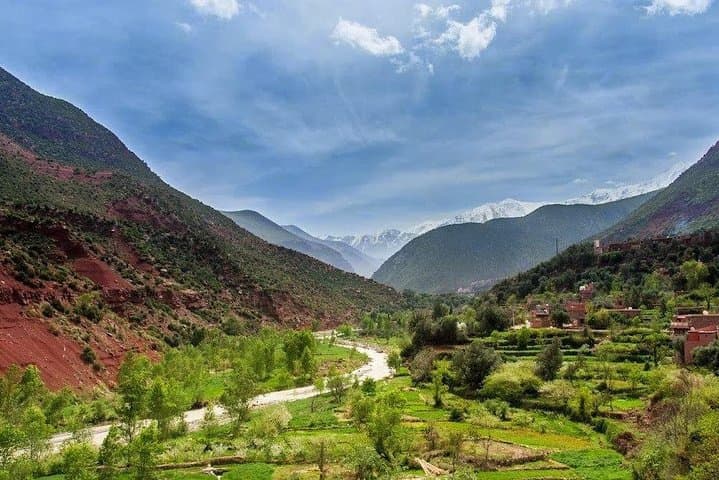


You leave Marrakech’s pink-stone bustle behind and climb into a landscape that shifts like a film: terraced fields, tight Berber villages clinging to slopes, and a river that seems to dare you to follow it upstream.
You leave Marrakech’s pink-stone bustle behind and climb into a landscape that shifts like a film: terraced fields, tight Berber villages clinging to slopes, and a river that seems to dare you to follow it upstream.
The route threads the Ourika Valley to Setti Fatma — origin of the seven waterfalls — then continues higher toward Oukaïmeden and the plateau of Kik. Geologically the High Atlas is young and sharply folded rock; the road cuts reveal granite and metamorphic beds that rise abruptly from river-carved valleys. Culturally, the villages you pass are part of a centuries-old Berber network of agriculture and mountain trade; mint tea invitations are routine and offer a clear window into daily life.
Expect short, guided walks to reach the waterfalls, a riverside lunch of tagine and salads, and a light camel ride across a low valley plain. The hike sections are on rocky, sometimes uneven trails with short steep pitches rather than long ascents.
Practical edge: start early to avoid mid-day heat, bring sun protection and at least 1.5–2 liters of water, and wear sturdy shoes for wet rocks at waterfall sites. Local guides speak English and know safe footpaths — follow their lead on narrow sections.
This trip is ideal for travelers wanting a compact, varied snapshot of Atlas life and landscape without overnight logistics. It’s a chance to trade Marrakech’s intensity for mountain air, waterfalls, and village hospitality, all returned to the city by evening.