THE ADVENTURE COLLECTIVE® · Independent discovery and booking for outdoor travel

Spend a day in the High Atlas with local guides for a cultural hike through Berber villages, waterfalls, and terraced fields, finishing with a home-cooked lunch in Ait Souka. Practical for all fitness levels and rich in local insights.
Spend a day in the High Atlas with local guides for a cultural hike through Berber villages, waterfalls, and terraced fields, finishing with a home-cooked lunch in Ait Souka. Practical for all fitness levels and rich in local insights.
The first steps leave Marrakech behind—an air-conditioned minivan climbs from ochre riads into a landscape that changes from palm groves to low alpine scrub. By midmorning the Atlas reveals itself: a string of serrated ridgelines, water cutting gullies through volcanic and sedimentary rock, and villages balanced on terraces. Local guides meet visitors at a village trailhead, and the walk becomes a conversation with place—stone houses, stacked fields, and women tending herb gardens that scent the valley.
Verified experiences and guided adventures in the surrounding area.
Operated by Atlas Mountain and Marrakech Day Trip · Marrakech, Marrakech-Safi
The first steps leave Marrakech behind—an air-conditioned minivan climbs from ochre riads into a landscape that changes from palm groves to low alpine scrub. By midmorning the Atlas reveals itself: a string of serrated ridgelines, water cutting gullies through volcanic and sedimentary rock, and villages balanced on terraces. Local guides meet visitors at a village trailhead, and the walk becomes a conversation with place—stone houses, stacked fields, and women tending herb gardens that scent the valley.
These slopes belong to the High Atlas, tectonically uplifted by collision between the African and Eurasian plates and worn by seasonal streams. Berber (Amazigh) communities have farmed these valleys for centuries; houses and public spaces reflect a culture shaped by mountain microclimates and trans-Saharan trade routes. Small cooperatives producing argan oil or herbal teas are common stops, and guests often share a home-cooked tajine flavored with wild thyme and rosemary.
Expect a steady, undulating hike between villages and near waterfalls rather than technical climbing—trails are rocky in places and can be steep on short pitches. Practical tips: start early to avoid midday heat, carry 1.5–2 liters of water, wear sturdy shoes with good tread, and bring layers for wind and afternoon cooling. Photography windows open when paths crest terraces facing the Toubkal chain; the light is clearest in the morning or late afternoon. Cultural courtesy matters—ask before photographing people and accept tea invitations; these interactions are the core of the experience.
easy.
7–8 hours.
Suitable for travelers with basic walking endurance; able to handle multiple short ascents and descents over uneven terrain.
Pickup is arranged from Marrakech accommodations—confirm your pickup point during booking and expect a morning departure.
The route is described as easy; families and active seniors can participate but should be comfortable with several hours of walking and some uneven terrain.
A traditional local lunch is included; an optional camel ride at the end is typically offered and may be included—confirm when booking.
No special permits are required for this day trip; standard travel insurance covering health and evacuation is recommended.
The High Atlas has been inhabited by Amazigh (Berber) communities for millennia; settlement patterns and terraced agriculture reflect adaptation to steep microclimates and seasonal water flow.
Stick to established paths and avoid removing plants—many local economies now combine tourism with small-scale sustainable agriculture to protect soil and water resources.
Atlas Mountain and Marrakech Day Trip operates guided outdoor trips and adventures with an emphasis on safety, stewardship, and memorable experiences.
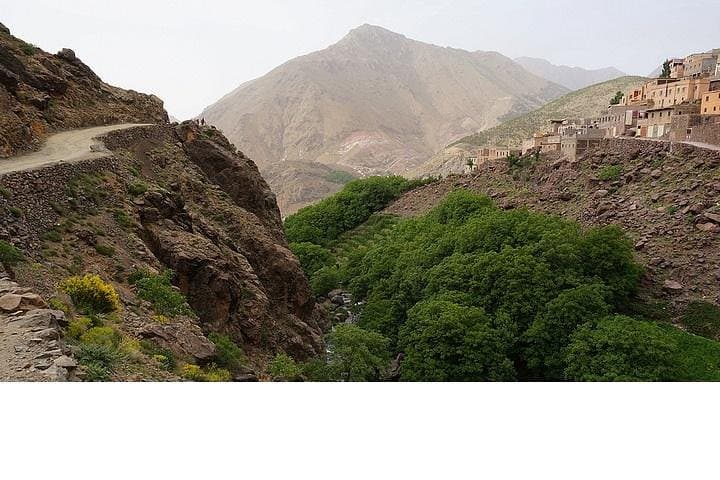
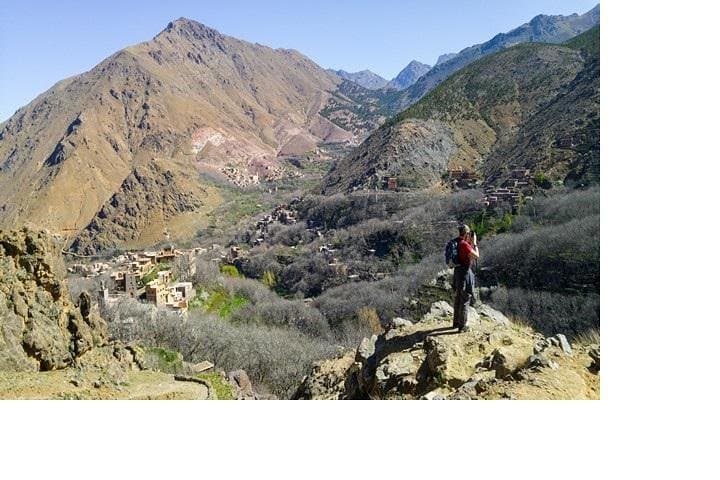
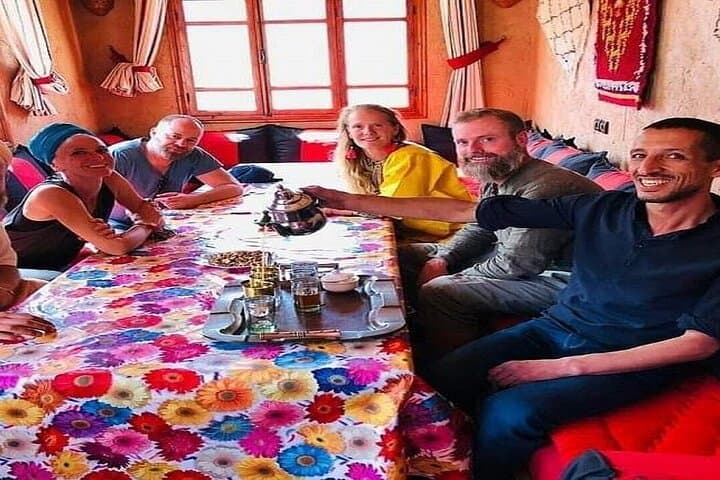
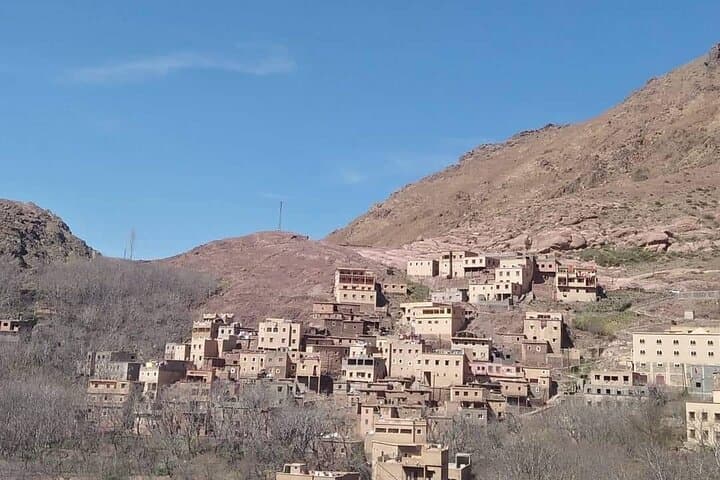
The first steps leave Marrakech behind—an air-conditioned minivan climbs from ochre riads into a landscape that changes from palm groves to low alpine scrub. By midmorning the Atlas reveals itself: a string of serrated ridgelines, water cutting gullies through volcanic and sedimentary rock, and villages balanced on terraces. Local guides meet visitors at a village trailhead, and the walk becomes a conversation with place—stone houses, stacked fields, and women tending herb gardens that scent the valley.
The first steps leave Marrakech behind—an air-conditioned minivan climbs from ochre riads into a landscape that changes from palm groves to low alpine scrub. By midmorning the Atlas reveals itself: a string of serrated ridgelines, water cutting gullies through volcanic and sedimentary rock, and villages balanced on terraces. Local guides meet visitors at a village trailhead, and the walk becomes a conversation with place—stone houses, stacked fields, and women tending herb gardens that scent the valley.
These slopes belong to the High Atlas, tectonically uplifted by collision between the African and Eurasian plates and worn by seasonal streams. Berber (Amazigh) communities have farmed these valleys for centuries; houses and public spaces reflect a culture shaped by mountain microclimates and trans-Saharan trade routes. Small cooperatives producing argan oil or herbal teas are common stops, and guests often share a home-cooked tajine flavored with wild thyme and rosemary.
Expect a steady, undulating hike between villages and near waterfalls rather than technical climbing—trails are rocky in places and can be steep on short pitches. Practical tips: start early to avoid midday heat, carry 1.5–2 liters of water, wear sturdy shoes with good tread, and bring layers for wind and afternoon cooling. Photography windows open when paths crest terraces facing the Toubkal chain; the light is clearest in the morning or late afternoon. Cultural courtesy matters—ask before photographing people and accept tea invitations; these interactions are the core of the experience.