THE ADVENTURE COLLECTIVE® · Independent discovery and booking for outdoor travel

Swap the medina’s bustle for an eight‑hour Atlas escape: zip high above a green valley, ride through olive groves, lunch by a pool, and paddle Ouirgane Lake at sunset. This full‑day from Marrakech mixes adrenaline with calm and local flavors.
Swap the medina’s bustle for an eight‑hour Atlas escape: zip high above a green valley, ride through olive groves, lunch by a pool, and paddle Ouirgane Lake at sunset. This full‑day from Marrakech mixes adrenaline with calm and local flavors.
You leave Marrakech before the heat peaks, the city’s ochre walls sliding behind you as the road climbs into the High Atlas. Windows down, cedars and scrub pass with a dry perfume, and the peaks sharpen against a sky that seems to push the light into the valleys. By the time the minivan eases into the Ouirgane basin, the lake glitters like a held breath—and the day’s three-act adventure is waiting.
Verified experiences and guided adventures in the surrounding area.
Operated by Atlas Epic Trails · Ouirgane, Marrakech-Safi
You leave Marrakech before the heat peaks, the city’s ochre walls sliding behind you as the road climbs into the High Atlas. Windows down, cedars and scrub pass with a dry perfume, and the peaks sharpen against a sky that seems to push the light into the valleys. By the time the minivan eases into the Ouirgane basin, the lake glitters like a held breath—and the day’s three-act adventure is waiting.
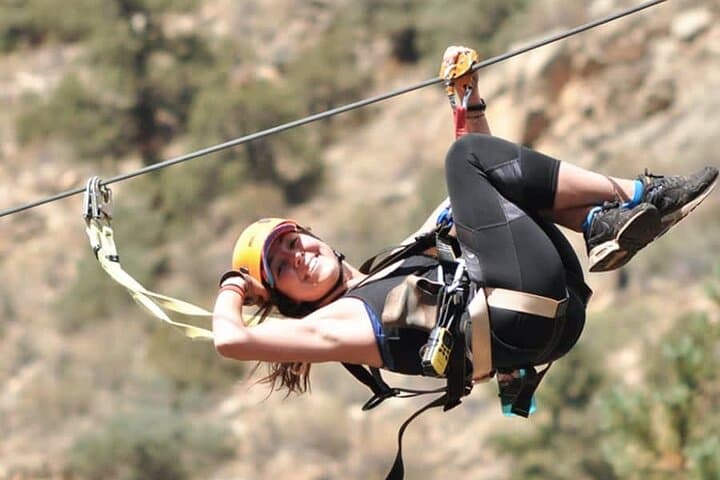
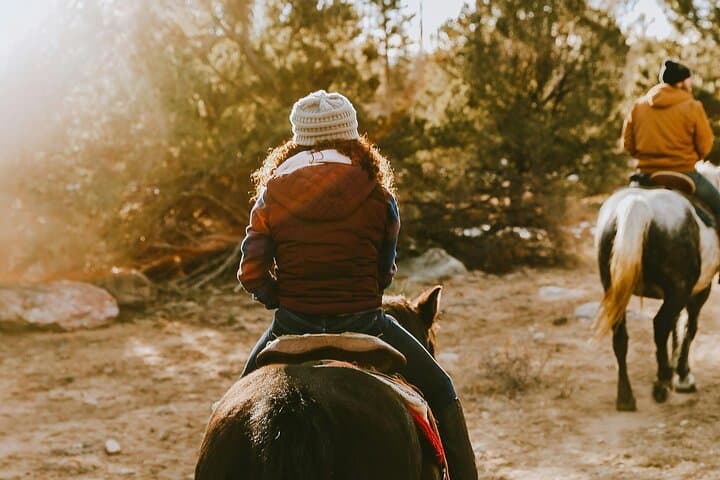
The zipline comes first: a pulse of wind and a momentary bird’s-eye view of terraced fields and a ribbon of river below. Lines here stretch several hundred meters from ridge to ridge, built to give you a long, clean run and a spectacular read on the valley’s geological bones—folded schists and exposed red earth carved by centuries of winter torrents. After the adrenaline, you settle into a slower gait: horseback through olive groves and red-hued hills. The horses pick their way along tracks worn into clay; local guides point out irrigation channels—ancient khettaras and modern pipes—showing how water is coaxed between terraces.
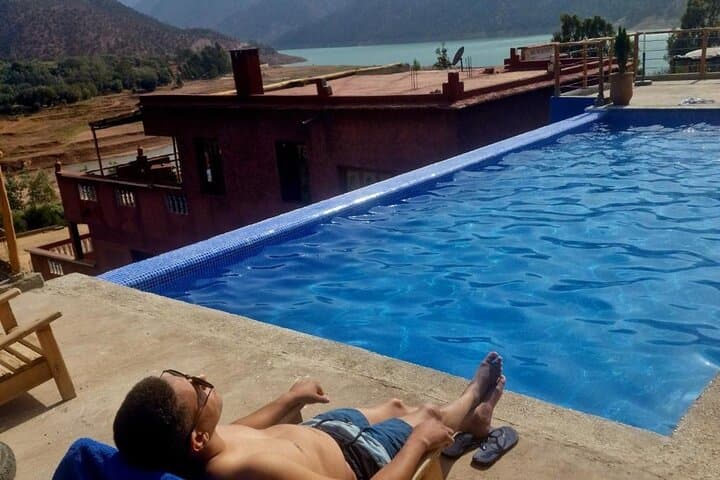
Lunch arrives as a celebration of the region’s foodways: tagines scented with preserved lemon, fresh flatbreads, and salads dressed with local olive oil. The retreat’s plunge pool looks over the lake; it’s a civilized pause that lets you trade salt and sweat for cool tiles and conversation.
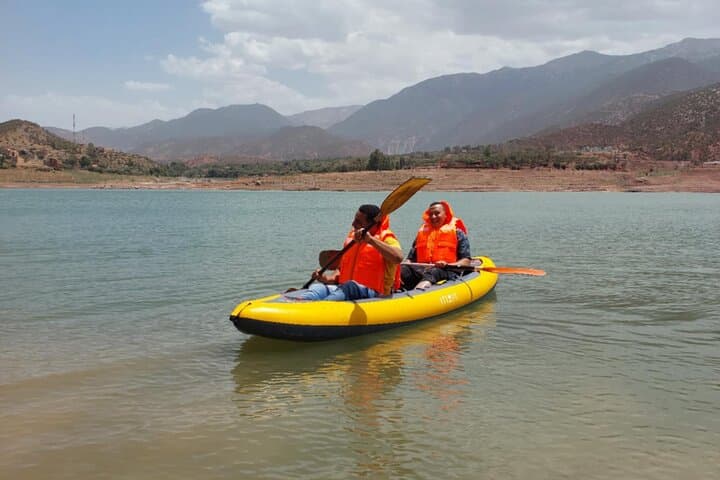
The day closes on the water. Kayaks glide across Ouirgane’s placid surface as shadows from the High Atlas lengthen. Paddle strokes are regular and meditative; wind will sometimes push you toward a reedbed where kingfishers dart like green sparks.
This landscape has long been a crossroads: Amazigh (Berber) villages occupied these slopes for centuries, raising olives and shepherding goats between mountain pastures. The High Atlas’ geology—folded, uplifted, and eroded—creates the dramatic valleys that make both the zipline and the lake possible.
Practical guide: expect a full day (roughly 8 hours) from Marrakech with about a 60–90 minute drive each way depending on traffic. Elevation at Ouirgane sits around 1,100–1,400 m, so mornings are cool and afternoons warm; bring layers. Activities require a moderate level of fitness—short bursts of exertion on the zipline, steady balance on horseback, and light paddling for the kayak leg. Footwear should be closed-toe for riding and grippy for the kayak; sunscreen and water are non-negotiable.
Timing matters: book a morning departure for lighter afternoon traffic and the best light on the lake. Respect local customs—modest clothing in villages—and follow guides’ safety instructions: helmets for zipline, life vests for kayaking, and gloves or stirrups for the ride. The combination of speed, silence, and slow movement gives you three ways to read the Atlas in a single, well-paced day.
moderate.
8 hours.
Moderate fitness—comfortable walking, basic balance for horseback, and light paddling stamina for a 30–60 minute kayak session.
Typical transfer time is 60–90 minutes each way depending on traffic and your hotel pickup location.
No—beginners are welcome; instructors give basic safety and technique briefings for both activities.
Yes—children can participate but check age limits with the operator; infant seats and family‑friendly options are noted in inclusions.
Closed‑toe shoes, comfortable trousers for riding, layered tops for changing temperatures, and sun protection are recommended.
Yes—an authentic Moroccan lunch is provided at the retreat, often featuring tagine, salads, and local bread.
The provider lists wheelchair‑accessible transport and surfaces, but the zipline, horseback and kayak activities have physical requirements—check with the supplier in advance.
The Ouirgane basin has long been inhabited by Amazigh communities who farm terraces and manage olive orchards; the landscape reflects centuries of small‑scale agriculture tied to seasonal water management.
Water is a limited resource here—choose operators who limit group sizes, avoid single‑use plastics, and support local waste management and community projects.
Atlas Epic Trails operates guided outdoor trips and adventures with an emphasis on safety, stewardship, and memorable experiences.
You leave Marrakech before the heat peaks, the city’s ochre walls sliding behind you as the road climbs into the High Atlas. Windows down, cedars and scrub pass with a dry perfume, and the peaks sharpen against a sky that seems to push the light into the valleys. By the time the minivan eases into the Ouirgane basin, the lake glitters like a held breath—and the day’s three-act adventure is waiting.
You leave Marrakech before the heat peaks, the city’s ochre walls sliding behind you as the road climbs into the High Atlas. Windows down, cedars and scrub pass with a dry perfume, and the peaks sharpen against a sky that seems to push the light into the valleys. By the time the minivan eases into the Ouirgane basin, the lake glitters like a held breath—and the day’s three-act adventure is waiting.
The zipline comes first: a pulse of wind and a momentary bird’s-eye view of terraced fields and a ribbon of river below. Lines here stretch several hundred meters from ridge to ridge, built to give you a long, clean run and a spectacular read on the valley’s geological bones—folded schists and exposed red earth carved by centuries of winter torrents. After the adrenaline, you settle into a slower gait: horseback through olive groves and red-hued hills. The horses pick their way along tracks worn into clay; local guides point out irrigation channels—ancient khettaras and modern pipes—showing how water is coaxed between terraces.
Lunch arrives as a celebration of the region’s foodways: tagines scented with preserved lemon, fresh flatbreads, and salads dressed with local olive oil. The retreat’s plunge pool looks over the lake; it’s a civilized pause that lets you trade salt and sweat for cool tiles and conversation.
The day closes on the water. Kayaks glide across Ouirgane’s placid surface as shadows from the High Atlas lengthen. Paddle strokes are regular and meditative; wind will sometimes push you toward a reedbed where kingfishers dart like green sparks.
This landscape has long been a crossroads: Amazigh (Berber) villages occupied these slopes for centuries, raising olives and shepherding goats between mountain pastures. The High Atlas’ geology—folded, uplifted, and eroded—creates the dramatic valleys that make both the zipline and the lake possible.
Practical guide: expect a full day (roughly 8 hours) from Marrakech with about a 60–90 minute drive each way depending on traffic. Elevation at Ouirgane sits around 1,100–1,400 m, so mornings are cool and afternoons warm; bring layers. Activities require a moderate level of fitness—short bursts of exertion on the zipline, steady balance on horseback, and light paddling for the kayak leg. Footwear should be closed-toe for riding and grippy for the kayak; sunscreen and water are non-negotiable.
Timing matters: book a morning departure for lighter afternoon traffic and the best light on the lake. Respect local customs—modest clothing in villages—and follow guides’ safety instructions: helmets for zipline, life vests for kayaking, and gloves or stirrups for the ride. The combination of speed, silence, and slow movement gives you three ways to read the Atlas in a single, well-paced day.