THE ADVENTURE COLLECTIVE® · Independent discovery and booking for outdoor travel

Escape Marrakech for an eight‑hour expedition into the Western High Atlas. Hike river-cut trails through Imlil and Aroumd, share lunch in a Berber home, and return with a clear sense of the region’s landscape and culture.
Escape Marrakech for an eight‑hour expedition into the Western High Atlas. Hike river-cut trails through Imlil and Aroumd, share lunch in a Berber home, and return with a clear sense of the region’s landscape and culture.
Morning light peels the ochre walls of Marrakech as a 4WD threads south through Moulay Brahim Gorge, and the city’s heat gives way to a green valley that seems to breathe. By midmorning the convoy drops into Imlil, a compact mountain village at the western foot of Jebel Toubkal; here the sound of running water replaces traffic and local guides unfurl routes into stepped fields and cedar-scented gullies.
Verified experiences and guided adventures in the surrounding area.
Operated by Red City Tours Marrakech · Marrakech, Marrakech-Safi
Morning light peels the ochre walls of Marrakech as a 4WD threads south through Moulay Brahim Gorge, and the city’s heat gives way to a green valley that seems to breathe. By midmorning the convoy drops into Imlil, a compact mountain village at the western foot of Jebel Toubkal; here the sound of running water replaces traffic and local guides unfurl routes into stepped fields and cedar-scented gullies.
The High Atlas carries a layered history — indigenous Amazigh (Berber) communities, terraced agriculture, and a network of mule tracks that once linked remote valleys to Marrakech’s markets. Geologically the range is rugged, composed of ancient folded rock and recent alluvial fans where streams cut narrow canyons. Culture is immediate: village tea, handwoven textiles, and modest stone houses clustered along streambeds.
Walks to Aroumd and Tamatert follow packed dirt trails, crossing small bridges and intermittent stream crossings, with steady but moderate uphill sections — terrain that rewards steady pacing with broad valley views and lunch in a Berber house.
Practical note: start early to avoid midday heat, wear sturdy shoes for rocky sections, carry at least 1.5 liters of water, and bring small notes of local currency for tea or tips. Expect 6–8 hours out of your day including transfers; the route is suitable for most fitness levels but includes uneven, sometimes steep sections. Guides handle logistics and local permissions, leaving travelers free to read the slope, listen to the valley, and step at the pace of the mountains.
easy.
8 hours.
Suitable for travelers with basic fitness who can walk 3–6 miles on uneven trails and handle short climbs; not technical.
Trails are mostly well-defined with steady, moderate climbs; it’s rated easy for most people but involves uneven footing and several hours of walking.
Typically transport from Marrakech, professional driver/guide, mountain guide fees, a Berber house lunch, and a short camel ride — check your booking for specifics.
Imlil sits at roughly 1,740 m (5,700 ft); most visitors acclimate without issue, but anyone sensitive to altitude should inform guides and take it easy.
Yes — the operator notes it’s accessible for families; bring appropriate footwear and plan for a slower pace if traveling with young children.
Amazigh (Berber) communities have farmed and traded through the High Atlas for centuries; Imlil grew as a mule and guide hub for Toubkal ascents.
Water is scarce in summer and trails can erode; stick to established paths, avoid single-use plastics, and hire local guides to support the regional economy.
Red City Tours Marrakech operates guided outdoor trips and adventures with an emphasis on safety, stewardship, and memorable experiences.
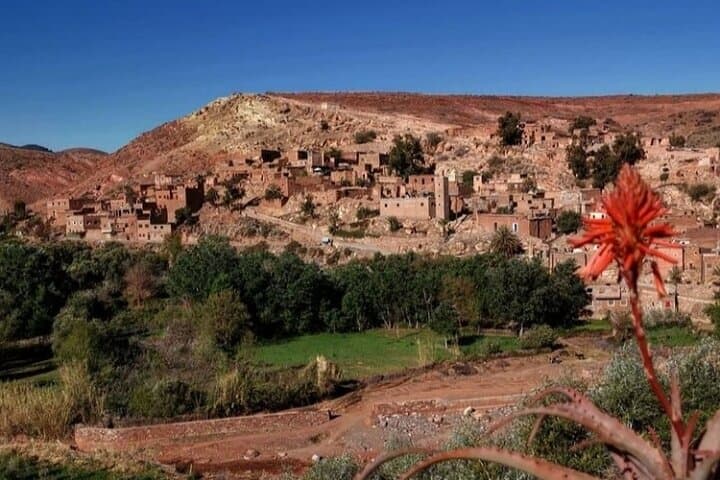


Morning light peels the ochre walls of Marrakech as a 4WD threads south through Moulay Brahim Gorge, and the city’s heat gives way to a green valley that seems to breathe. By midmorning the convoy drops into Imlil, a compact mountain village at the western foot of Jebel Toubkal; here the sound of running water replaces traffic and local guides unfurl routes into stepped fields and cedar-scented gullies.
Morning light peels the ochre walls of Marrakech as a 4WD threads south through Moulay Brahim Gorge, and the city’s heat gives way to a green valley that seems to breathe. By midmorning the convoy drops into Imlil, a compact mountain village at the western foot of Jebel Toubkal; here the sound of running water replaces traffic and local guides unfurl routes into stepped fields and cedar-scented gullies.
The High Atlas carries a layered history — indigenous Amazigh (Berber) communities, terraced agriculture, and a network of mule tracks that once linked remote valleys to Marrakech’s markets. Geologically the range is rugged, composed of ancient folded rock and recent alluvial fans where streams cut narrow canyons. Culture is immediate: village tea, handwoven textiles, and modest stone houses clustered along streambeds.
Walks to Aroumd and Tamatert follow packed dirt trails, crossing small bridges and intermittent stream crossings, with steady but moderate uphill sections — terrain that rewards steady pacing with broad valley views and lunch in a Berber house.
Practical note: start early to avoid midday heat, wear sturdy shoes for rocky sections, carry at least 1.5 liters of water, and bring small notes of local currency for tea or tips. Expect 6–8 hours out of your day including transfers; the route is suitable for most fitness levels but includes uneven, sometimes steep sections. Guides handle logistics and local permissions, leaving travelers free to read the slope, listen to the valley, and step at the pace of the mountains.