THE ADVENTURE COLLECTIVE® · Independent discovery and booking for outdoor travel

A private day tour from Dambulla that pairs Athugala (Elephant Rock) and a 2nd-century BCE Theravada temple in Ridigama with Kurunegala’s royal-era ruins. Ideal for travelers wanting compact cultural history, short climbs, and village-level encounters.
A private day tour from Dambulla that pairs Athugala (Elephant Rock) and a 2nd-century BCE Theravada temple in Ridigama with Kurunegala’s royal-era ruins. Ideal for travelers wanting compact cultural history, short climbs, and village-level encounters.
You arrive before the noon heat, the A/C taxi easing away from Dambulla’s low-rise hotels into lanes lined with leaning coconut palms.
Verified experiences and guided adventures in the surrounding area.
Operated by Ceylon Travel Dream · Dambulla, Central Province
You arrive before the noon heat, the A/C taxi easing away from Dambulla’s low-rise hotels into lanes lined with leaning coconut palms.
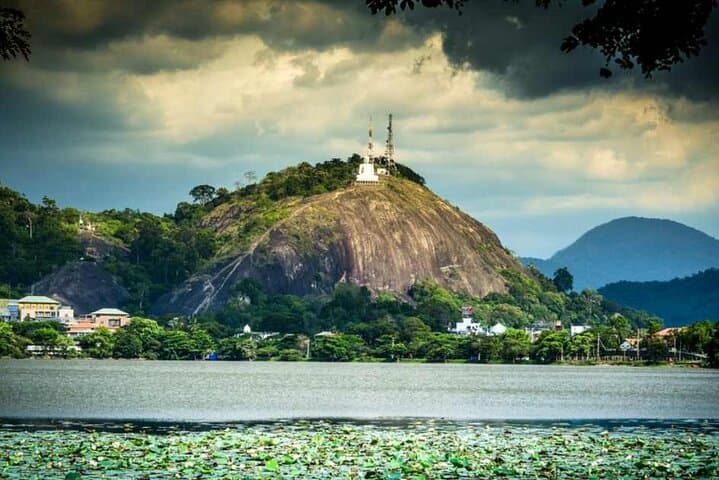
Athugala announces itself as a hulking silhouette—one of the eight great rocks that ring Kurunegala—its flanks scarred with age and a newly visible 88-foot Buddha gazing over rice paddies. The breeze pushes the palms and carries the faint clack of a distant temple bell; the rock feels like a living landmark, watching centuries of travelers and rulers pass below.
This route threads together Wayamba’s quieter histories: Kurunegala’s role as a medieval royal seat in the 12th–14th centuries, the moated palace ruins nearby, and a second-century BCE Theravada shrine in Ridigama where local ritual rhythms remain unchanged. Geologically the region is defined by hard, exposed outcrops that rise from flat paddy plains, offering abrupt viewpoints and tight, stone steps rather than long alpine walks.
Practically, expect a 6–8 hour private excursion with short, manageable climbs, temple stairs, and village lanes. Modest dress and removing shoes for shrines are required. Sun protection, a steady water supply, and steady footwear for uneven stone are the essentials; guides handle logistics and local interpretation. Morning departures reduce heat and improve light for photos, while afternoons bring longer shadows across the rocks and cooler air.
This is a day built around easy, sensory exploration—rock, ritual, and rural Sri Lanka—best approached with curiosity, respectful clothing, and a readiness to move at a local pace.
easy.
6–8 hours.
Suitable for most fitness levels; involves short climbs and stair sections but no sustained ascents.
The tour runs about 6–8 hours and typically includes A/C vehicle transport, an English-speaking guide, mineral water, and visits to Athugala and Ridigama sites.
No—it's rated easy with short climbs and stair sections; most travelers in average health can participate.
Cover shoulders and knees, remove shoes before entering shrines, and avoid loud or revealing clothing as a sign of respect.
Yes—there are basic restroom stops and small village stalls; guides usually plan short breaks for refreshments.
Kurunegala served as an important medieval royal capital in the 12th–14th centuries; nearby ruins reflect fortified palace sites and monastic complexes from that period.
Sites are sensitive to foot traffic and donations-support conservation; visitors should avoid climbing fragile ruins and follow temple rules to reduce impact.
Ceylon Travel Dream operates guided outdoor trips and adventures with an emphasis on safety, stewardship, and memorable experiences.


You arrive before the noon heat, the A/C taxi easing away from Dambulla’s low-rise hotels into lanes lined with leaning coconut palms.
You arrive before the noon heat, the A/C taxi easing away from Dambulla’s low-rise hotels into lanes lined with leaning coconut palms.
Athugala announces itself as a hulking silhouette—one of the eight great rocks that ring Kurunegala—its flanks scarred with age and a newly visible 88-foot Buddha gazing over rice paddies. The breeze pushes the palms and carries the faint clack of a distant temple bell; the rock feels like a living landmark, watching centuries of travelers and rulers pass below.
This route threads together Wayamba’s quieter histories: Kurunegala’s role as a medieval royal seat in the 12th–14th centuries, the moated palace ruins nearby, and a second-century BCE Theravada shrine in Ridigama where local ritual rhythms remain unchanged. Geologically the region is defined by hard, exposed outcrops that rise from flat paddy plains, offering abrupt viewpoints and tight, stone steps rather than long alpine walks.
Practically, expect a 6–8 hour private excursion with short, manageable climbs, temple stairs, and village lanes. Modest dress and removing shoes for shrines are required. Sun protection, a steady water supply, and steady footwear for uneven stone are the essentials; guides handle logistics and local interpretation. Morning departures reduce heat and improve light for photos, while afternoons bring longer shadows across the rocks and cooler air.
This is a day built around easy, sensory exploration—rock, ritual, and rural Sri Lanka—best approached with curiosity, respectful clothing, and a readiness to move at a local pace.