THE ADVENTURE COLLECTIVE® · Independent discovery and booking for outdoor travel

Make a full-day run from Athens to Meteora’s towering sandstone pillars to visit clifftop Orthodox monasteries. This private tour combines geological spectacle, centuries-old religious sites and hands-on local perspective from an English-speaking driver.
Make a full-day run from Athens to Meteora’s towering sandstone pillars to visit clifftop Orthodox monasteries. This private tour combines geological spectacle, centuries-old religious sites and hands-on local perspective from an English-speaking driver.
You step out of the car at the lip of a sheer sandstone tower and the valley below exhales: a mosaic of olive groves, red-tiled roofs and ribboned roads. Meteora’s monasteries sit like human-made crowns on these pillars, their stone steps and wooden balconies clinging to faces carved by wind and river over millions of years.
Verified experiences and guided adventures in the surrounding area.
Operated by Welcome Pickups · Kalabaka, Thessaly
You step out of the car at the lip of a sheer sandstone tower and the valley below exhales: a mosaic of olive groves, red-tiled roofs and ribboned roads. Meteora’s monasteries sit like human-made crowns on these pillars, their stone steps and wooden balconies clinging to faces carved by wind and river over millions of years.
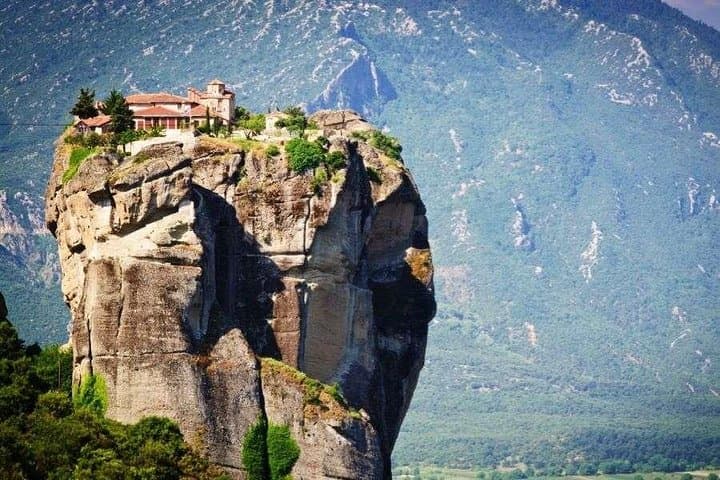
The rocks themselves are a Miocene conglomerate—pebbles and sand fused into towers after a prehistoric seabed uplifted and eroded. Monastic communities arrived in the Byzantine era, expanding most visibly from the 14th to 16th centuries when hermits and monks built access by rope, ladder and later, carved stairways. Today a cluster of active monasteries—Varlaam, Holy Trinity, Megalo Meteoro and Agios Nikolaos Anapafsas—preserve religious practice and austere architecture; visitors must follow strict dress codes and local rules.
Culturally, Meteora bridges rural Thessaly life and Orthodox spiritual tradition. Drivers on private tours act as informal guides, sharing local stories and directing you to viewpoints; note they cannot enter monastic precincts with you. Footing alternates between paved paths and steep stone stairs; expect short, sharp climbs and exposed viewpoints with 300–400 m drops.
Practical guidance: plan for a long day (about 14 hours round trip from Athens), bring water, sun protection and a skirt or long trousers for monastery entry. Arrive early at each site to avoid midday crowds and allow 30–90 minutes per monastery depending on how many interiors you can enter. Respect restricted areas, carry small change for donations, and keep a charged phone for photos—the light on the rocks mid-afternoon is especially clear.
moderate.
14 hours.
Good for travelers who can handle repeated stair climbs and a long day in the car; not strenuous but requires mobility for uneven paths.
It’s about 4–5 hours one way by car (roughly 350 km) depending on traffic; a private day trip is typically ~14 hours round trip including stops.
Admission fees are usually paid on-site and are not included in the private transfer; check opening hours in advance as some monasteries close on certain days.
No; drivers serve as informal guides and provide historical context but are not permitted inside monastic buildings.
Short children can ride in a stroller in the town, but monastery access requires climbing stairs and is not stroller-friendly; infants should be carried where steps are steep.
Meteora’s monasteries expanded between the 14th and 16th centuries when monks sought remote places for contemplative life, later adapting rope-and-ladder access into carved stairways.
The area is a UNESCO site with strict rules to protect fragile rock faces and monastic heritage—stay on marked paths, avoid drone use near monasteries, and follow posted guidelines.
Welcome Pickups operates guided outdoor trips and adventures with an emphasis on safety, stewardship, and memorable experiences.
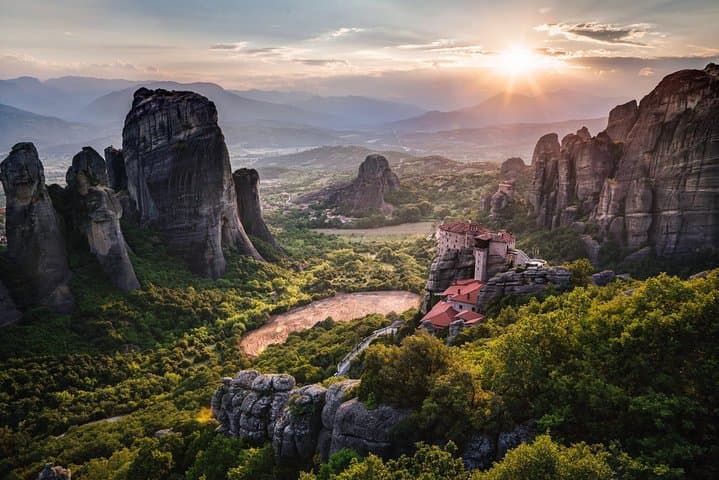
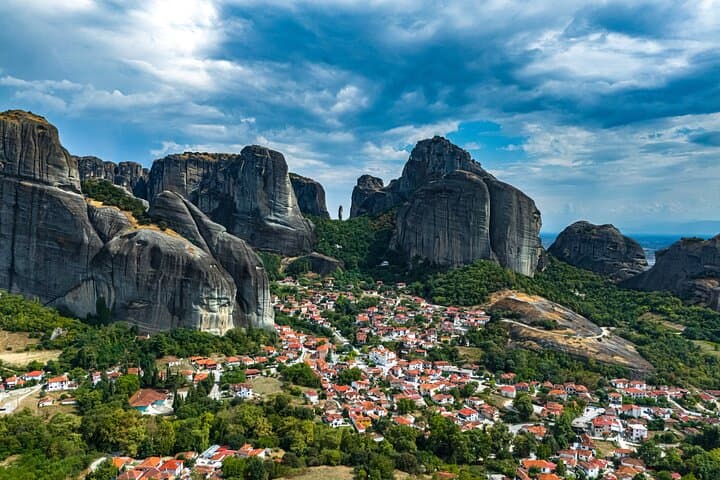
You step out of the car at the lip of a sheer sandstone tower and the valley below exhales: a mosaic of olive groves, red-tiled roofs and ribboned roads. Meteora’s monasteries sit like human-made crowns on these pillars, their stone steps and wooden balconies clinging to faces carved by wind and river over millions of years.
You step out of the car at the lip of a sheer sandstone tower and the valley below exhales: a mosaic of olive groves, red-tiled roofs and ribboned roads. Meteora’s monasteries sit like human-made crowns on these pillars, their stone steps and wooden balconies clinging to faces carved by wind and river over millions of years.
The rocks themselves are a Miocene conglomerate—pebbles and sand fused into towers after a prehistoric seabed uplifted and eroded. Monastic communities arrived in the Byzantine era, expanding most visibly from the 14th to 16th centuries when hermits and monks built access by rope, ladder and later, carved stairways. Today a cluster of active monasteries—Varlaam, Holy Trinity, Megalo Meteoro and Agios Nikolaos Anapafsas—preserve religious practice and austere architecture; visitors must follow strict dress codes and local rules.
Culturally, Meteora bridges rural Thessaly life and Orthodox spiritual tradition. Drivers on private tours act as informal guides, sharing local stories and directing you to viewpoints; note they cannot enter monastic precincts with you. Footing alternates between paved paths and steep stone stairs; expect short, sharp climbs and exposed viewpoints with 300–400 m drops.
Practical guidance: plan for a long day (about 14 hours round trip from Athens), bring water, sun protection and a skirt or long trousers for monastery entry. Arrive early at each site to avoid midday crowds and allow 30–90 minutes per monastery depending on how many interiors you can enter. Respect restricted areas, carry small change for donations, and keep a charged phone for photos—the light on the rocks mid-afternoon is especially clear.